Hero
How does Bulldog from Frasier do it (monogamy)?

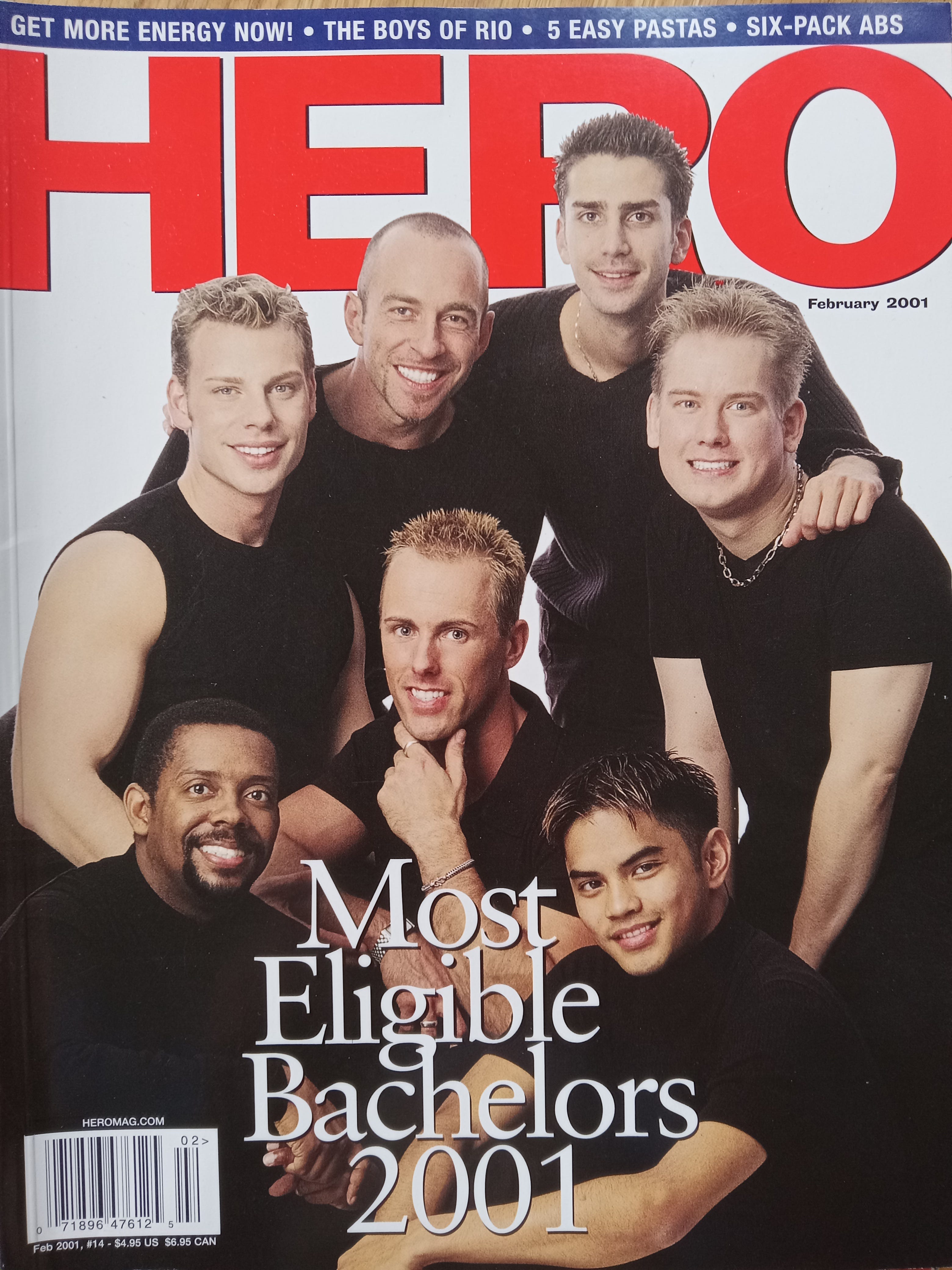
For a couple of years at the beginning of the century there was a gay men’s magazine “for the rest of us,” that is, for gay men who want monogamous relationships and don’t identify with the ‘scene.’ As you can imagine, it was really boring! Take some of their most eligible bachelors:
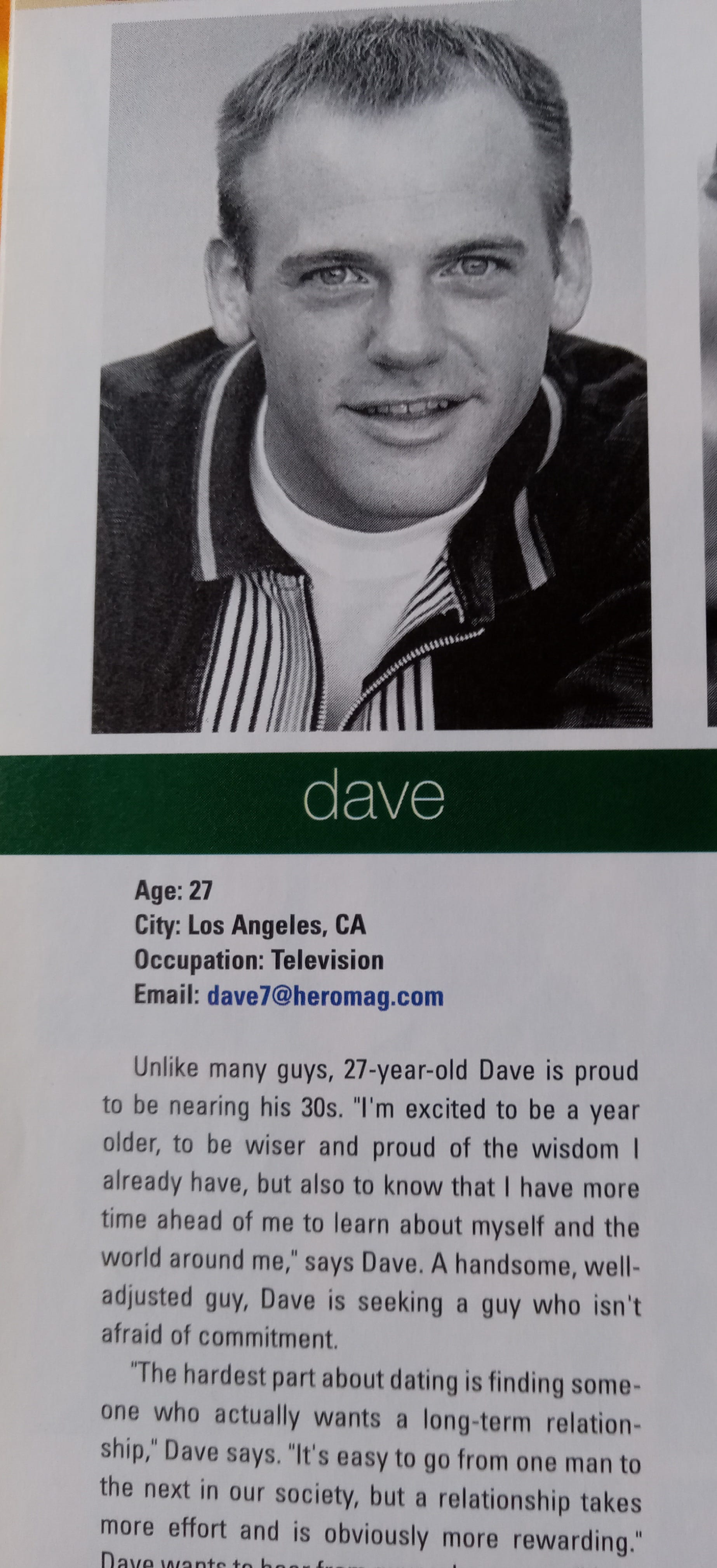
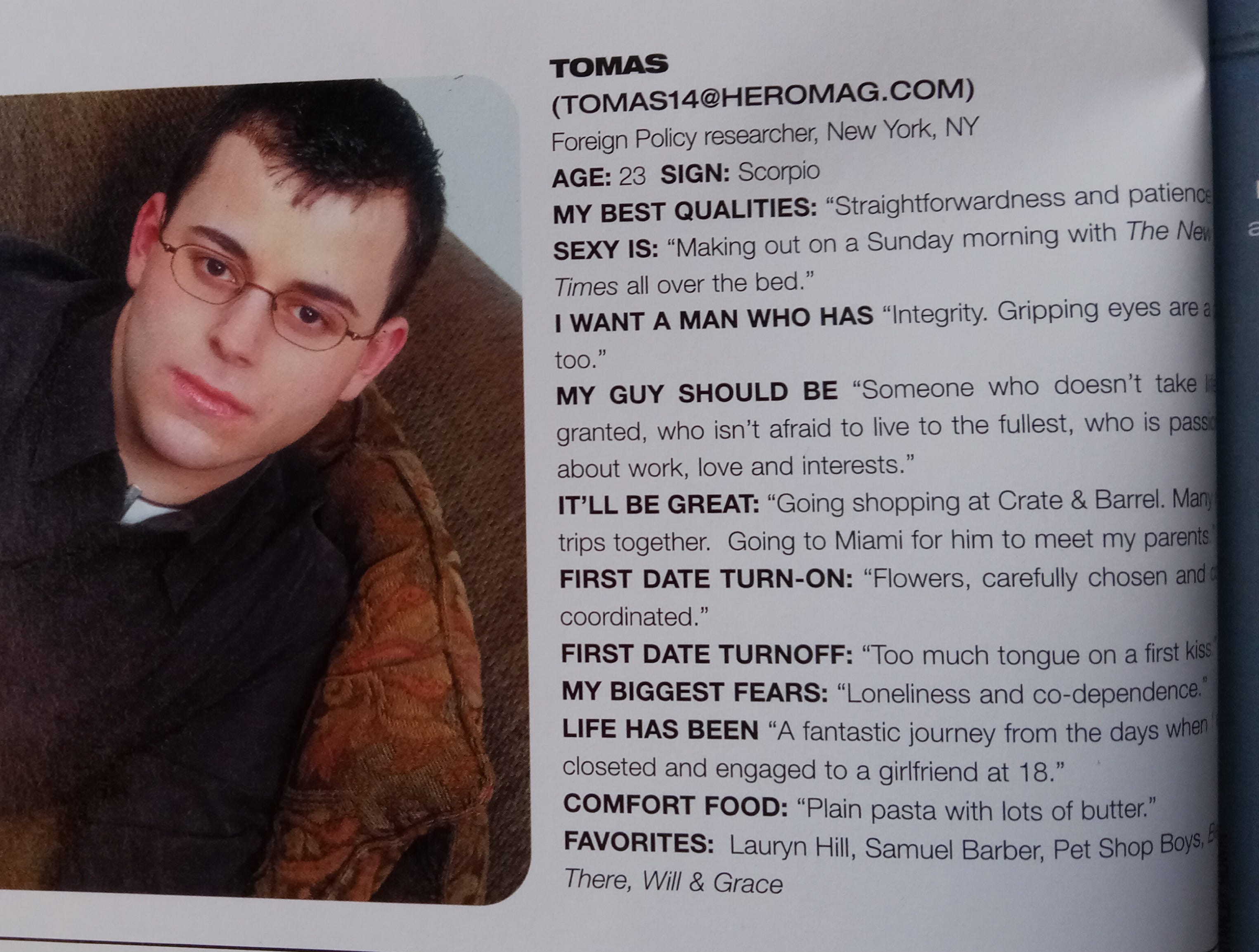
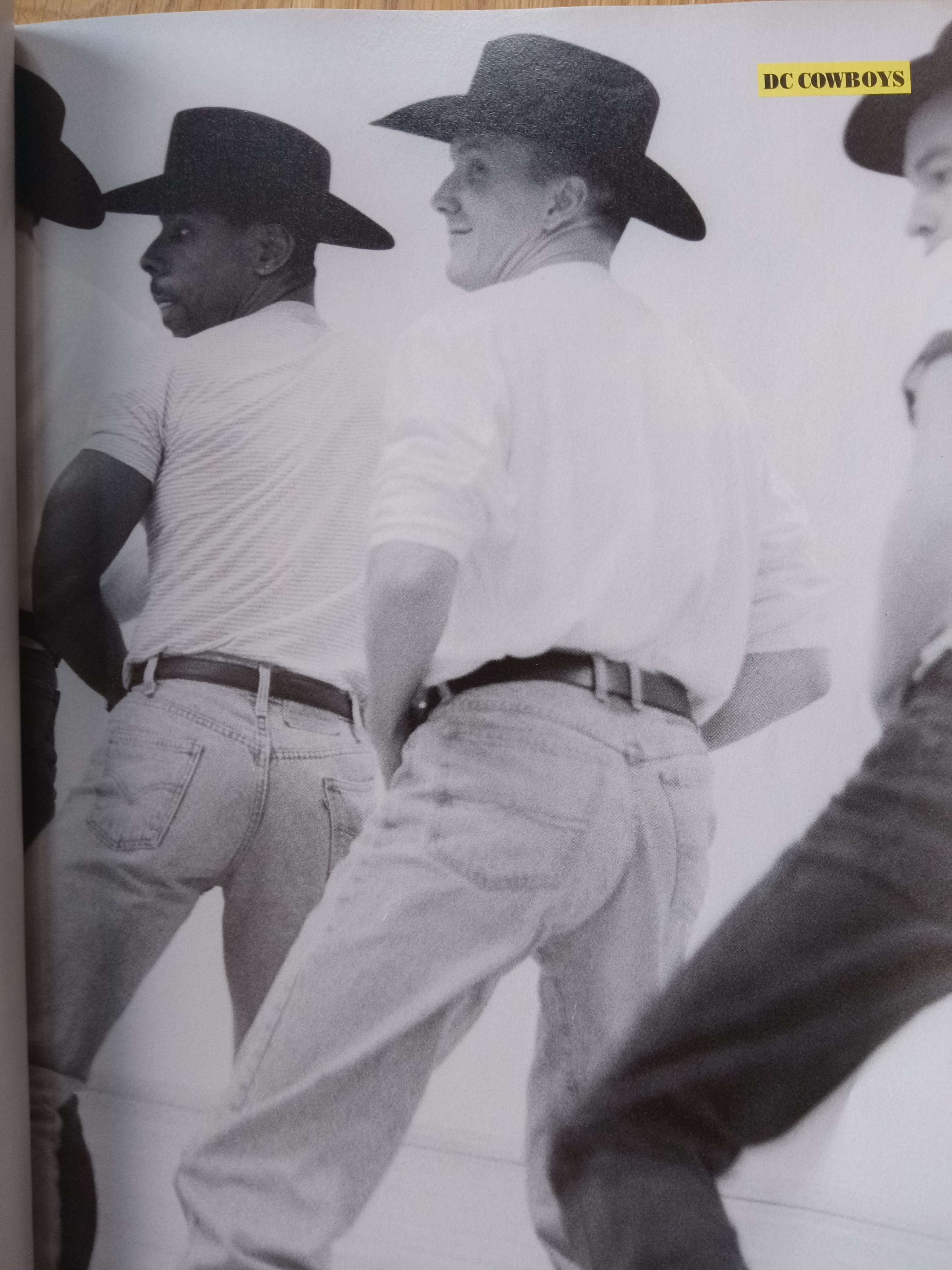
Readers who would find such guys eligible would also probably appreciate articles on pasta and line-dancing:

Or appreciate the unthreatening good-looks of this Chris Kattanesque model from a review of backpacks (okay, he is admittedly a would for me—which is how I get tricked by ‘vers’ tops):

Snore! But the dullness was the point. Most gay men are, after all, boring—most people are boring, and why shouldn’t they be?
A magazine full of hot people, or a (for sure less popular) magazine full of smart, creative, accomplished people, doesn’t ‘represent’ the community—and often doesn’t even represent an ideal to which boring people aspire, especially if that ideal is urban yuppie slut with a lot of cash to blow on designer furniture and clothes. The latter is probably the ideal purchaser (who cares if they’re a reader) of a magazine, from the perspective of potential advertisers, but what such people want is ultimately in its own way also quite dull—what passes for gay mags today, like Gayletter or the now-defunct (I think) Hello Mr. were essentially commercials for Bottega Veneta with tenderqueer puffpieces on Garth Greenwell or Michael Chang. I don’t know who wants such inoffensive NPR-meets-CharliXCX puffery, but not me.
Back to the monogamous-majority “rest of us.” Most gays, I’m assuming, are monogamous, or wouldn’t mind being so—that’s at least been true of my own life and world. And it’s true that this desire is, perhaps, not “represented” in our media as often as endless, navel-gazing explorations of the ethics of polyamory and open-coupling, which honestly wasn’t even interesting when gays were first over-sharing about it in the 70s.
It’s at best touchingly quaint that some people still think that what they do in bed and in their relationships is the frontier of ethical self-fashioning, and haven’t yet moved on to the current frontier: fiddling with your ‘gender’ (even this is surely on it’s way out—who knows what’s next! when sex/uality and gender are both old news, and playing around with race is still, pace Dolezal and Chu, more-or-less taboo, how will uninteresting people ever find themselves?).
One of my 'favorite’ gay ‘content creators’ is a middle-aged guy looking for love in Chicago and speaking out for all the fellow gays who want monogamy in a culture full of shallow hedonism. He’s like Larry Kramer in Faggots, if she were a personal trainer who didn’t read Proust. And he’s always going on (from the same angle, switch it up Sean!) as if masculine-of-center ‘regular guy’ monogamy-seekers with ‘good values’ were an oppressed and lonesome minority-within-a-minority. Twenty-five years ago, guys writing into Hero felt much the same…
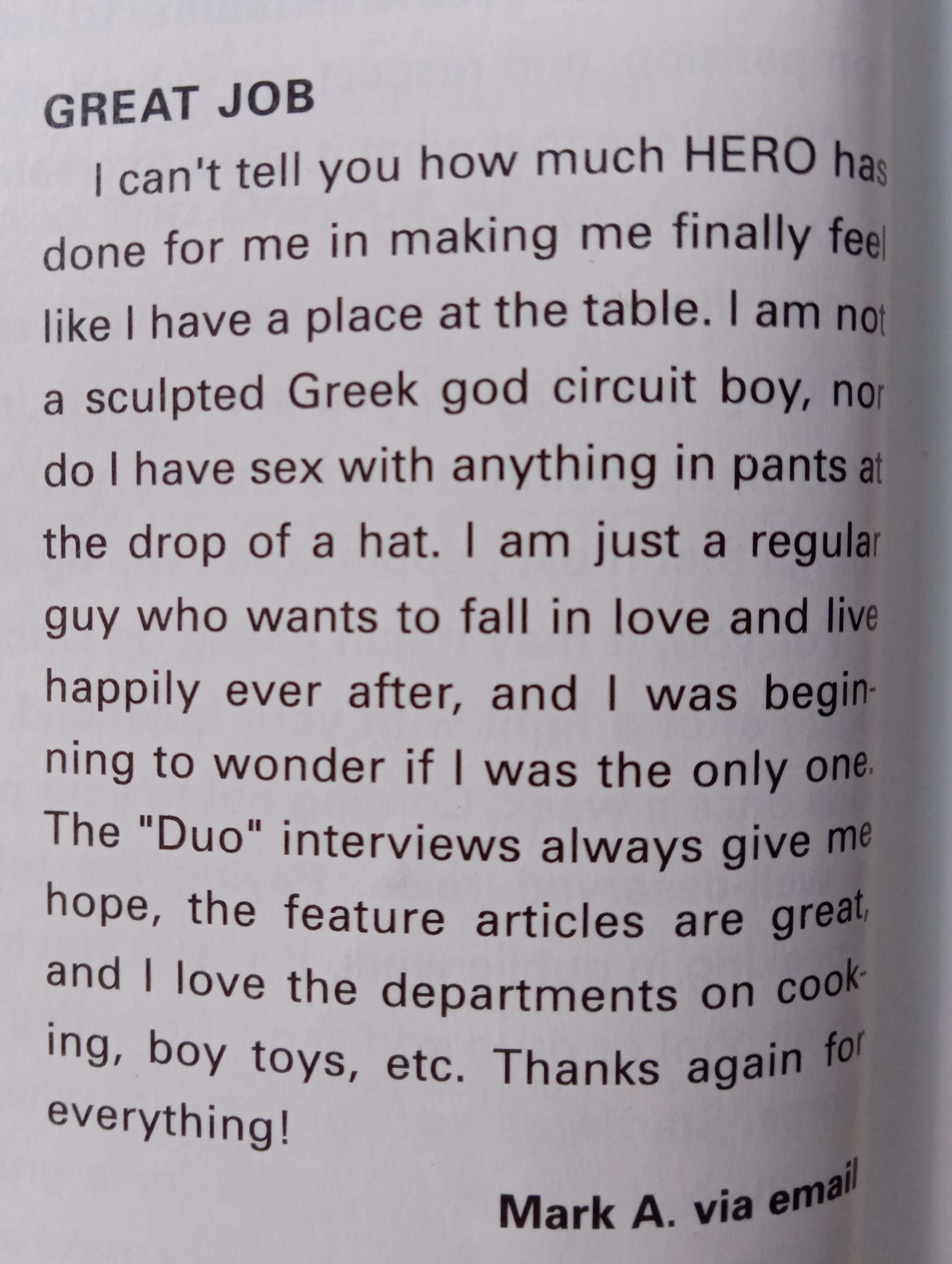
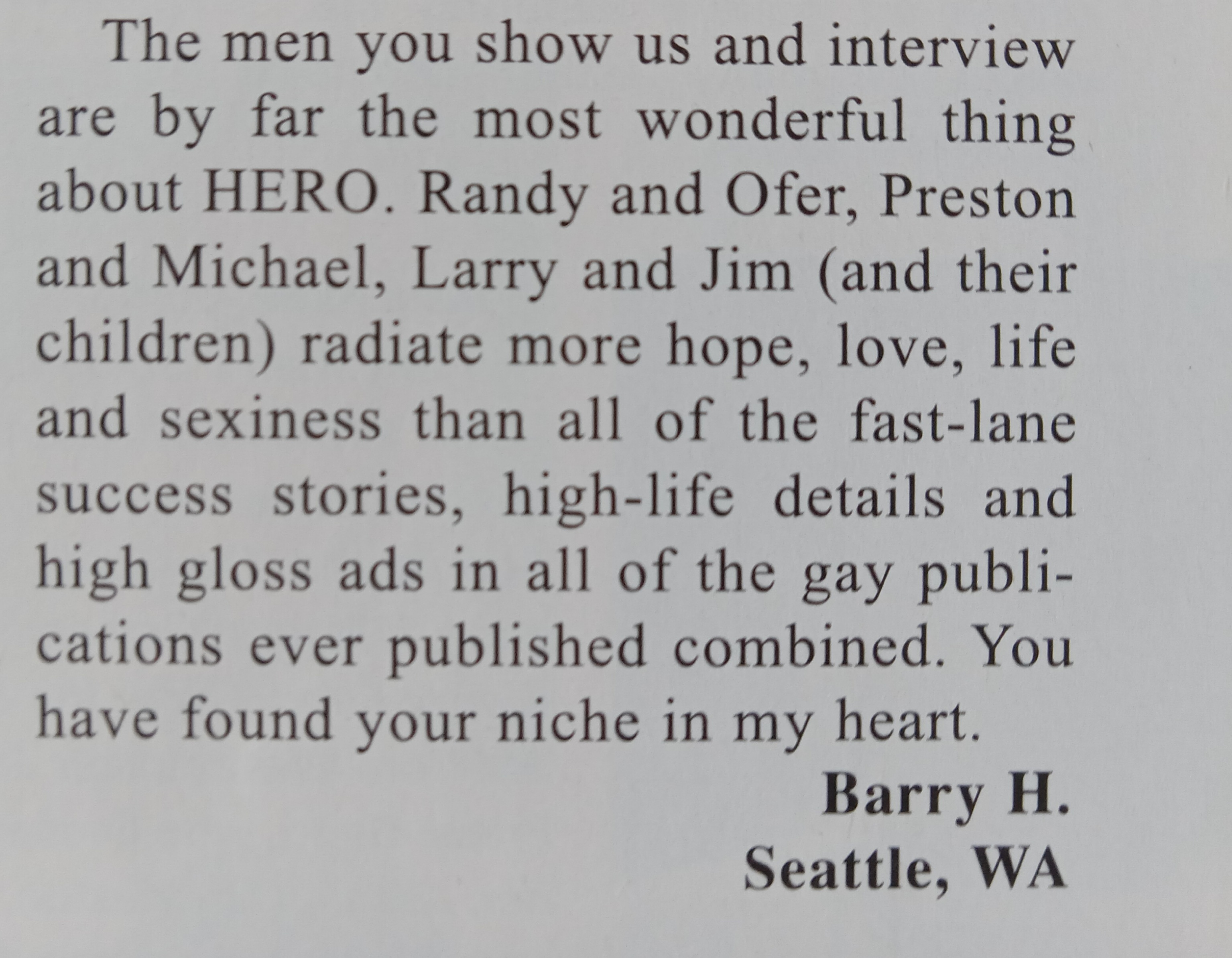
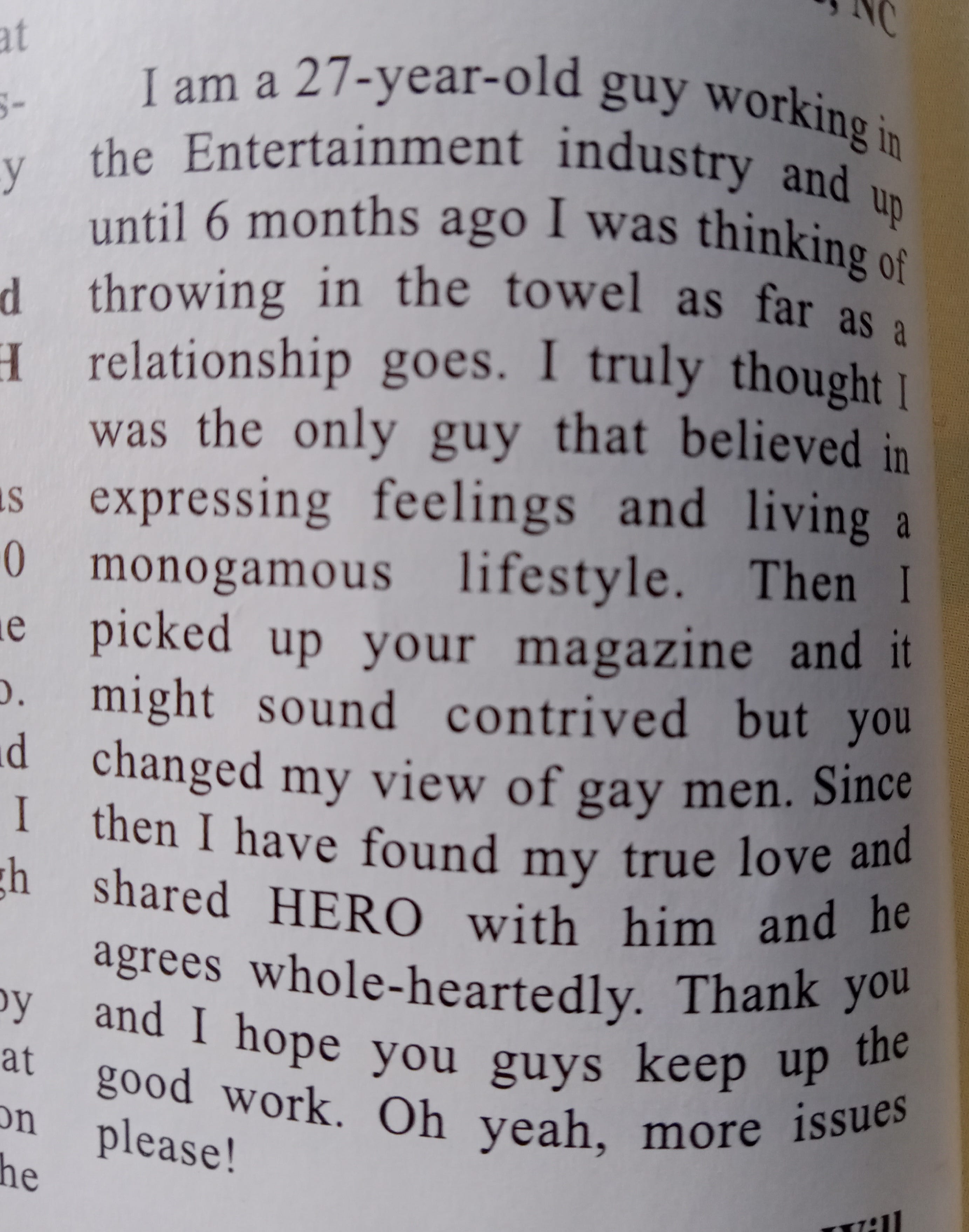
I take it that literally every gay of every type feels ‘excluded’ from the ‘community’ and wonders whether there is anyone else like him, seething about how hotter fitter richer whiter butcher/faggier guys get all the attention and representation. And I suppose everyone deserves a corner to seethe in (this one’s mine, go find your own).
Does anyone else…?

It wouldn’t hurt either, in principle, for gays in relationships to talk openly about how they manage to make it work—this was the idea Michael Denneny had in publishing Lovers and its less popular sequel Decent Passions, sharing long interviews with both halves of gay couples who were together in the late 70s and early 80s (who talked, notably, about how they negotiated things like open-ness, topping/bottoming, power dynamics, etc). But, as with Drag Race and other reality shows over the years, it seems like the ‘realness’ and possible value (or at least entertainment value) of such glimpses into ‘real life’ has been diminishing as people get more and more used to stylizing themselves in public as having just-right qualities of relatable messy-but-not-too-messiness.
For example, this piece on the gay monogamous life of Bulldog from Frasier is, I guess, sweet, but neither going to be of much use to gays trying to get their sexual-romantic lives together nor even of a reader looking for fun (fun is how Dan Butler describes couples’ therapy!).
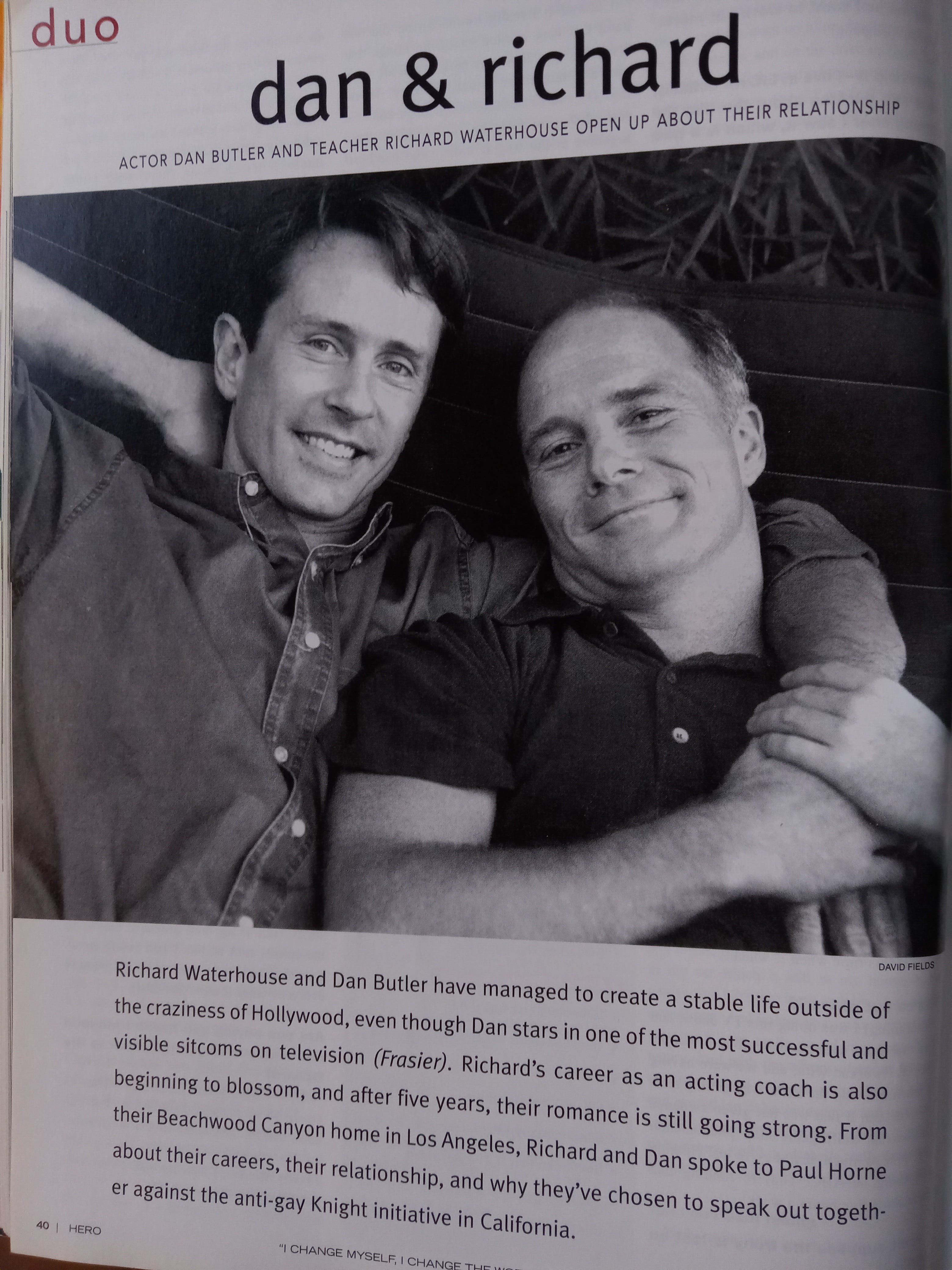
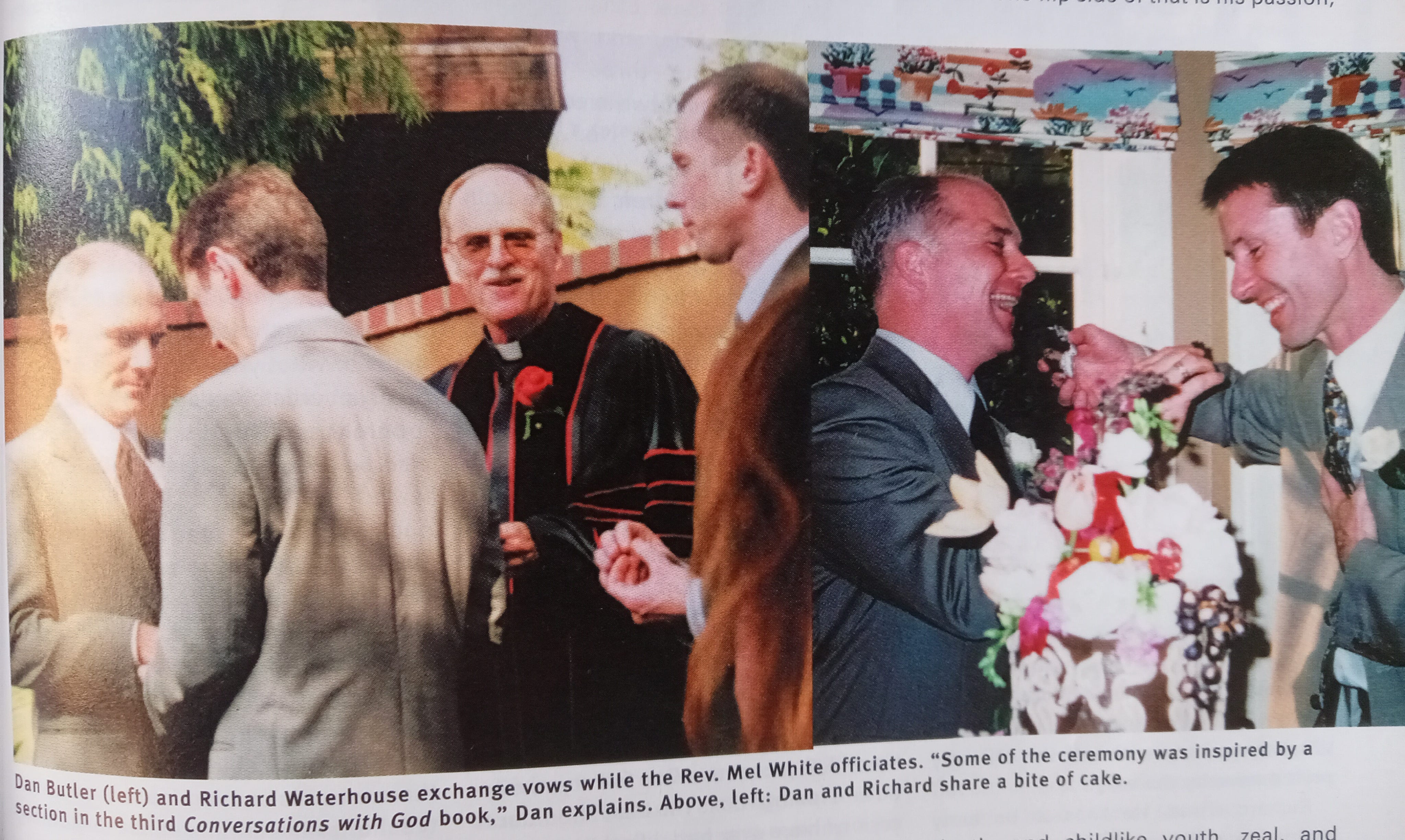
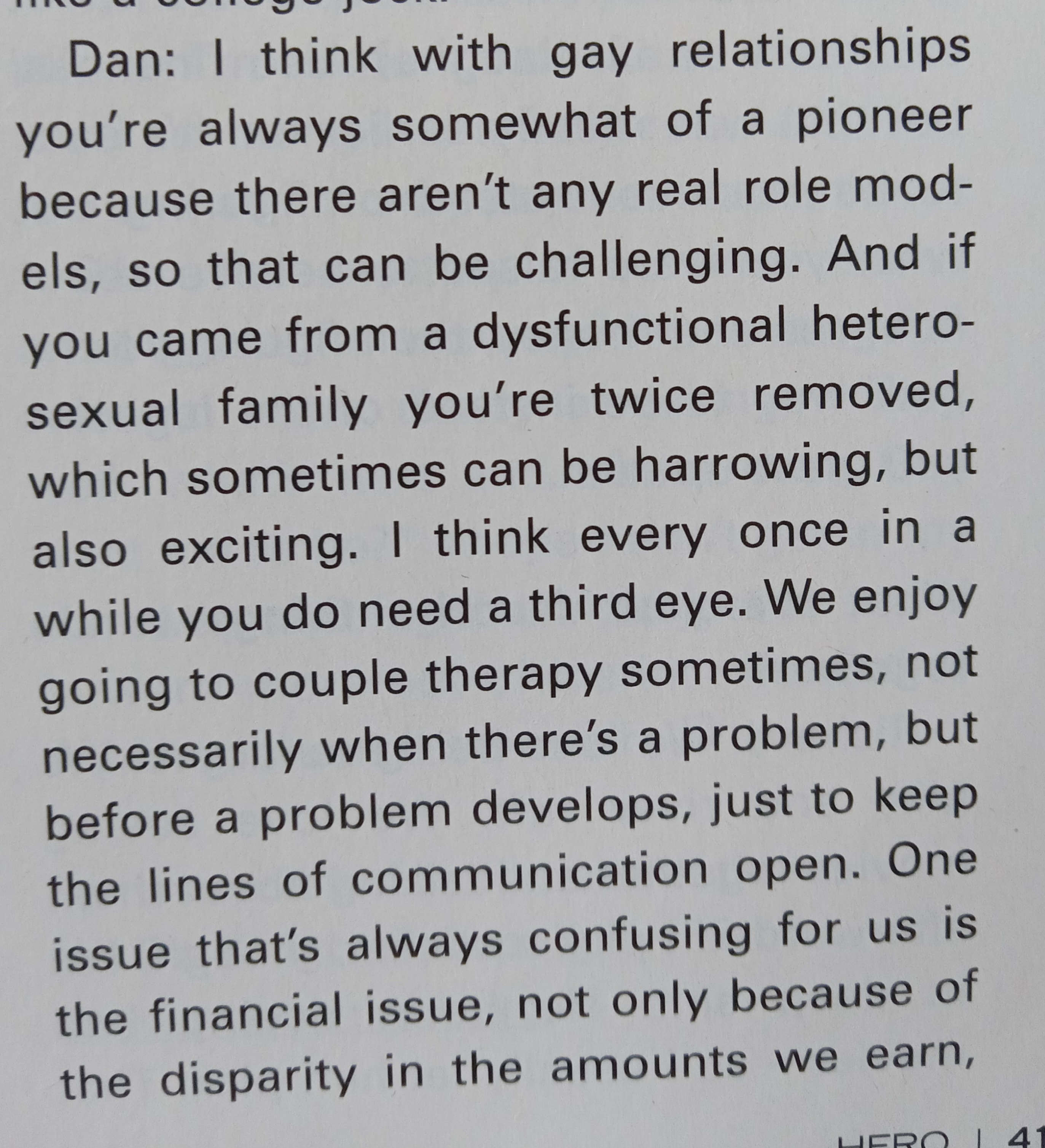
Imagine your big problem in life is your man, Bulldog from Fraiser, makes more money than you.
Well, if you’re not asleep yet—and why not?—here’s the Chris Kattan look alike again. Yowza!