Gerald Byerley (1937-1998)
Memorial for the Unknown Homosexual

Looking through old copies of Artforum, I maybe enjoy the ads more than anything else (much more say, than the hectoring, sometimes totalitarian, blustering of Michael Fried or Rosalind Kraus). Especially the ones artists take out for themselves, the ones that are themselves art. The most famous is Lynda Benglis with a dildo, giving what Annie Lennox only wished she could give, looking like a white Grace Jones. I was baffled the other day by this one, from March 1979. It’s real ‘crazy artist’ hours, with the broken-up, repetitive text, some of it in faint pencil, and a hard-to-follow, mise-en-abime-y, way-too-personal narrative.
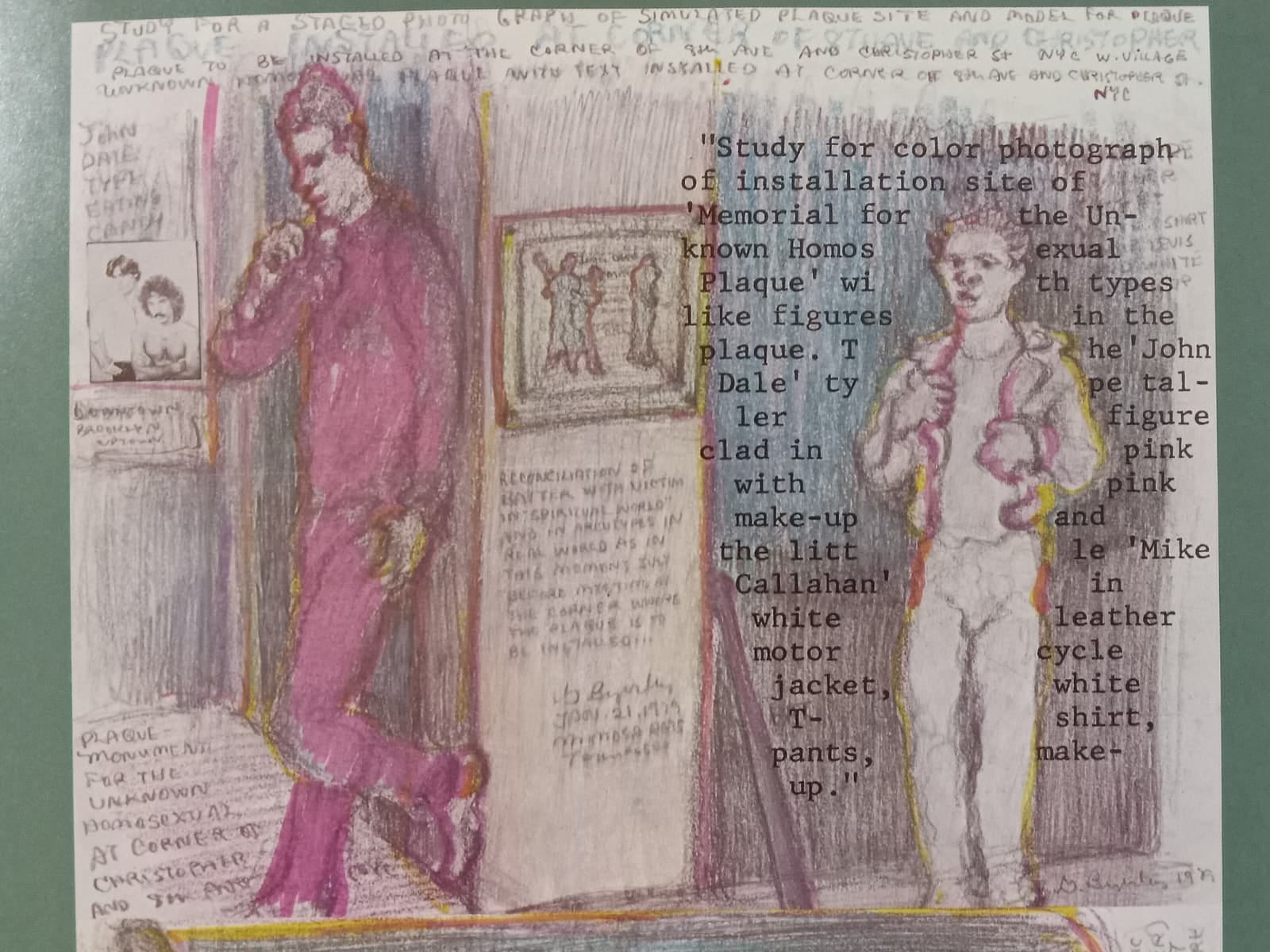
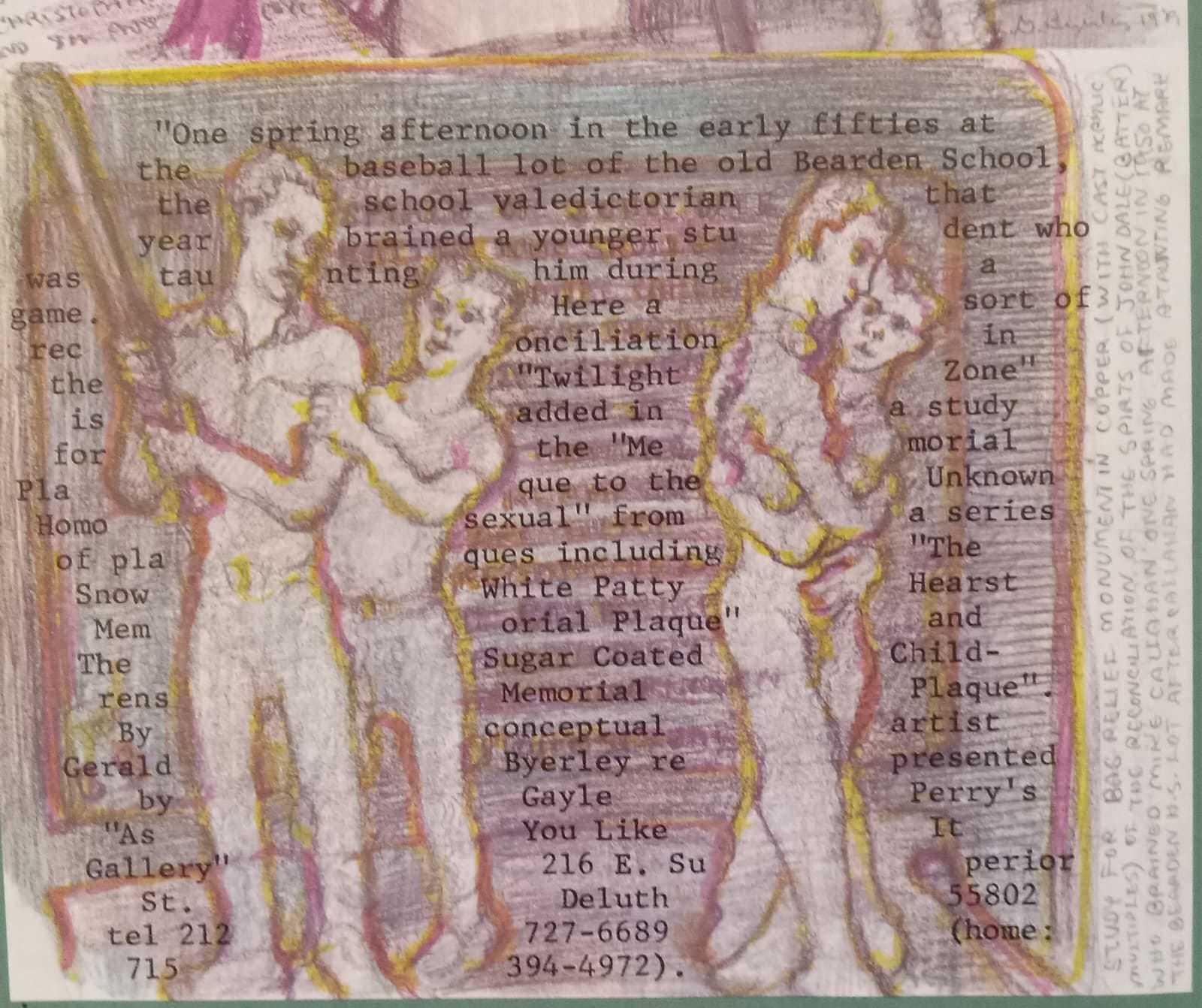
The image, we’re told, is a “study for a staged photograph of simulated plaque site and model for plaque to be installed at corner of 8th Ave and Christopher Street” dedicated to the “Unknown Homosexual.” So we’ve got a 1. a study 2. a staged photograph 3. a simulated plaque site (idk what this means) 4. a “monument” or “memorial” to be built on the basis of the plaque… or the photo… or the study?
Somehow this monument/memorial to gays is also dedicated to an incident, presumably in the artist’s own adolescence, when “John Dale” struck “Mike Callahan” in the head with a baseball bat. A gay bashing?
We’re told “John Dale” and “Mike Callahan” are “types” for the figures to be appear in the study/photo/plaque/monument. “John Dale” is in pink, wearing make-up, which is presumably what enraged “Mike Callahan.” In the monument, the two embrace. Thus for some reason and somehow the Monument to the Unknown Homosexual is to be a “reconciliation” of “batter and victim” in what Byerley calls, with quotes, a “ ‘spiritual world’ … ‘Twilight Zone’.”
I’m not so sold on “what if the gaybasher and gaybashed kissed?” And who are the two guys in the photo in the upper left corner?
Then again, public art in that corner of NYC to memorialize the gay struggle has been pretty lacking, whether it was George Segal’s terrible gay liberation statues or the New York City AIDS Memorial—this wouldn’t have been worse! Plus the colors and clumsy eroticism remind me a bit of gay Maurice Sendak’s illustrations of gay-ish Herman Melville’s boring Pierre.
I couldn’t learn much more than the following about the artist:
Gerald Durwood Byerley (1937-1998; one assumes these dates mean a death from AIDS) was born in South Carolina, taught for some time at Virgina Commonwealth University, and died in Tennessee. He seems to have had at least some friendship with fellow kooky southerner Charlotte Moorman, the experimental cellist who collaborated with Nam June Paik (to the extent anyway that she and Byerley exchanged postcards once, as documented in Northwestern University’s archive). He doesn’t seem to have lived in New York, but for a period in the 70s he was plugged into the New York avant-garde.
References to him as an artist, working apparently mostly in video (then very cutting edge) and collage (a classic gay form), as well as work “on denim” (?!) appear in Avalanche (1972), Arts Canada (1974), New York (1975), Cue: The Weekley Magazine of New York Life (1976), Artnow/USA (1983), and Art in America (1985). After that he appears to have only shown regionally in Tennessee, where he died, unmentioned by the national or New York art press.
You can see him playing with tape (maybe a video pun?) on public TV in 1973. And the Knoxville Museum of Fine Art has this hideous thing by him from 1981. The museum writes:
By the early 1970s, East Tennessee artist Gerald Byerley had earned national attention for his experimental video and performance work, including being highlighted alongside renowned artists Richard Serra and Paul Kos in a 1973 Boston Public Television documentary “Video: The New Wave.” By the late 1970s, however, he shifted his attention to paintings in which he often looked to moving imagery from vintage films as the basis for his compositions. In some cases, he captured such footage by taking photographs of selected scenes as they appeared on his television screen. By the mid-1980s, he began adding glitter to many painted compositions to reference their “silver screen” origins and ties to what he perceived as the pitfalls of consumer culture. This untitled work depicts a mysterious lone figure standing beside a vintage automobile along the Appian Way, an historic route in southeast Italy connecting Rome and Brindisi. It is a study for a larger glitter painting in which Byerley adds several cloaked characters whose identities and intentions are unknown.
Well glitter is a classic gay choice.
Otherwise it’s hard to find work by him online! He has one small-sounding folder at the Virginia Museum of Fine Arts.
His B.F.A thesis from Washington Univerity (1960), on ambiguity in abstract art, is, however, online. What an age we live in! It’s the work of a college student, to be sure, but has some interesting ‘readings’ of a few paintings, and definitely does not suggest the kind of primitivist neo-folk madman suggested by the sketch for a plan of a draft of a plaque for a monument!
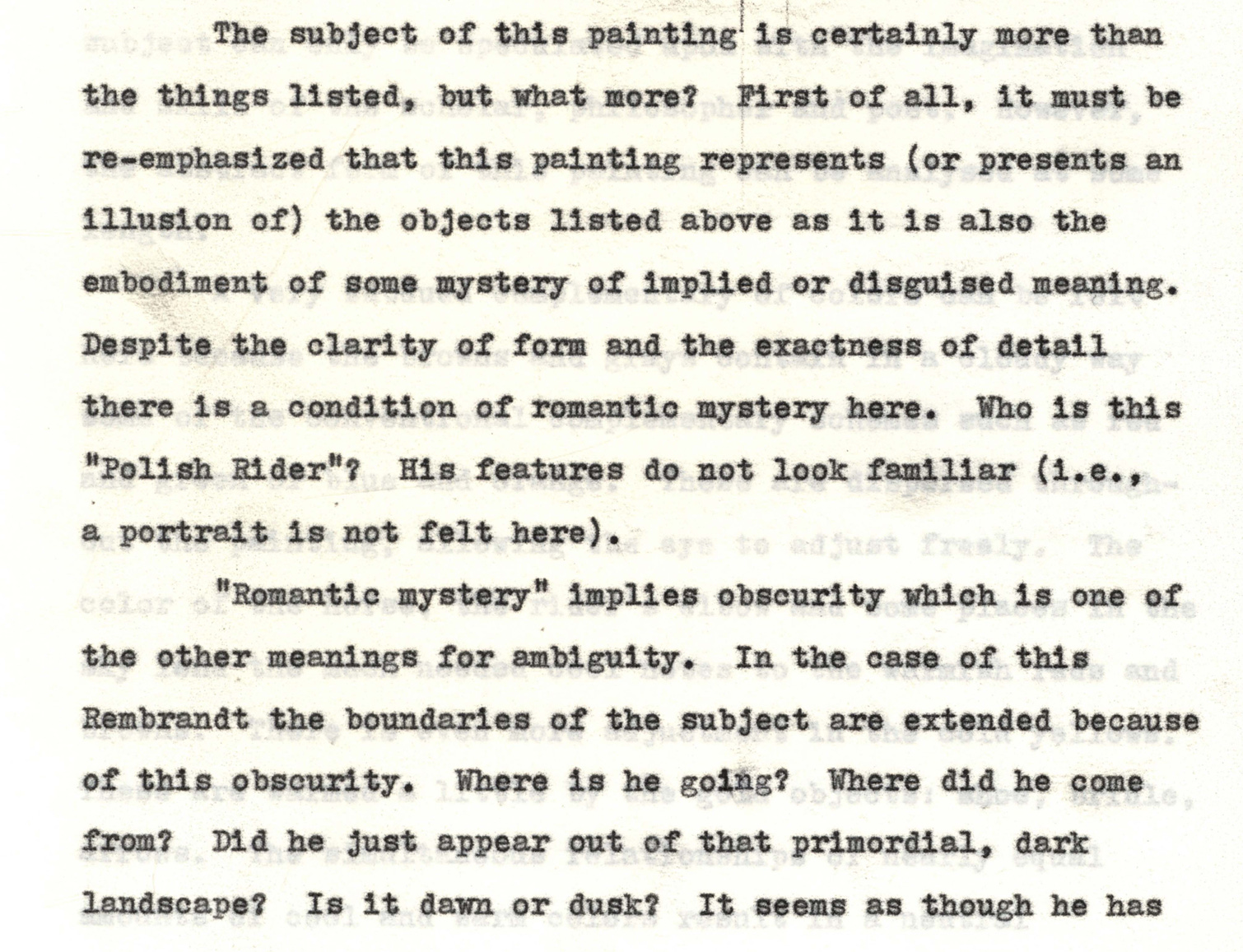
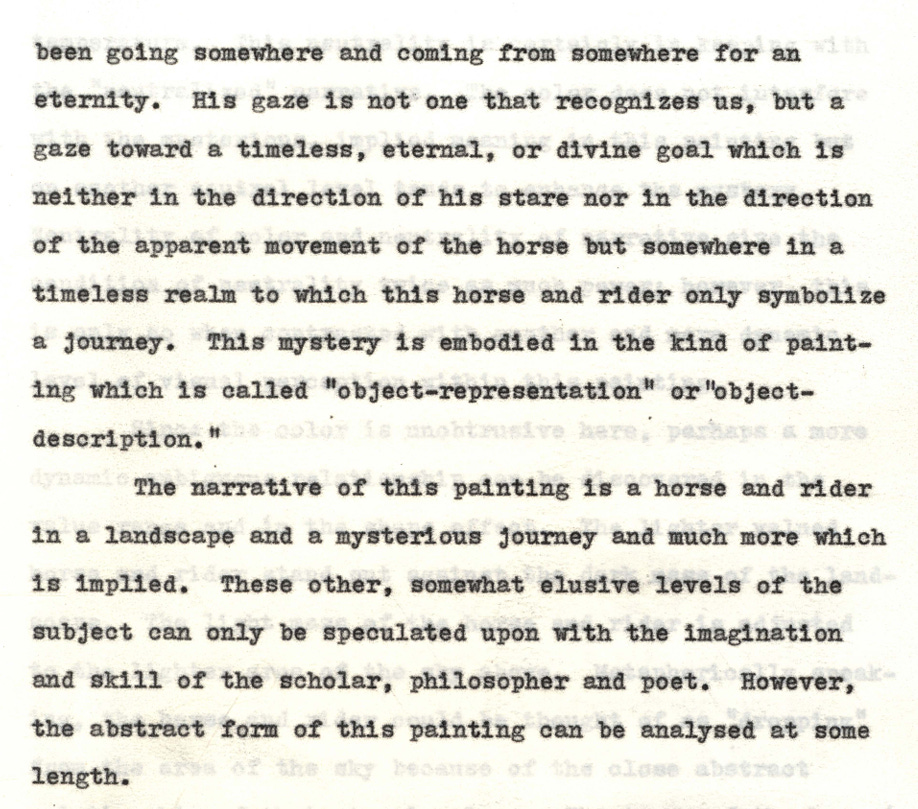
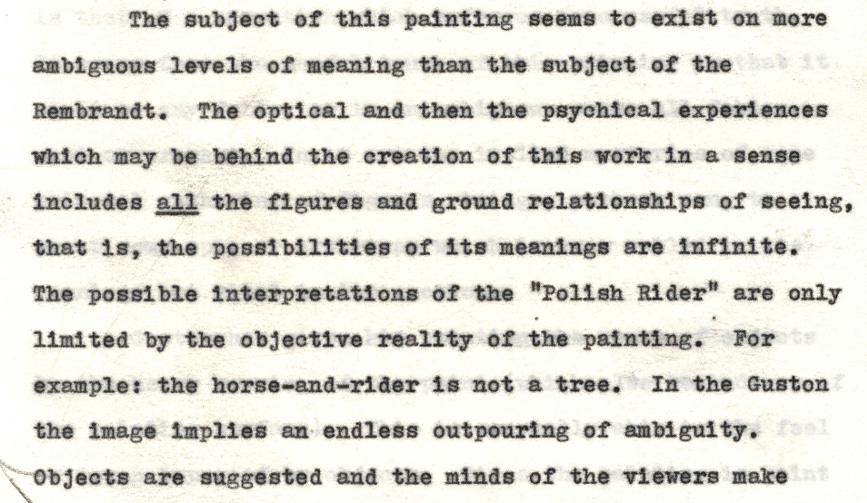
He starts with an interpretation of Rembrandt’s “Polish Rider,” to argue that art was highly ambiguous and mysterious even before it got modern and abstract:
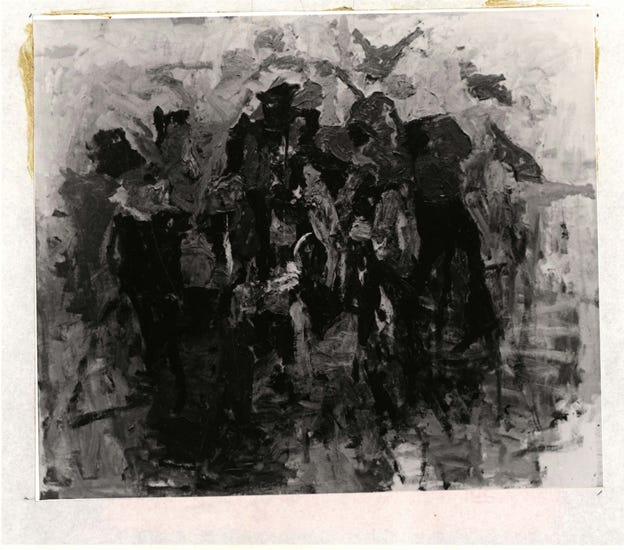
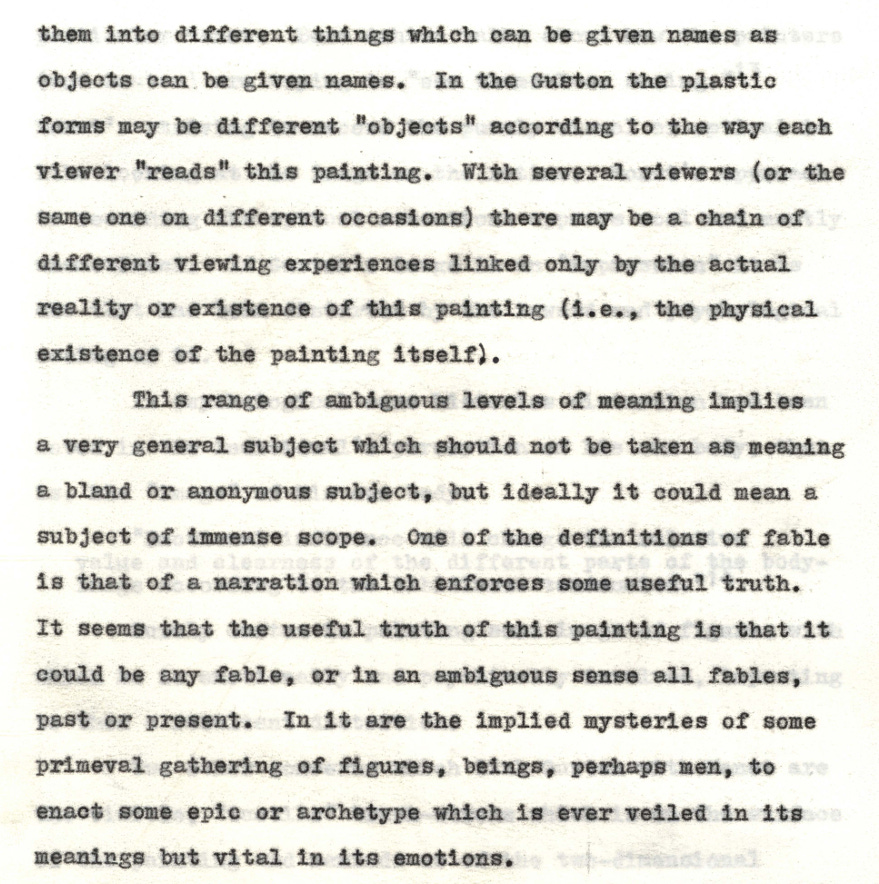
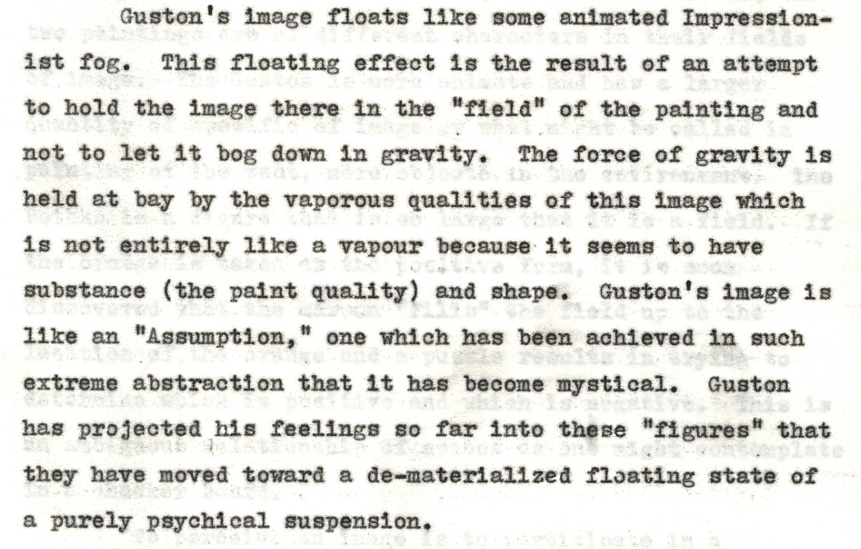
He then interprets Philip Guston’s “A Fable,” as an archetypal abstract painting:
Byerley looks at a few more paintings—a Rothko, a Motherwell, a Kline—and concludes that abstraction is in part a way of hiding from oneself and one’s inner violences:
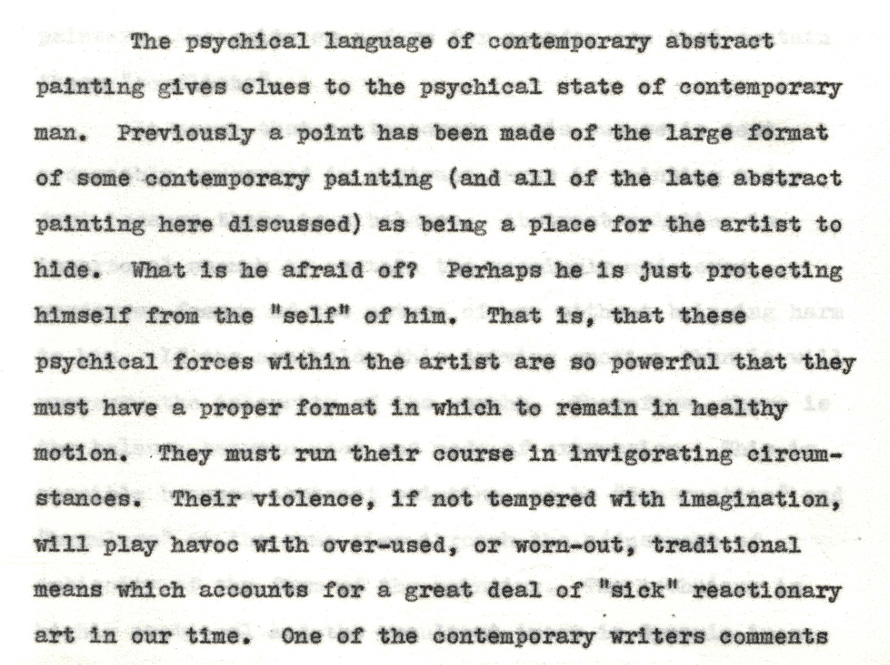
Certainly there were some closet cases, even then launching careers, whose abstraction looks a lot like a fear of being caught gay!
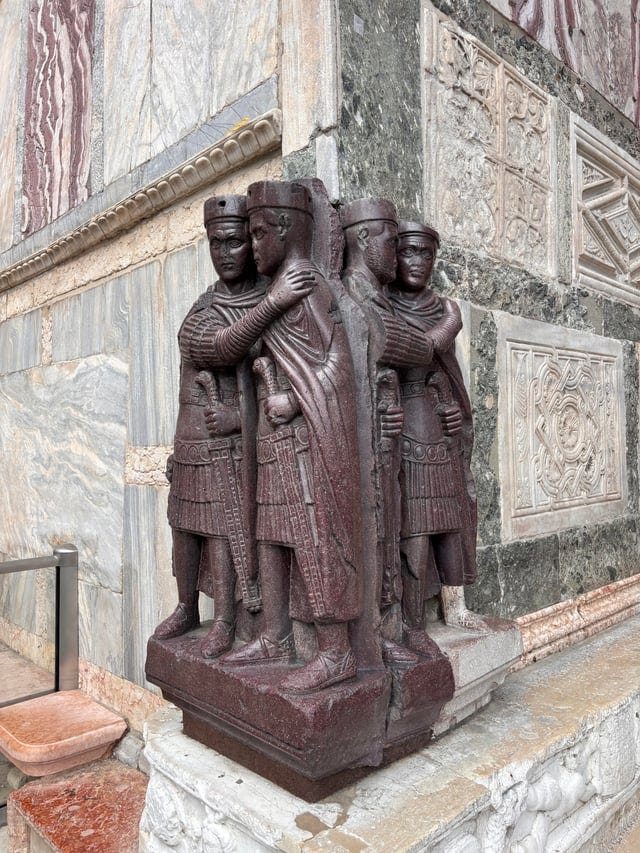
Isn’t it time for a Monument to the Closeted Artist? A statue of, say, Jasper Johns, Robert Rauschenberg, Ellsworth Kelly, and Cy Twombly intertwined like, the Porphyry State of the Tetrarchs.
Interesting find. Against the conclusion, if I get it right, I'd say that Rauschenberg and Johns were having their paternal battles with, and moving away from, Abstract Expressionism rather than hiding in its "fog and field." Another Artforum writer, Benjamin Buchloh, characterizes their project in these terms:
"the sheer flamboyant violence of Rauschenberg’s assault on pictorial and painterly conventions [of Abstract Expressionism] and the extreme subtlety of Johns’s ironic and melancholic mourning of the loss of modernism’s abstract morphologies."
Buchloh sees them as intermediaries between Ab/Ex and Frank Stella's "scriptural" black paintings. And however they might seem to hide their homosexuality in their post Abstract Expressionist strategies, it was all really an open secret in the 1960s art world.
Regarding Twombly, who was also saying goodbye to Abstract Expressionism, you can say he was simply transcribing and transmuting what he saw on bathroom walls and on pylons under bridges, which in the fifties were quite shocking even if in an ultimately pleasing way. People forget graffiti was often scratched on walls with the points of knives (as Tw's early work was) and whose "font sizes" seemed to get larger the closer they got to corners.