Gay World (nsfw)
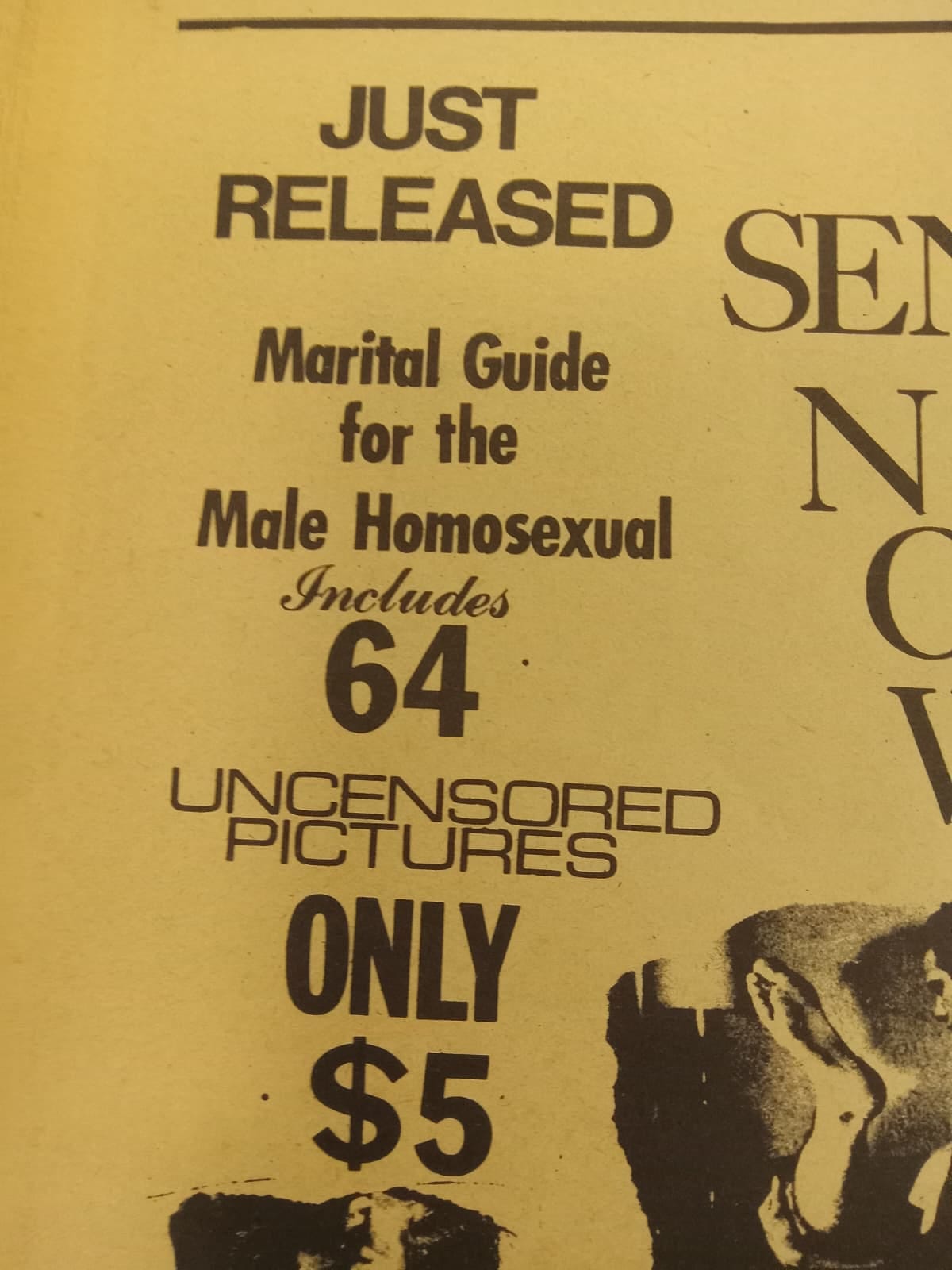
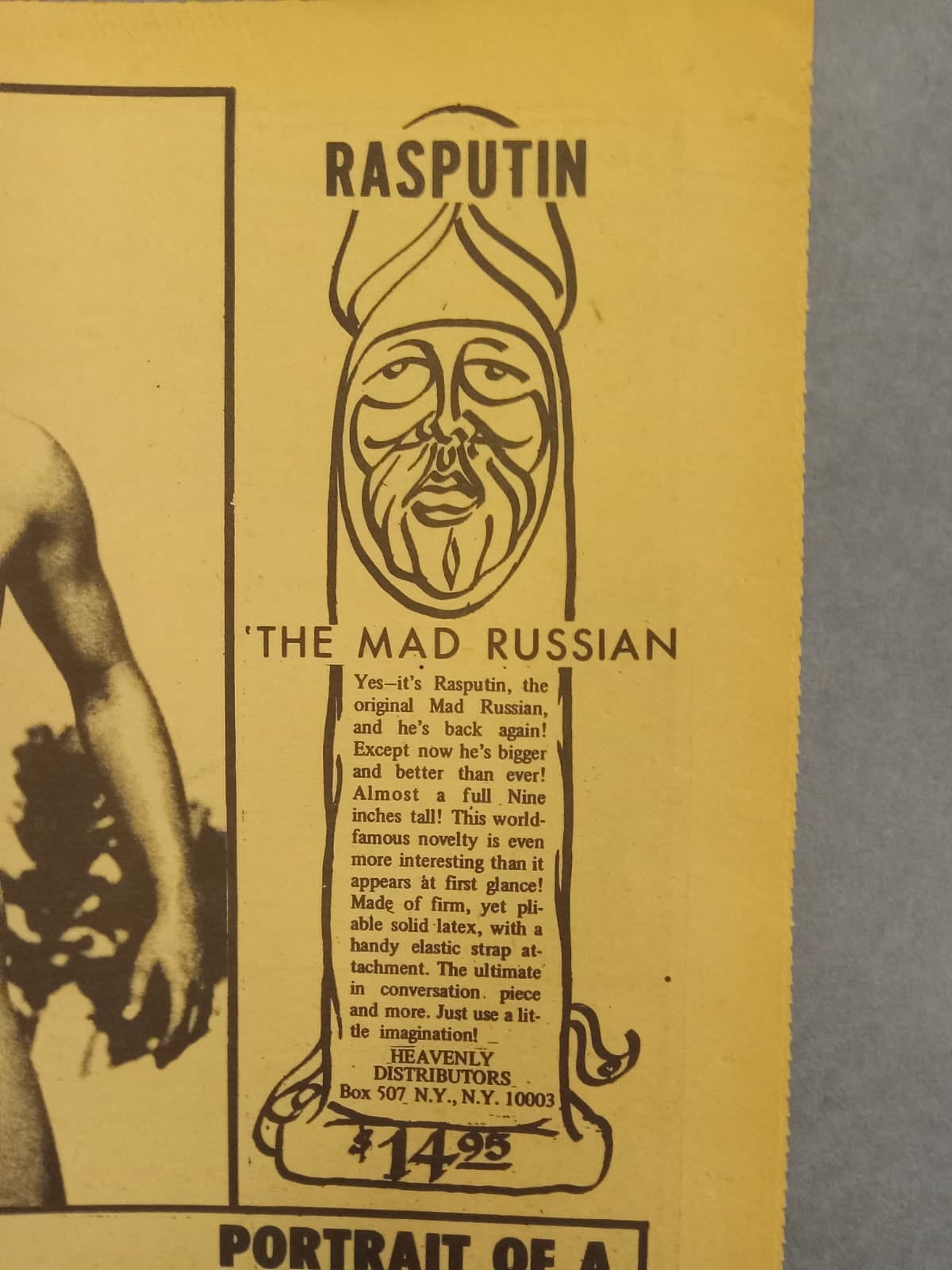
"marital aids for the male homosexual"

Over the past year or so, while working on the research for a book I’ll hopefully get written next year, I’ve been reading and writing a lot about the idea of a “gay world.”
The concept is, on the one hand, crucial to the thought and activism of Michael Denneny, who applied in his work at Christopher Street and Stonewall Inn Editions the ideas of “world” from his teacher Hannah Arendt (and her teacher/lover Martin Heidegger) to define a cultural horizon in which individuals can express—and in doing so exchange, alter, and expand—their different perspectives on matters of common concern.*
On the other hand, “gay world” was used widely already in the 60s to refer to what people would later call the community, lifestyle, culture, etc. A few such references were made by homos themselves in positive or winkingly self-affirming terms; “gay” was not yet exactly a militant identity, it was more of a codeword. More often, straight media published reports on the “gay world” to expose its inherently miserable, doomed inhabitants, as in this 1968 book (the cover of which, however, suggests that homoeroticism is as much a selling point as homophobia):
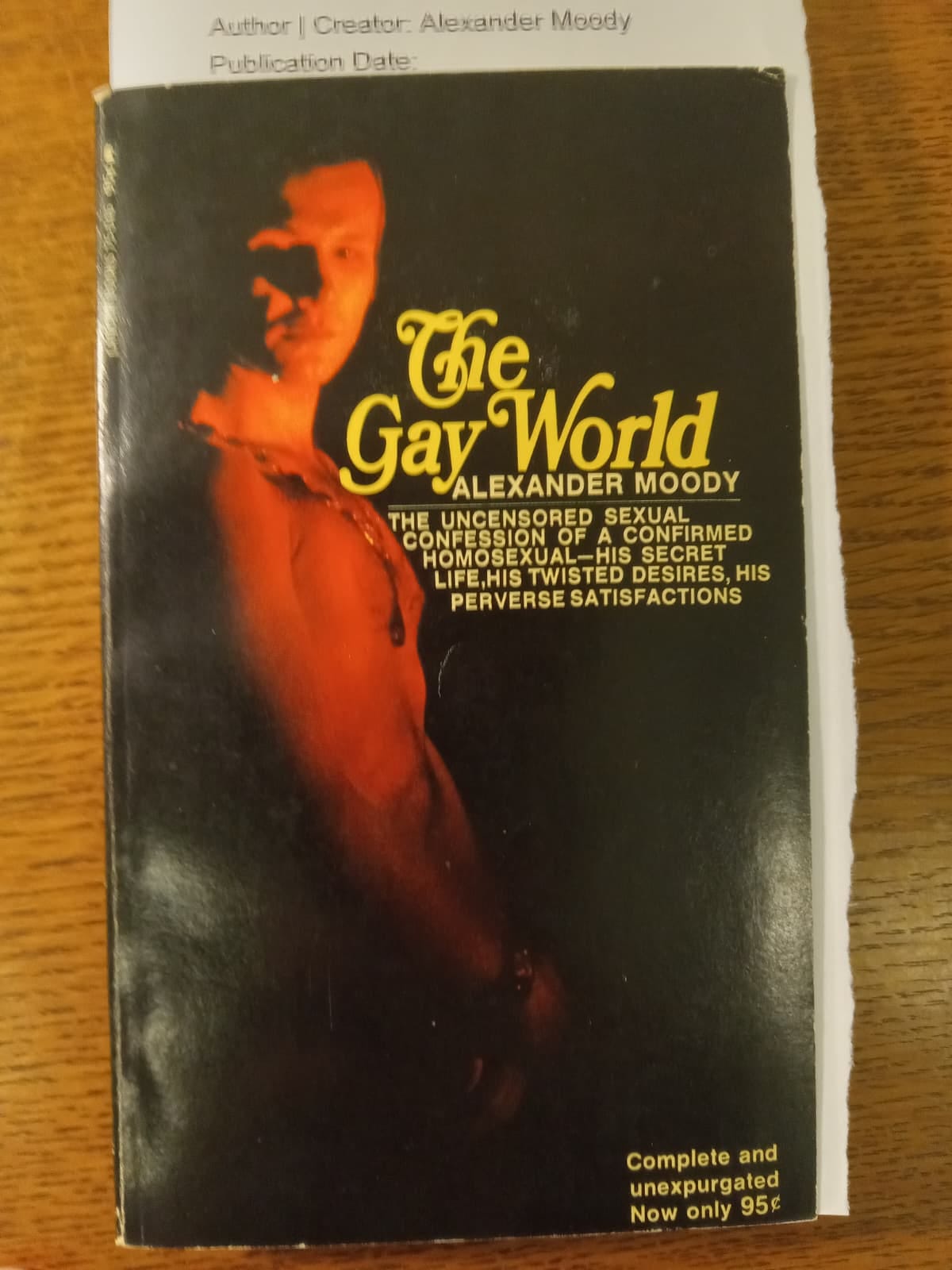
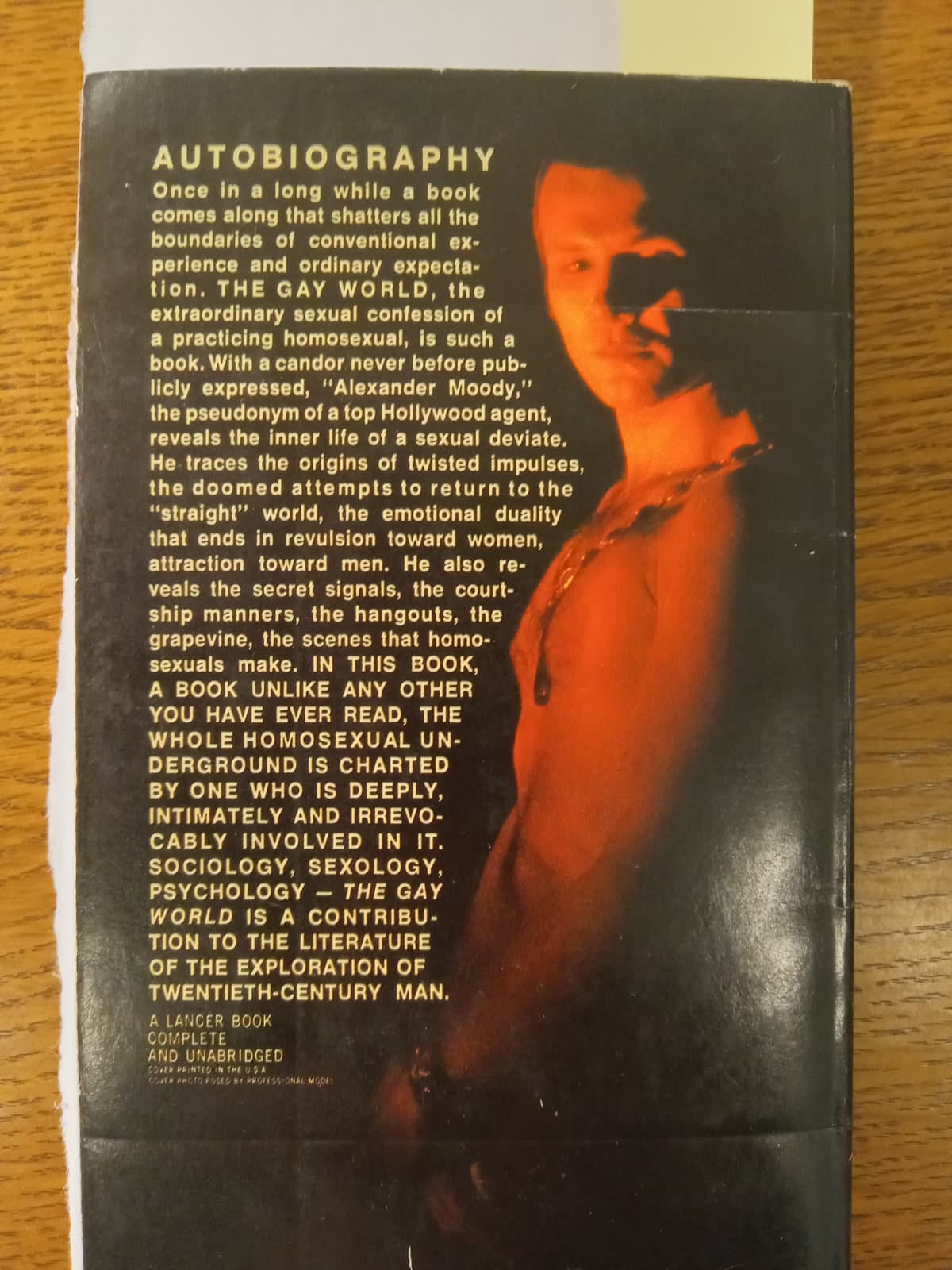
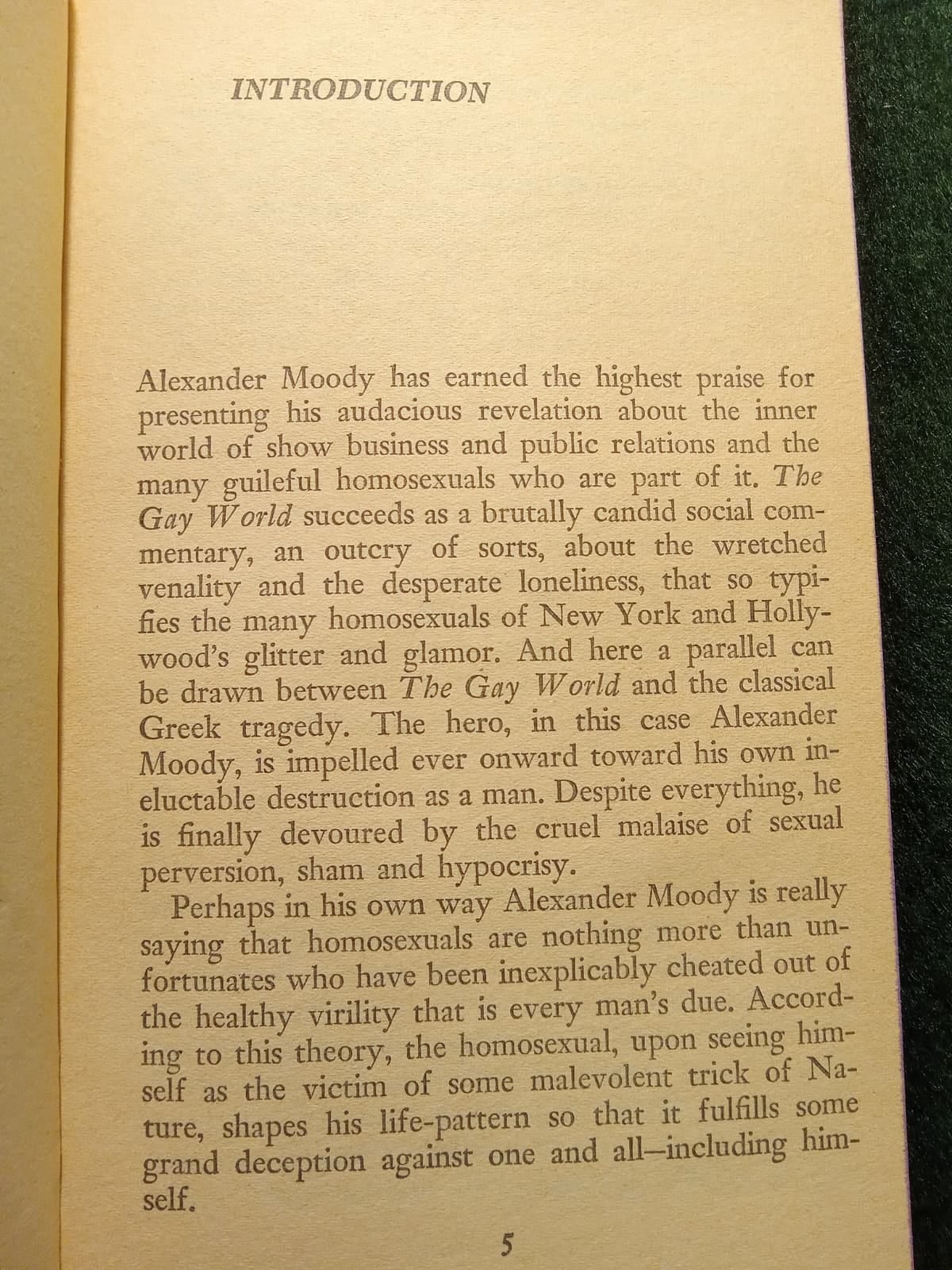
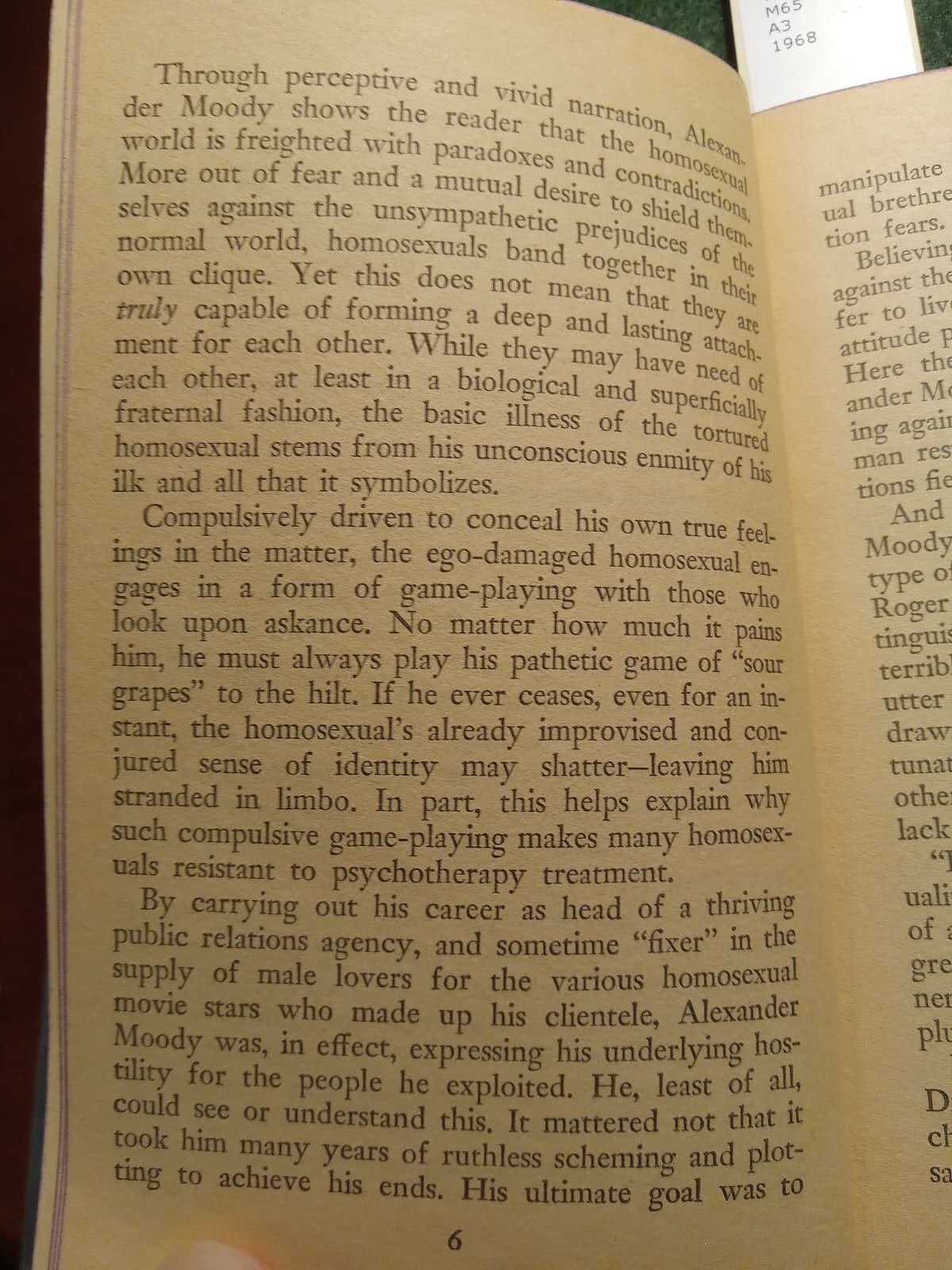
Part of what I want to do in my book—which will probably have “Gay World” in the title—is to explore how Denneny conceived of a “gay world” as a cultural-political horizon for dialogue, self-display, and collective power, defined and maintained by the reading and writing of imaginative fiction and non-fiction, and in doing so brought together his take on Arendt’s ideas with the already existing “gay world” lived by homos and homophobically imagined in straight media.
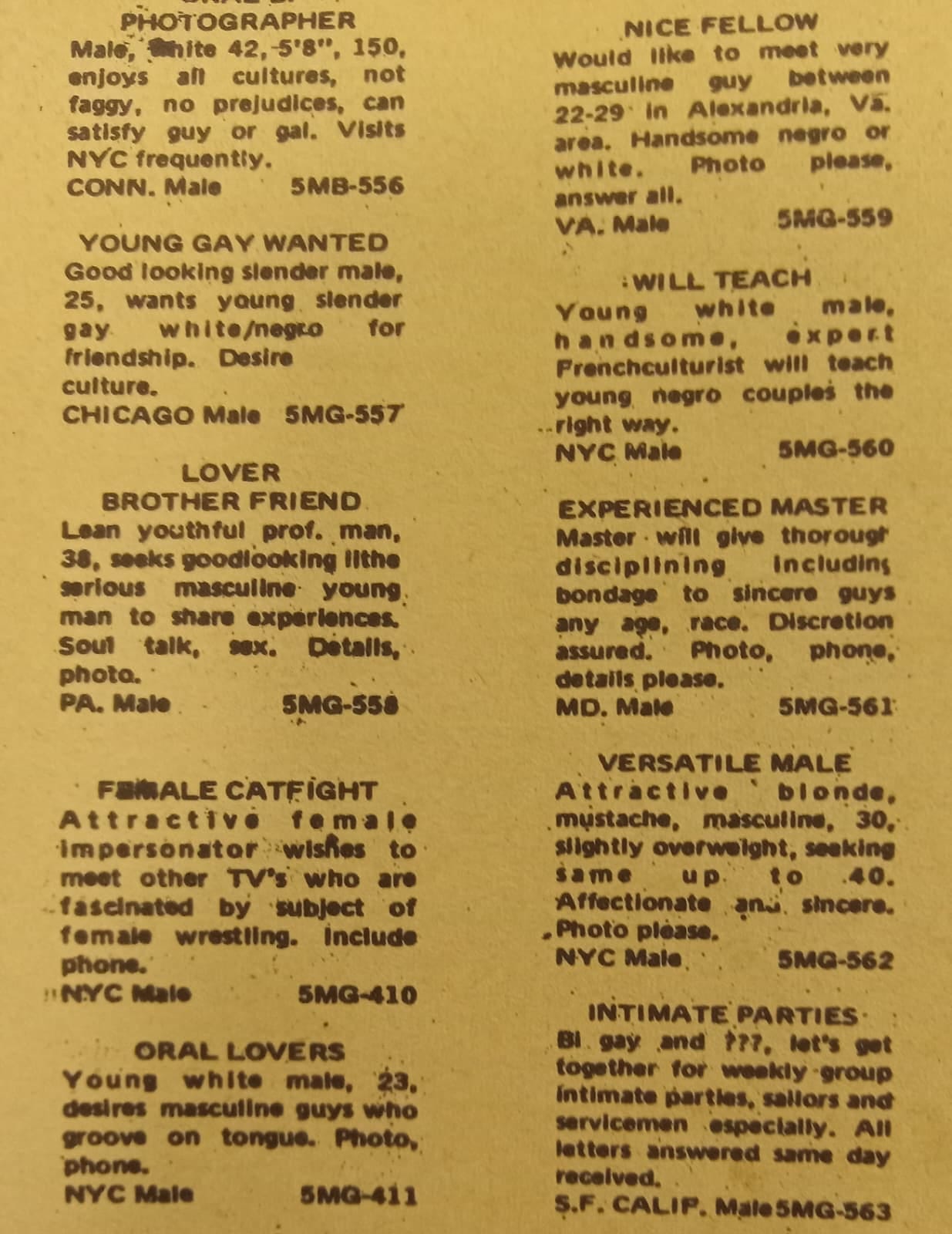
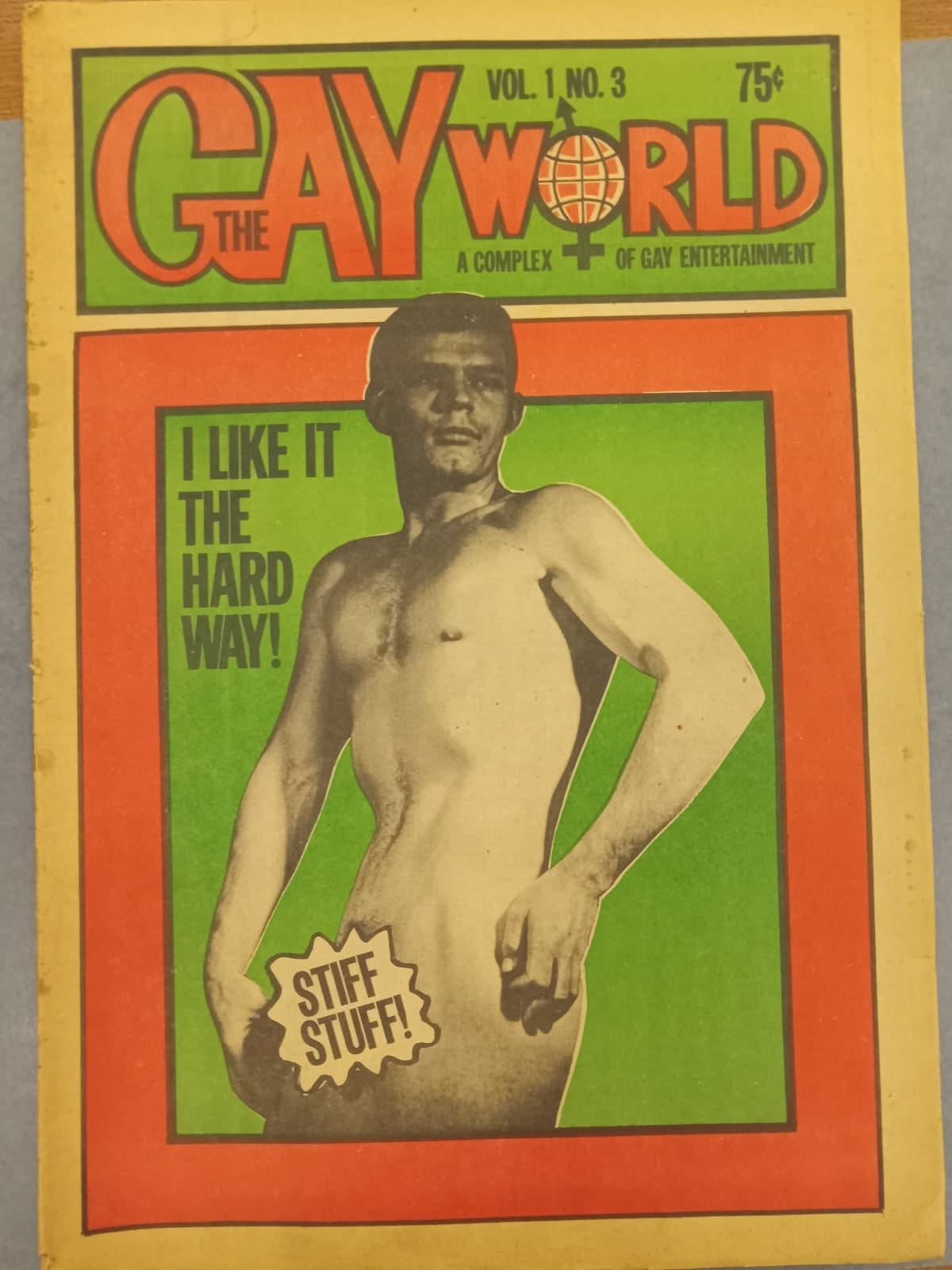
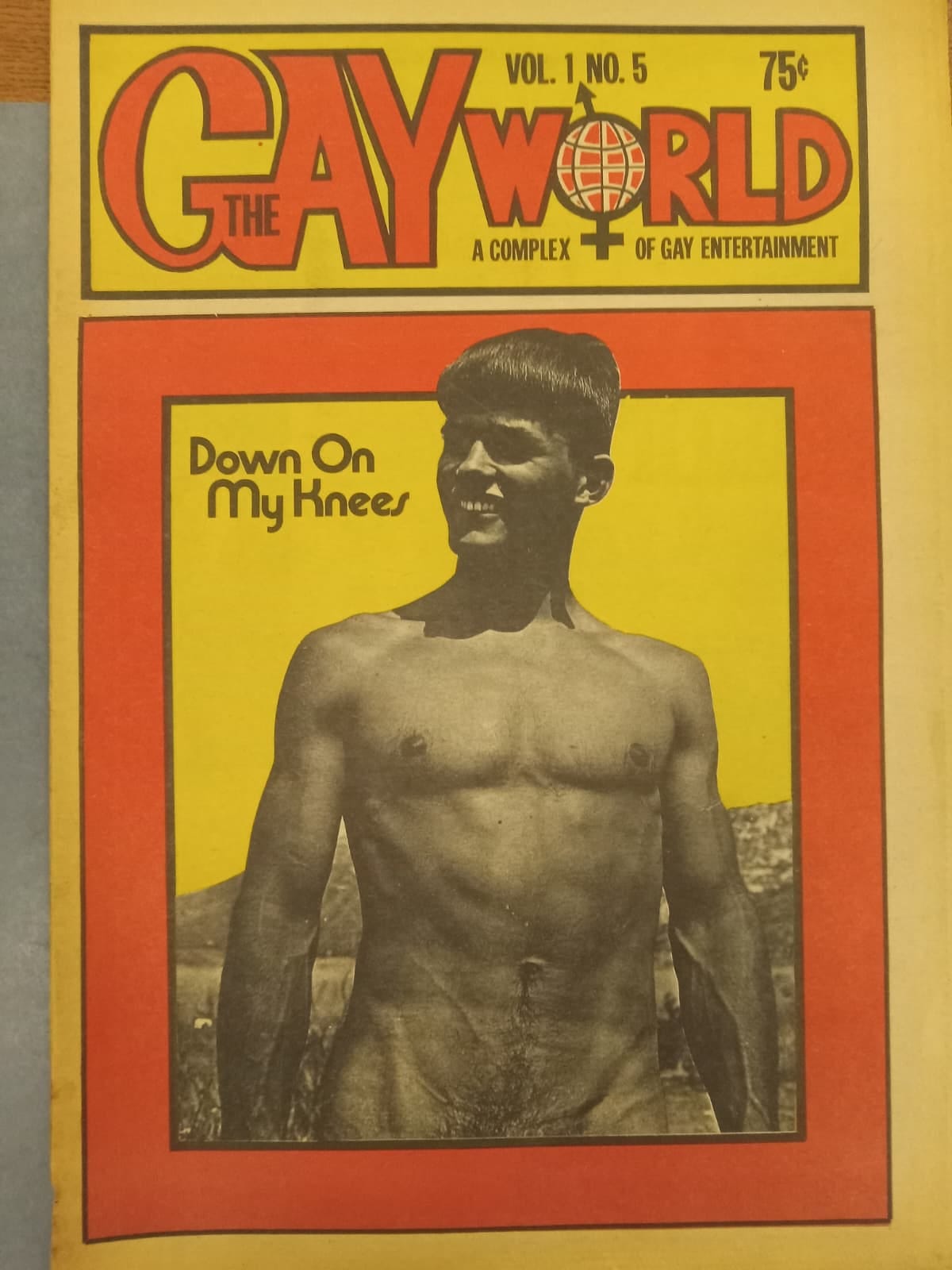
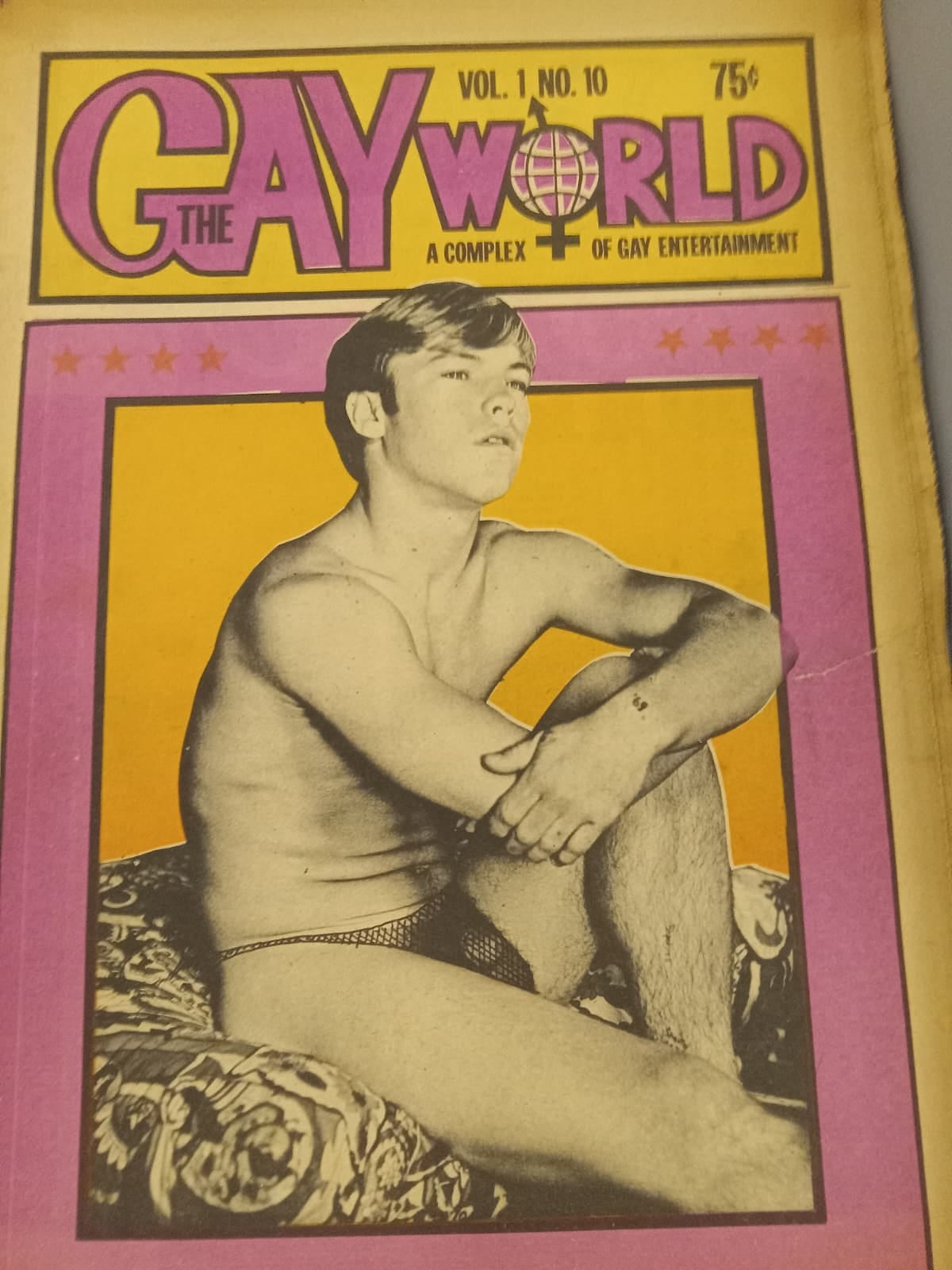
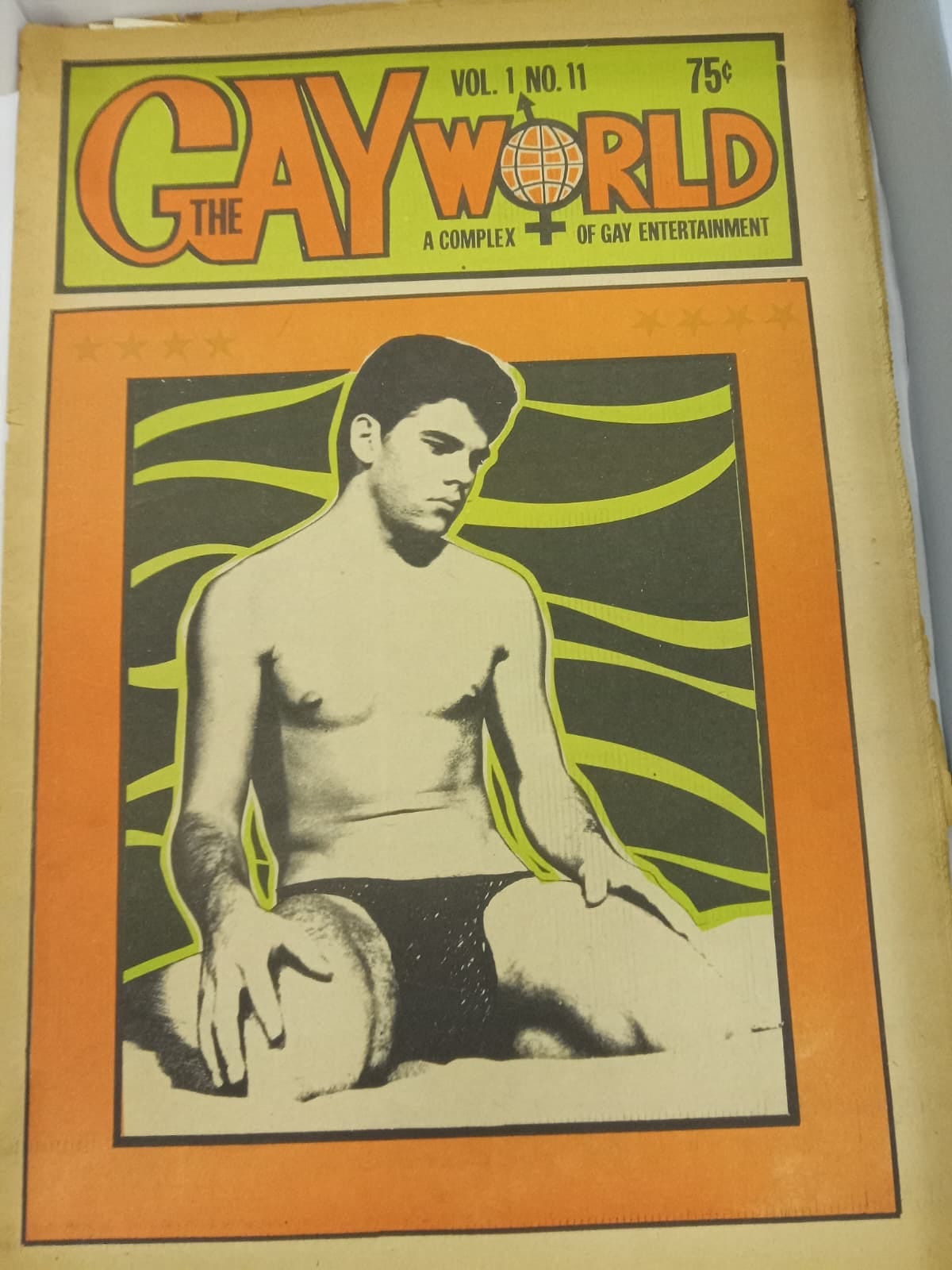
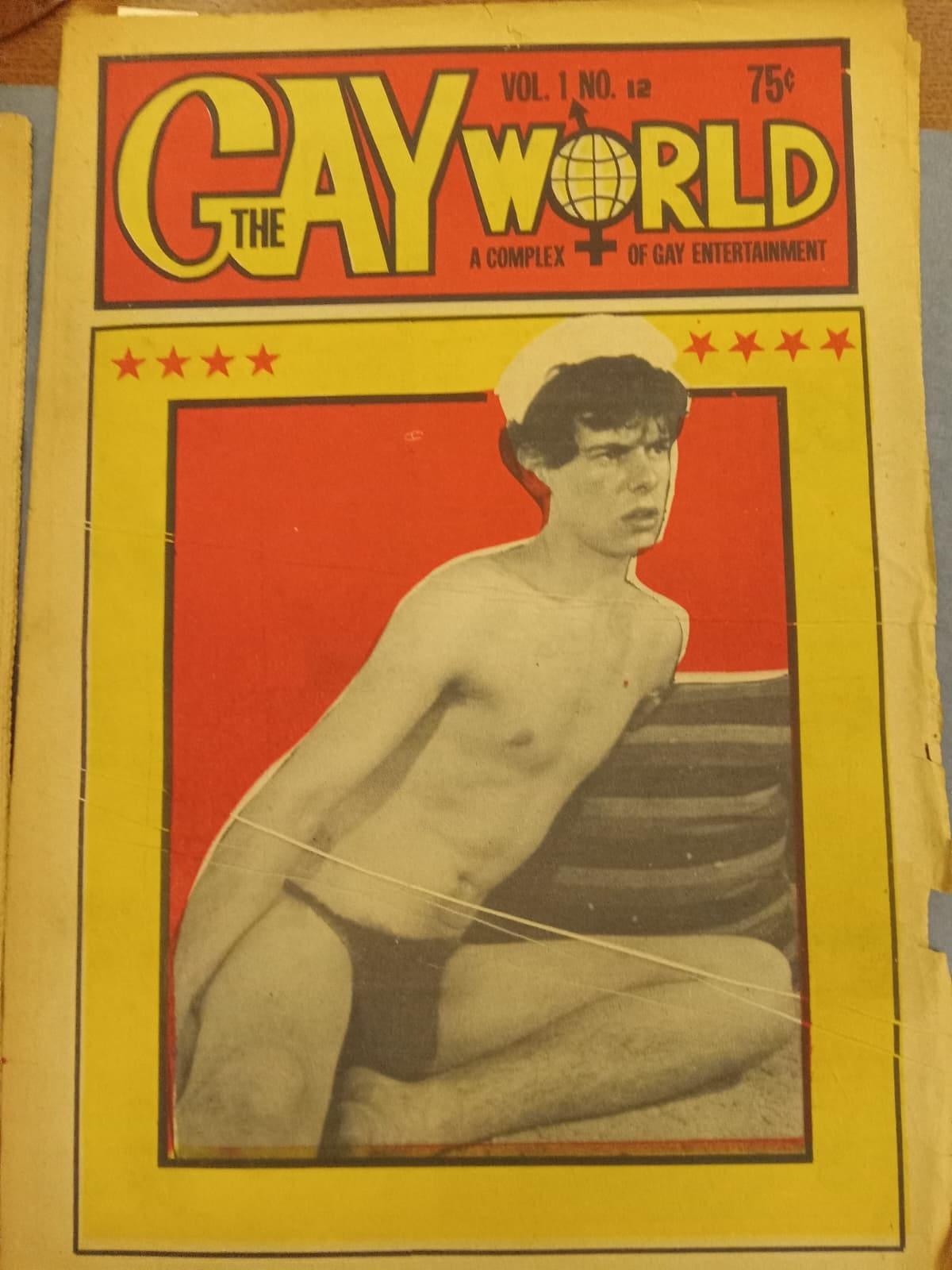
I was intrigued to learn recently that there was a gay publication named “Gay World” in the 1960s, a somewhat amateurish beefcake affair published on cheapo newsprint. I haven’t found out much about it (it doesn’t seem to have been particularly popular and its editorial team seems to have been using pseudonyms), but it has a typical mix of (often badly photographed) cute boys posing, some not-too-rough sex, ads for “marital aids” and quirky dildos, personals, and fiction. Without any concern to conceptually define the “world” of “gay world,” let alone to ask what Heidegger would say…

Now for some ass:
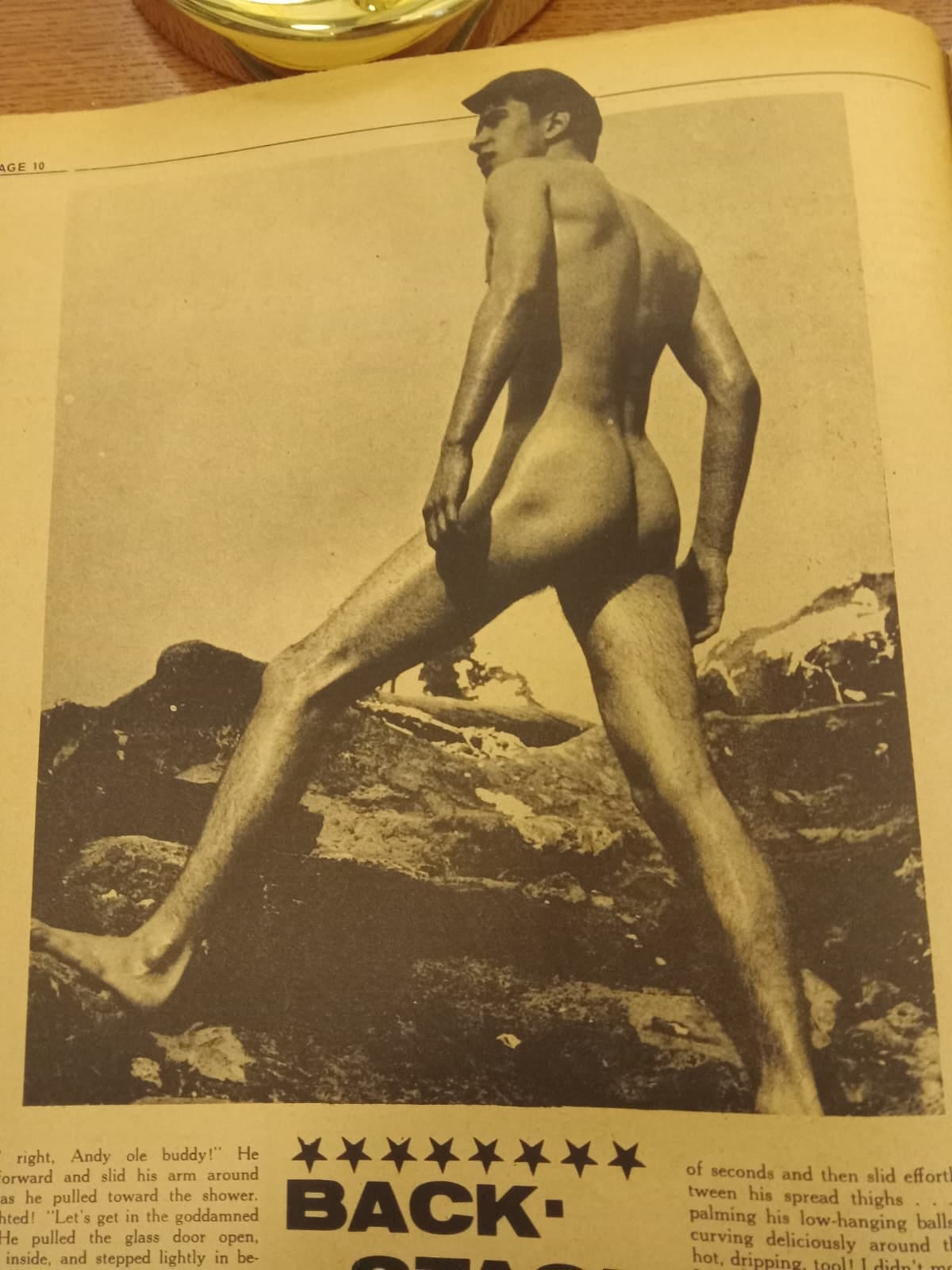
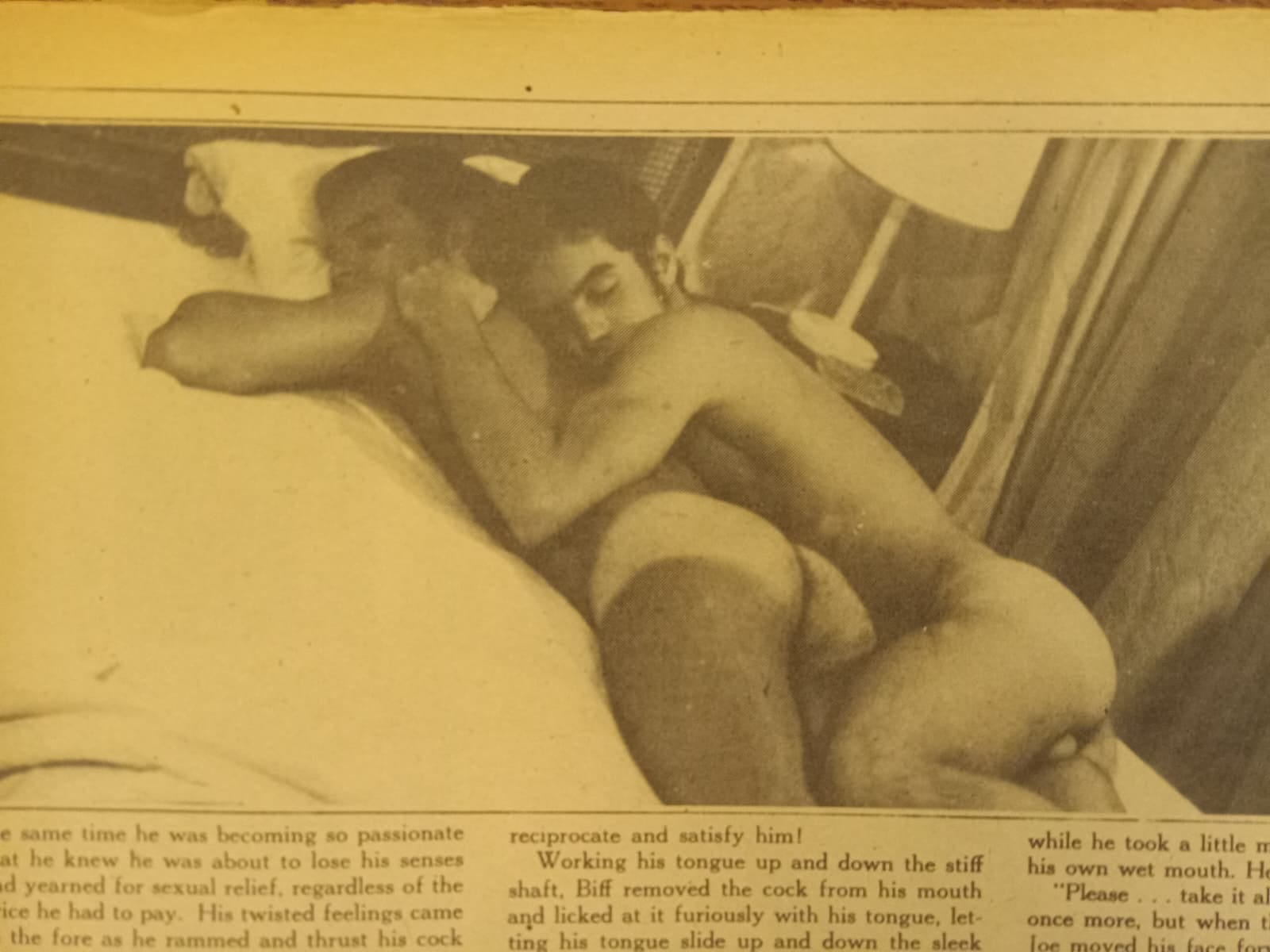
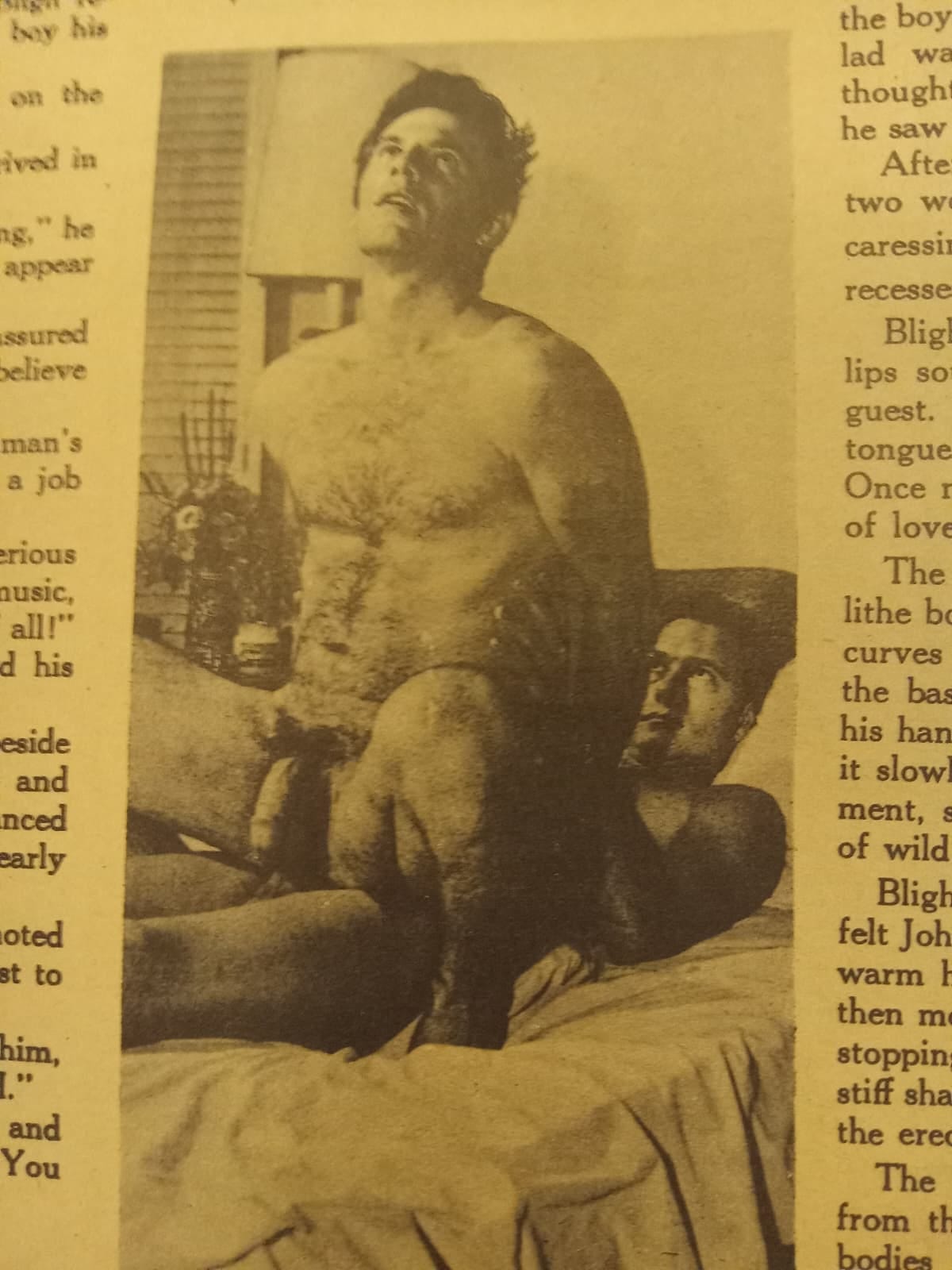
I love the contrasting faces in the last one.
The real appeal of Gay World though is its cover art, with the beefcake set in garish 60s glow tones:
*“World” in texts like Arendt’s The Human Condition or Heidegger’s Being and Time may seem like a container of all human experience, as if there is one world we all share, but both thinkers are concerned with “world” as something that evolves historically, and thus can be shaped (and imperiled or even lost) by changes in politics and technology. There is not one consistent, transhistorical “world” that is simply part of an enduring human nature. They signal that there are multiple different “worlds” existing simultaneously—Heidegger gives examples like the “world of sport” or world of fashion. Those “worlds” are made up not just of sets of places (fashion houses, runways, etc.), practices, people, etc., but also ways of talking, thinking, sensing and seeing, that add up to a horizon in which things and people show up as, for example, “fashion.” A/the “world” isn’t itself a thing, but is the possibility of anything showing up as part of a meaningful whole.
My recent talk at Bard College’s Arendt Center on the topic of Denneny’s “gay world” was quite unsuccessful, with the unwoke liberal contingent expressing disbelief and then annoyance that I make Arendt, via Denneny, out to be defending “identity politics” (which I’m apparently supposed to know is bad)—as if Arendt didn’t spend two decades advocating for a particular form of Zionism (one not necessarily in favor of the state of Israel, and by the end quite critical of it, but one founded in the idea—which, for my money, is the essence of Zionism, and mutatis mutandis, of any other nationalism—that Jews form a “world” with common experiences and interests, along with different perspectives on them, and that they need specifically Jewish cultural and political organizations in order to foster multi-sided, comprehensive reflection on what Jews ought, collectively, to do; one might oppose Israel, precisely, for the sake of a “Jewish world,” which would be quite different from opposing it on universalist grounds). The leftist queer contingent, on the other hand, thought it was a betrayal of Arendt’s universalism to use her to advocate for gay male cultural-political spaces, when, now more than ever, the wretched of the earth must rally intersectionally together to fight oppression (I was implied to be arguing “Arendt says LGB without the T”).
Both liberalism and leftism are flavors of universalism, derived from philosophical anthropologies (claims about human nature), and in that sense I think unable really to grapple with Arendt’s critiques of philosophy, of the idea of human nature (rather than a human condition founded on our insuperable plurality), and thus of liberalism and leftism. Arguing this point sometimes feels hopeless and anyway isn’t what I mean to do here (I have—yet another—long essay on Arendt, Denneny, and the idea of “world” coming out soon-ish).
The arrival of your book is something I am eagerly awaiting.
At least your UT Austin talk was successful!