Christopher Isherwood's Library
listen to your uncle

I’ve never been into Isherwood. I think I’m still traumatized by the boredom of reading Ascent of F6 as a teen (what if Eliot’s verse plays were even duller, and about Hinduism instead of Anglocatholicism? asked no one), and while I guess for the sake of gay literature I’m glad A Single Man was written, I didn’t read it with pleasure.
Moreover, God, the English… whether they’re prim, whimsical, prissy, eccentric, or any of the other adjectives they particularly can be, I prefer them doing it over there, away from us, not moving here as Isherwood and Auden did (Thom Gunn and David Hockney get passes—as does Reyner Banham). A few pages of Hollinghurst, Douglas Stuart, or Adam Mars-Jones (all I’ve read of any of them) are enough for a lifetime.
But it is nice that Isherwood spent the second half of his life in Los Angeles because that means his books are at the Huntington. It’s hard to get a sense of his personal taste, especially in gay stuff, since by the last decades of his life he’d become something of an elder statesman among homos who would send him their books for approval. He reached new generations of gay readers in part through his new fiction appearing—rather to his chagrin at being ghettoized—in gay sleaze mags:
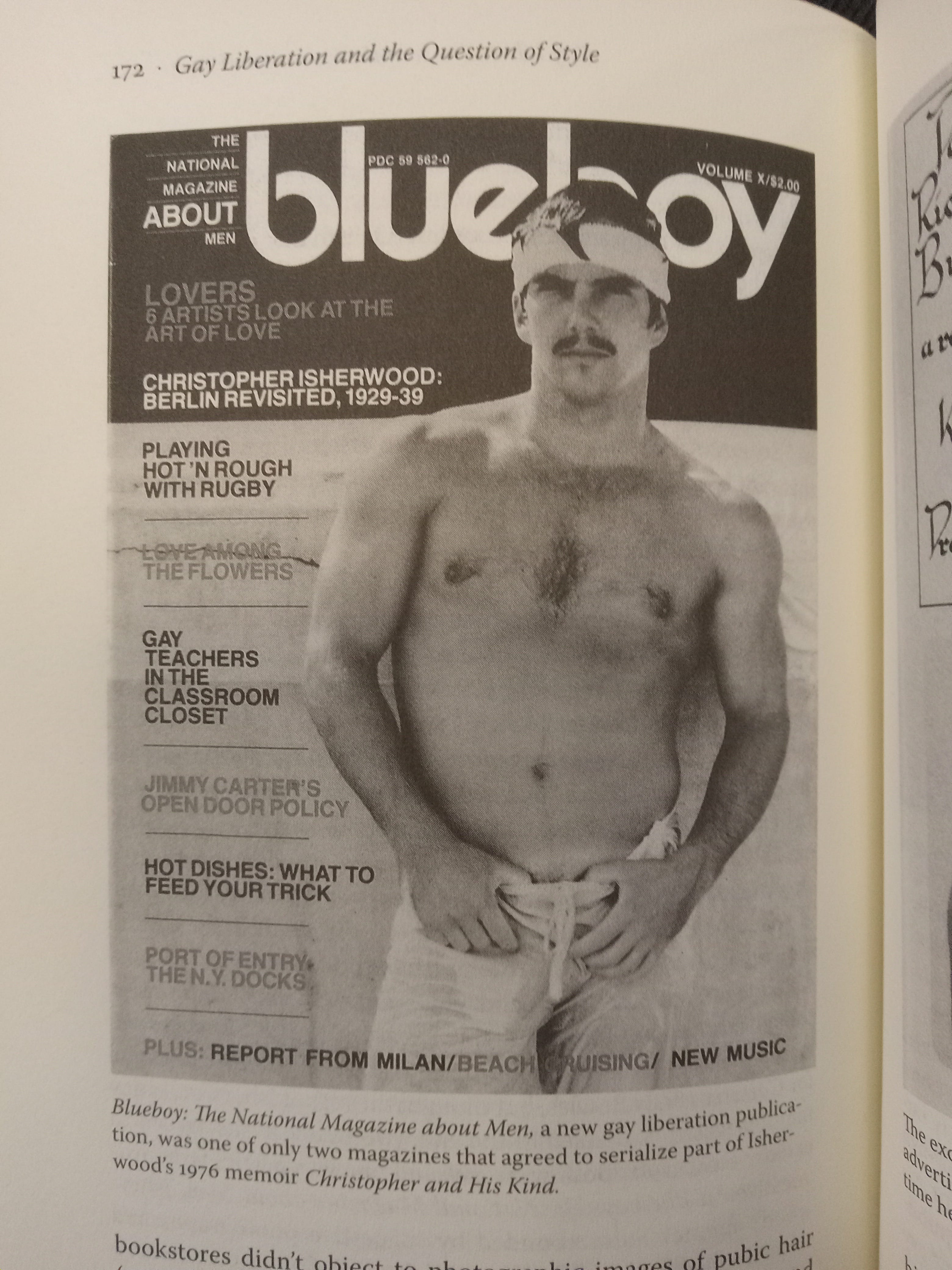
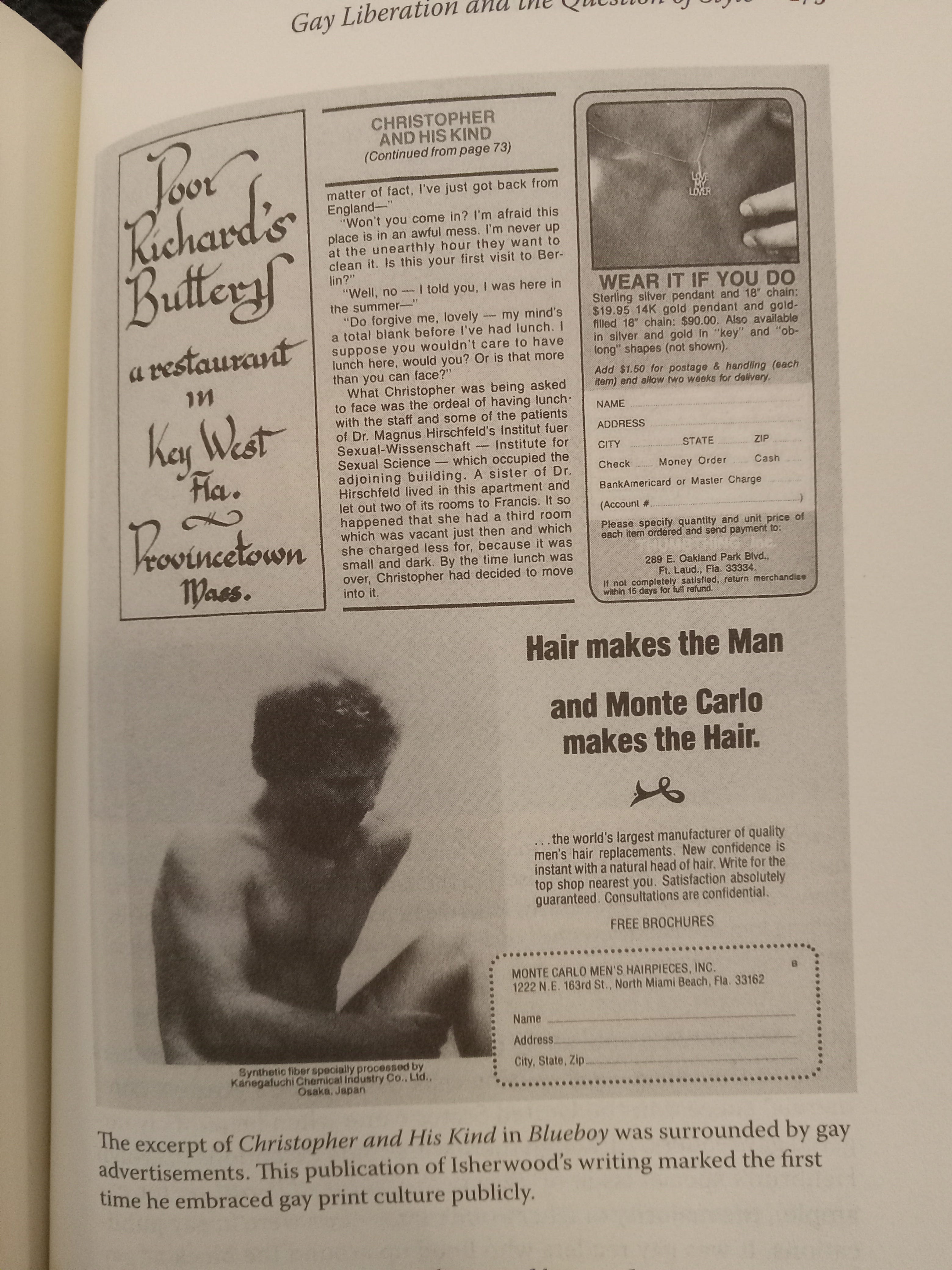
Personally I think this is exactly the setting in which gay writing ought to appear. Once some years ago a thing I’d written for Tablet appeared at around the same time as a profile they did on gay Jewish Onlyfans performers, and I thought, yes, this is the context in which I want my review of Dave Oppenheimer’s book on Dave Hickey to be seen. Part of the fun of gay life has always been how things mingle—ectomorphic delicate bespectacled nerds and post-literate protein-shaking jocks (I can’t believe I used to worry, as a teen, that I’d never find a boyfriend, let alone a real man, because I’m too thin too faggy and too mean!), pansies and trade, critics and camwhores. We’re meant to be at the same brunch and in the same magazine—without the play among our constitutive subtypes the community languishes in sad queer academic theorycelitude on the one hand and social media yammering on the other.
But back to Isherwood—none of his books that I’ve looked at show evidence of having been read (underlining, dog-earing, spine-breaking… but some are gentler readers than me!). There however all sorts of things you’d expect in a literate homo of the period—novels by Vidal and Rechy, poetry and prose by Paul Bowles.
More intriguingly, some weird items—such as this collection of poems by the ‘Bunny LaRue’ drag persona of a Boston activist, John Mitzel, who was a founder of Fag Rag, the annoying leftist-radical 70s gay papers I’ve made fun of on this Substack.
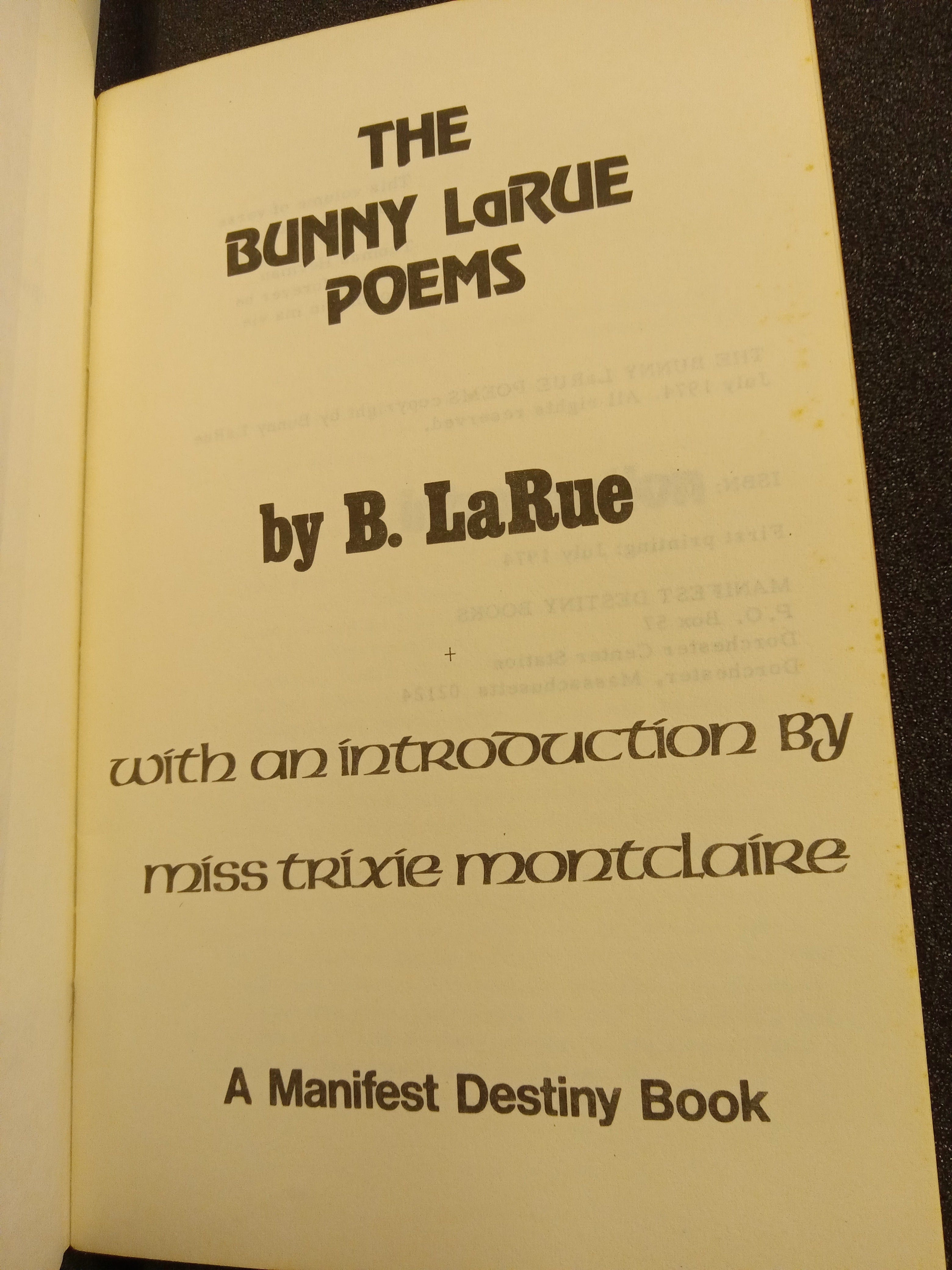
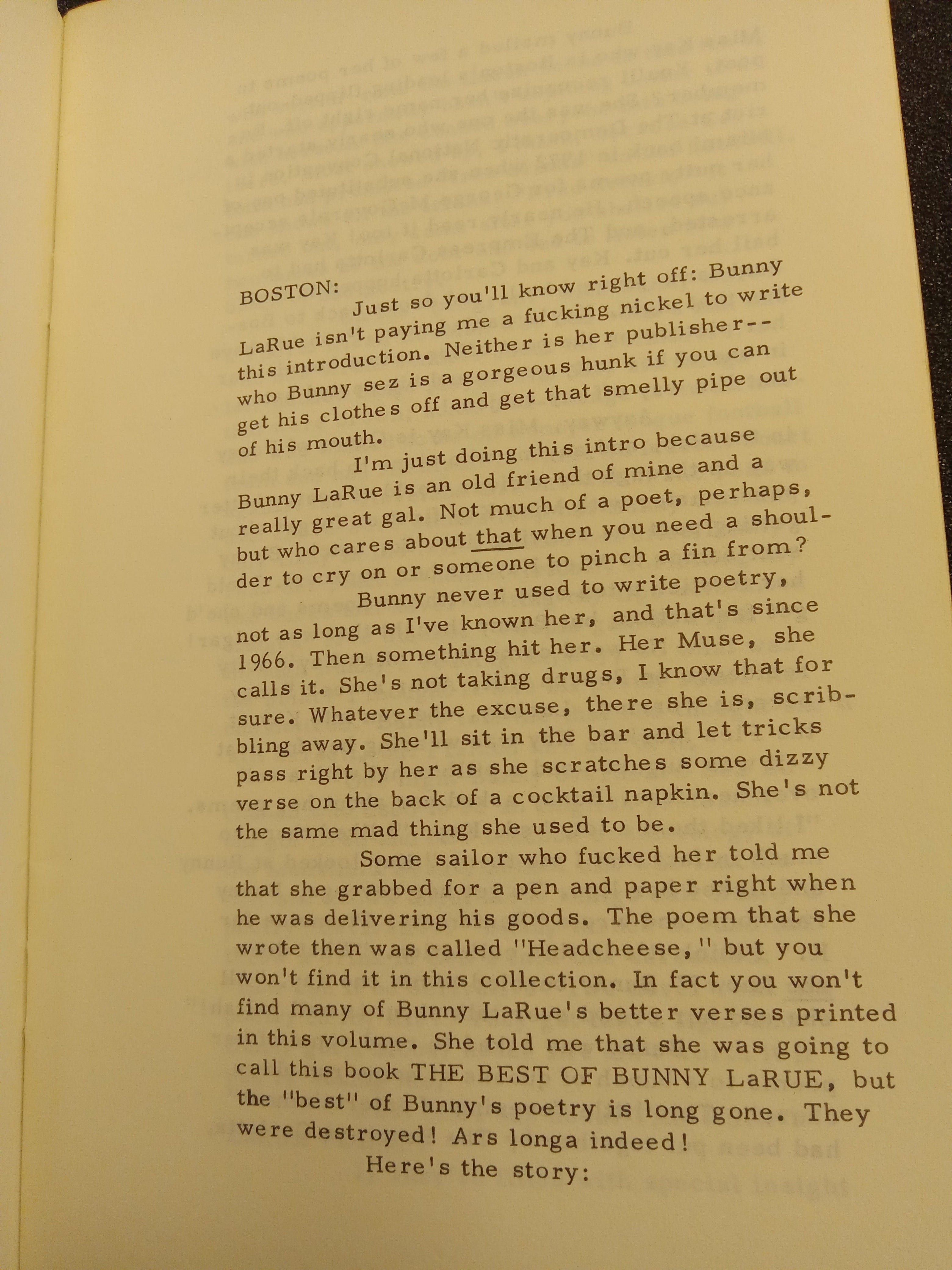
I’ll spare you Trixie’s story.
Bunny’s poems of course aren’t good, but aren’t meant to be either:
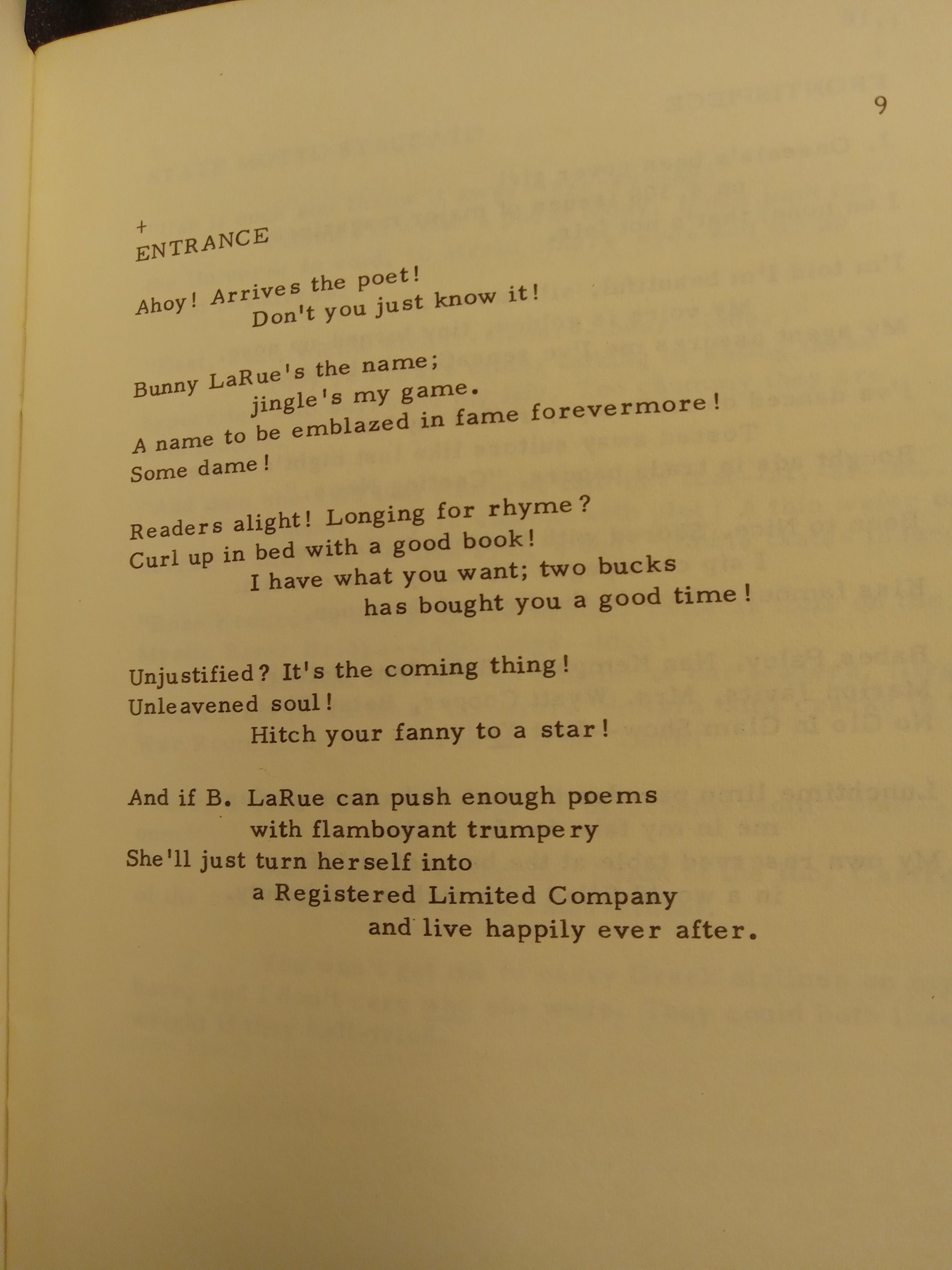
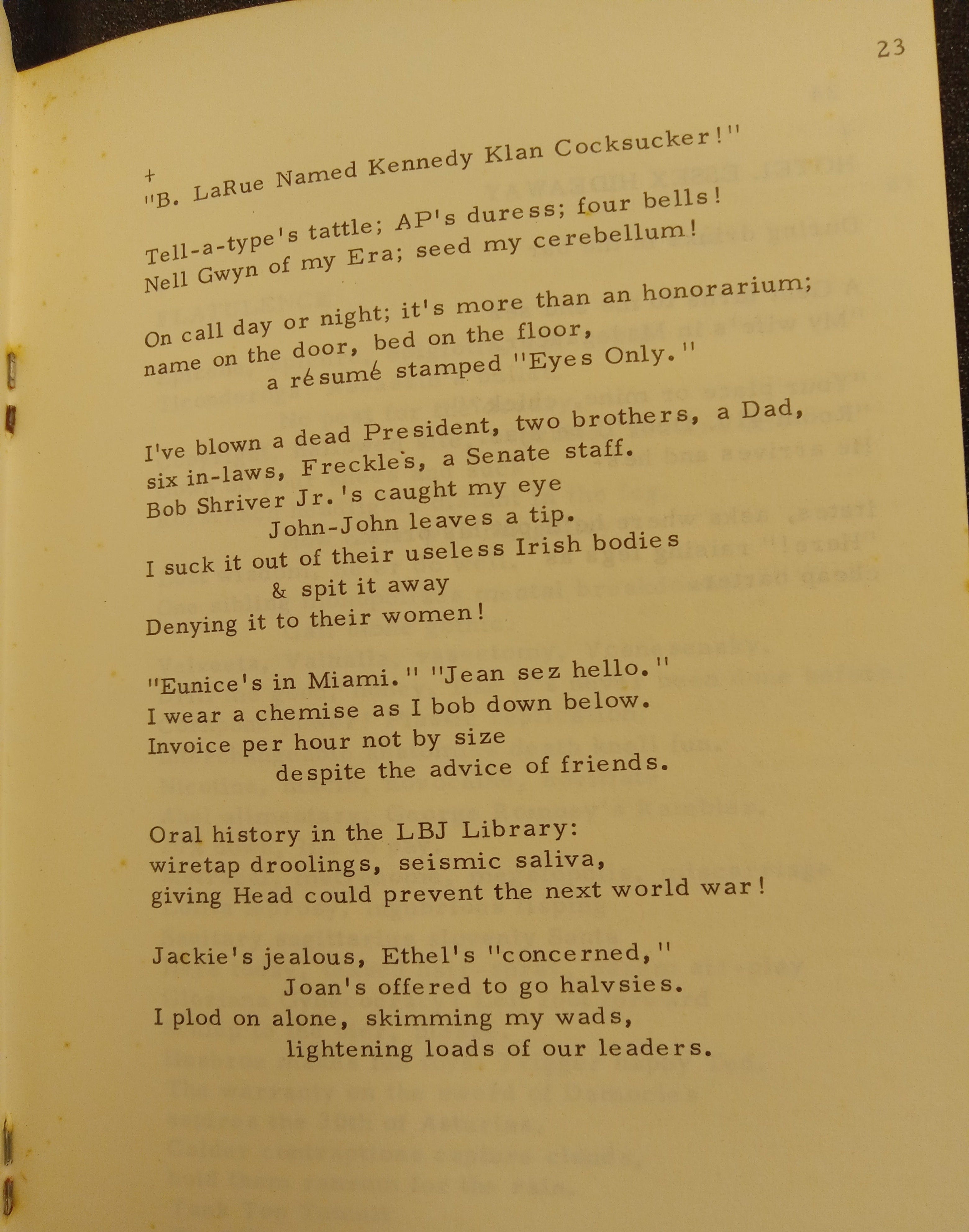
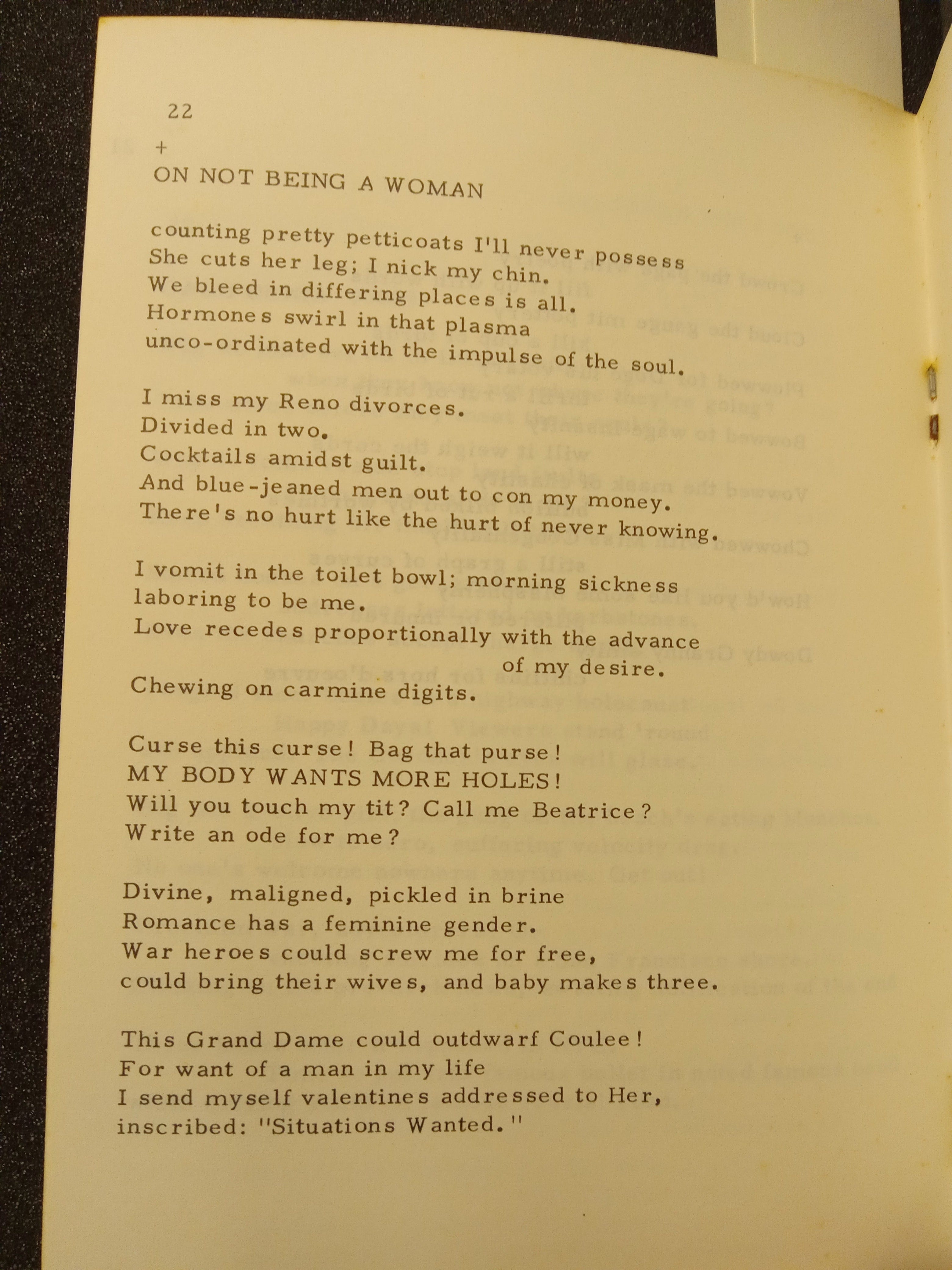
She does have a poem-essay that makes Andrea Long Chu’s “On Liking Women” even more unnecessary (I picked up btw, the most recent issue of N+1 to see how the Theory Left is doing—the editorial singled out Chu, whom N+1 helped launch, for particular praise, saying her work grounding transness in desire alone seems even more forward-thinking and precious in our current moment for which unhinged wokeshit is in no way responsible. The issue also includes a short story in which an Asian American woman torments a white guy who fetishizes such women [that man’s name? Andrea Long Chu] and an essay by a Black woman professor about how hard that is what with all the microaggressions. We’re fucked! I’ll be getting drafted for the Greenland invasion or getting shot for a fifty-dollar carton of eggs while the retards at N+1 keep working towards the perfect fusion of Marx and Cringe):
Also in the collection is this Gay Lexicon (1972), which is somewhere tonally between efflorescent camp and ‘Excuse Me the Subaltern is Speaking’:
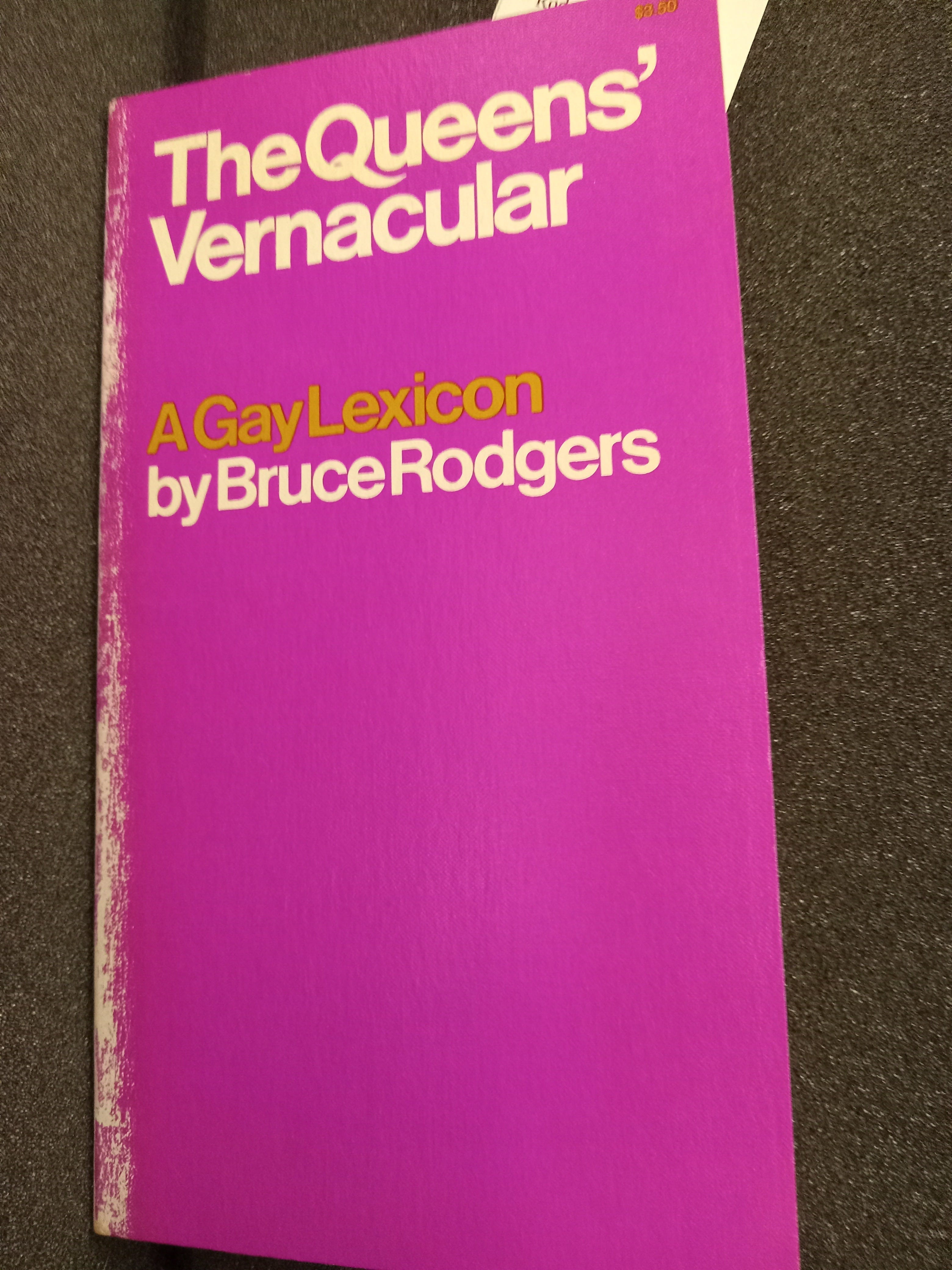
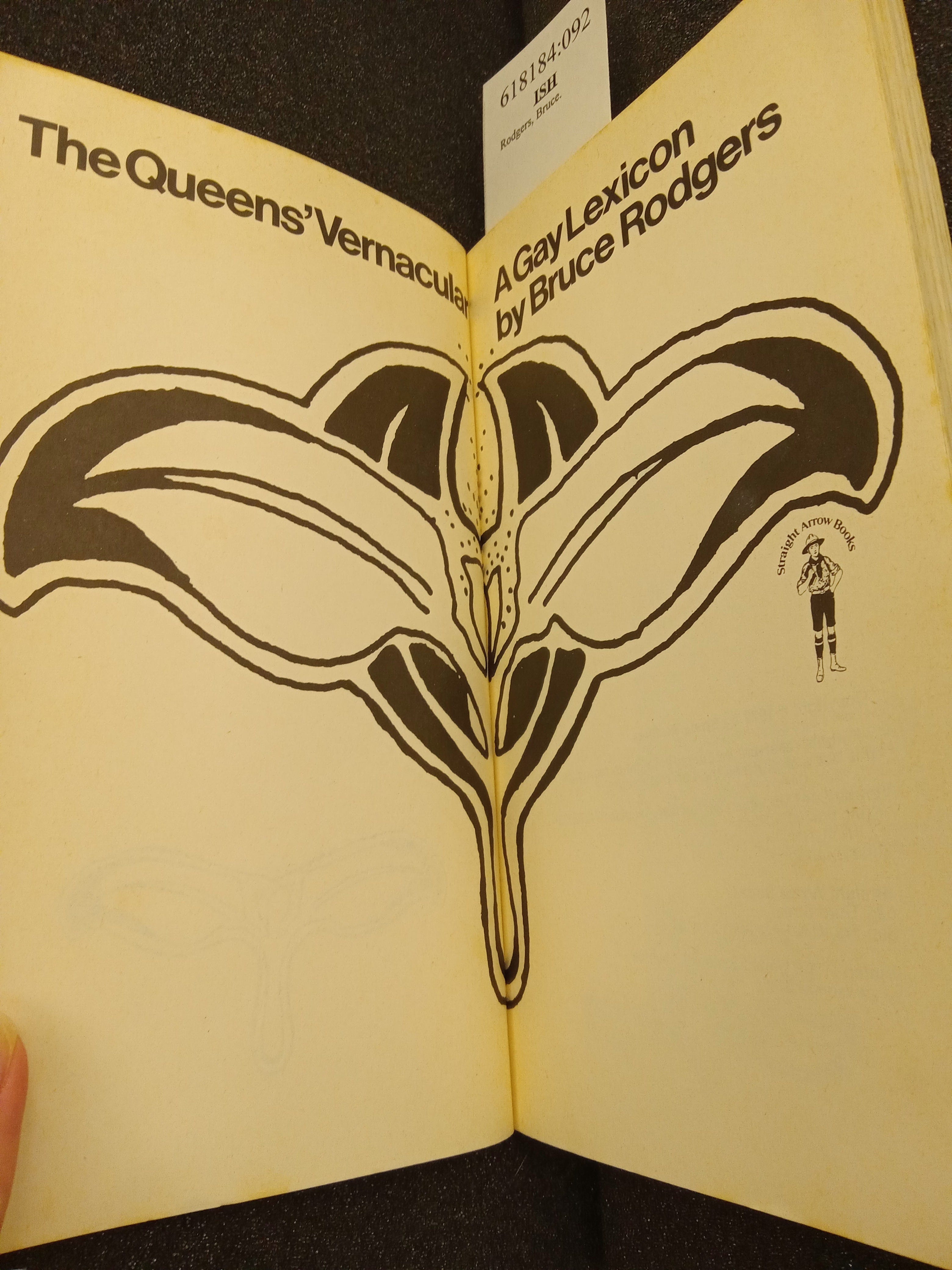
The illustrations are adorable, but the forward is giving Wretched of the Earth:
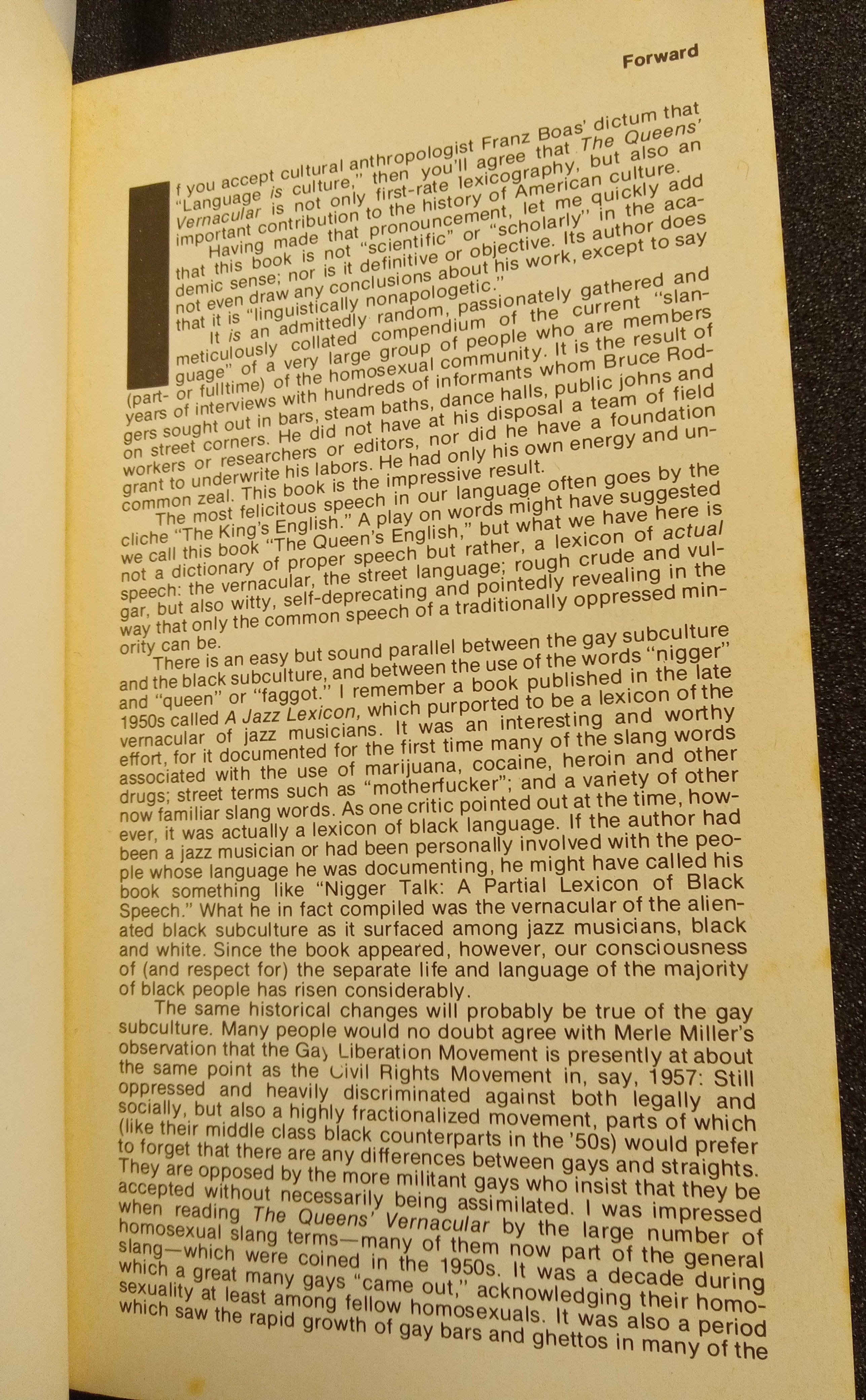
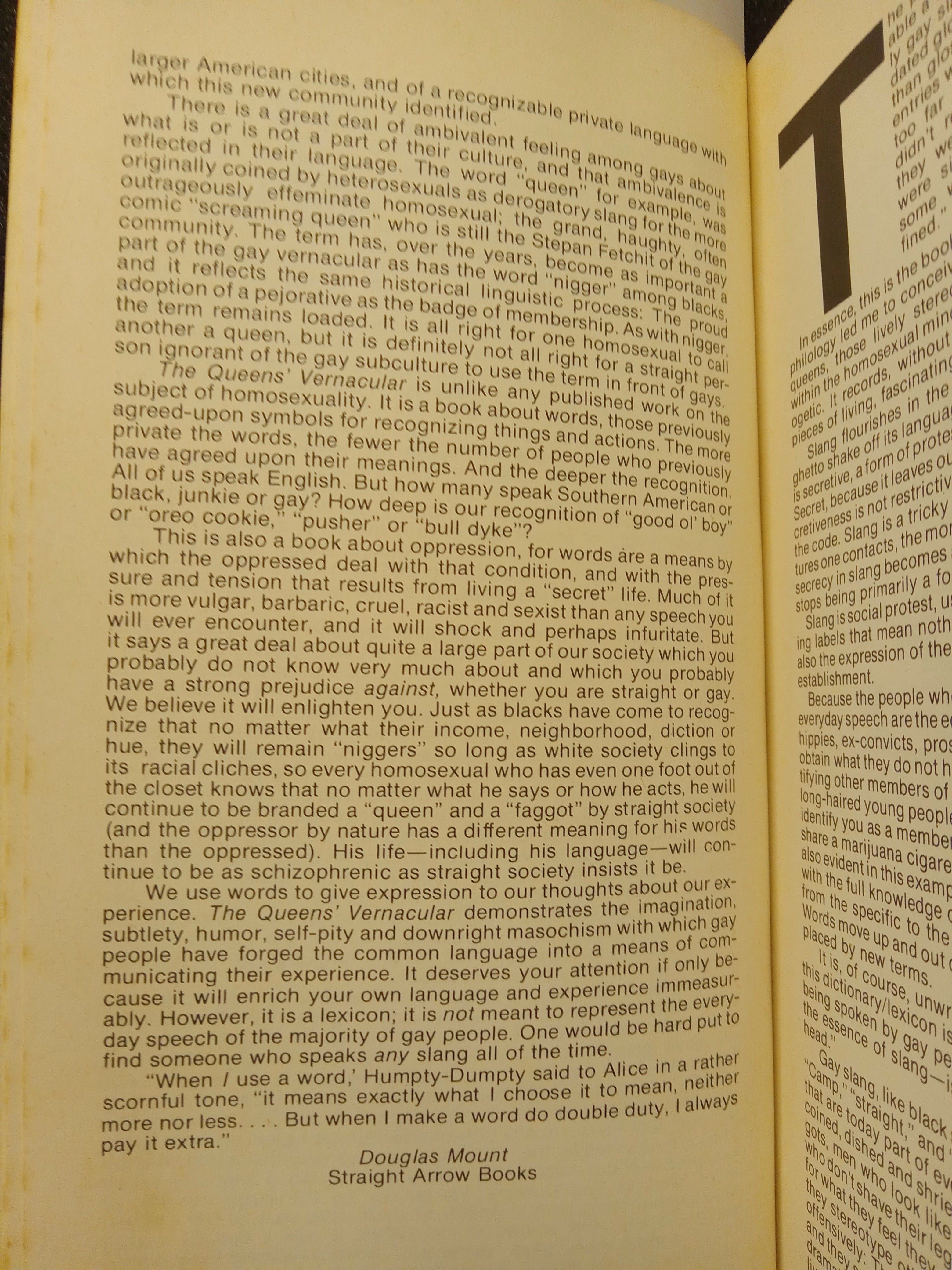
But the book—and it’s a full book, not a pamphlet!—is more than it sounds, in part because it’s performing learned seriousness in the entries and then letting the examples do the work of silliness (is “Gay Lexicography” a dissertation yet? Richard Howard worked on making dictionaries when he was getting started—one more case would make for a thesis topic!):
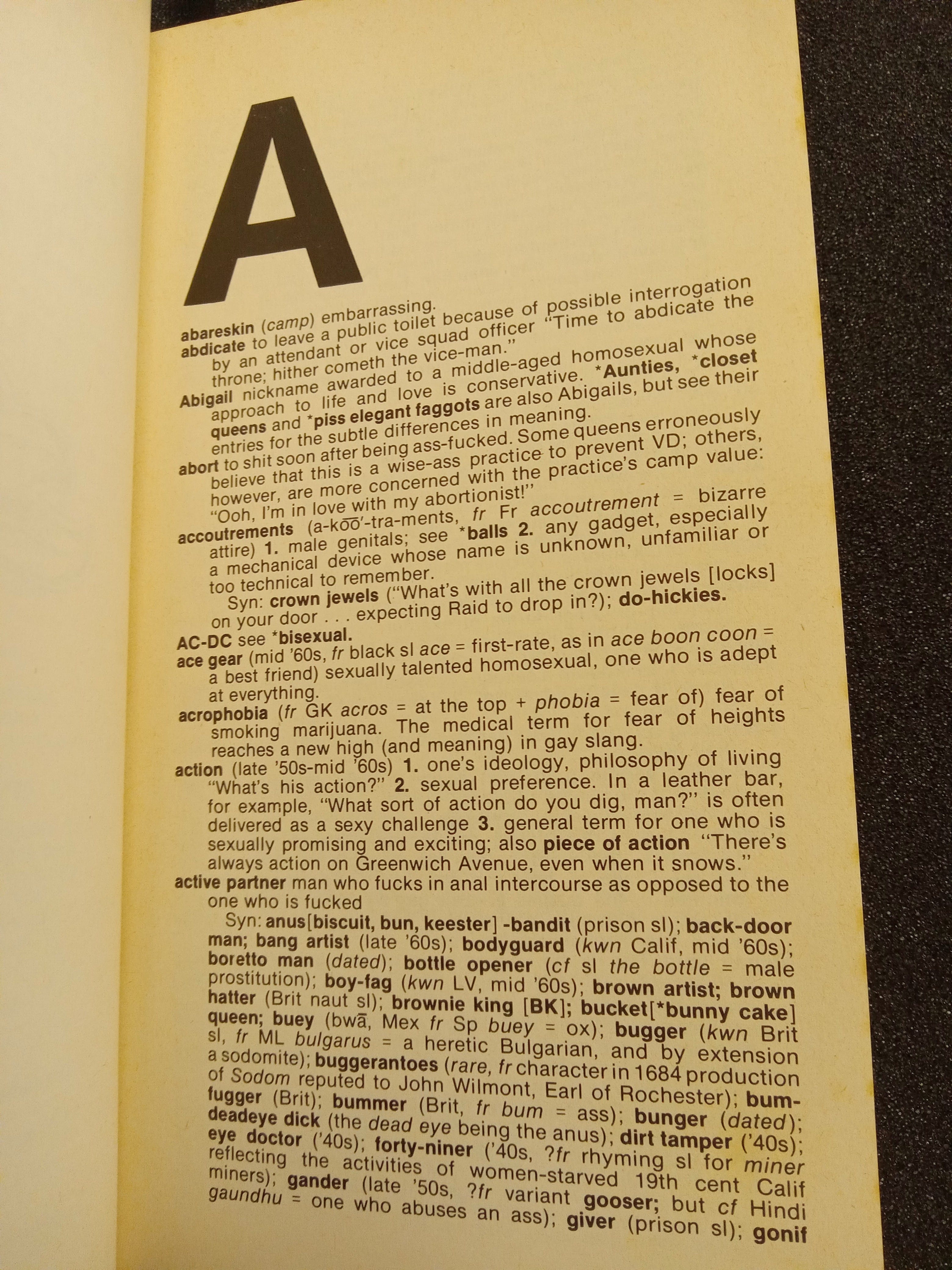
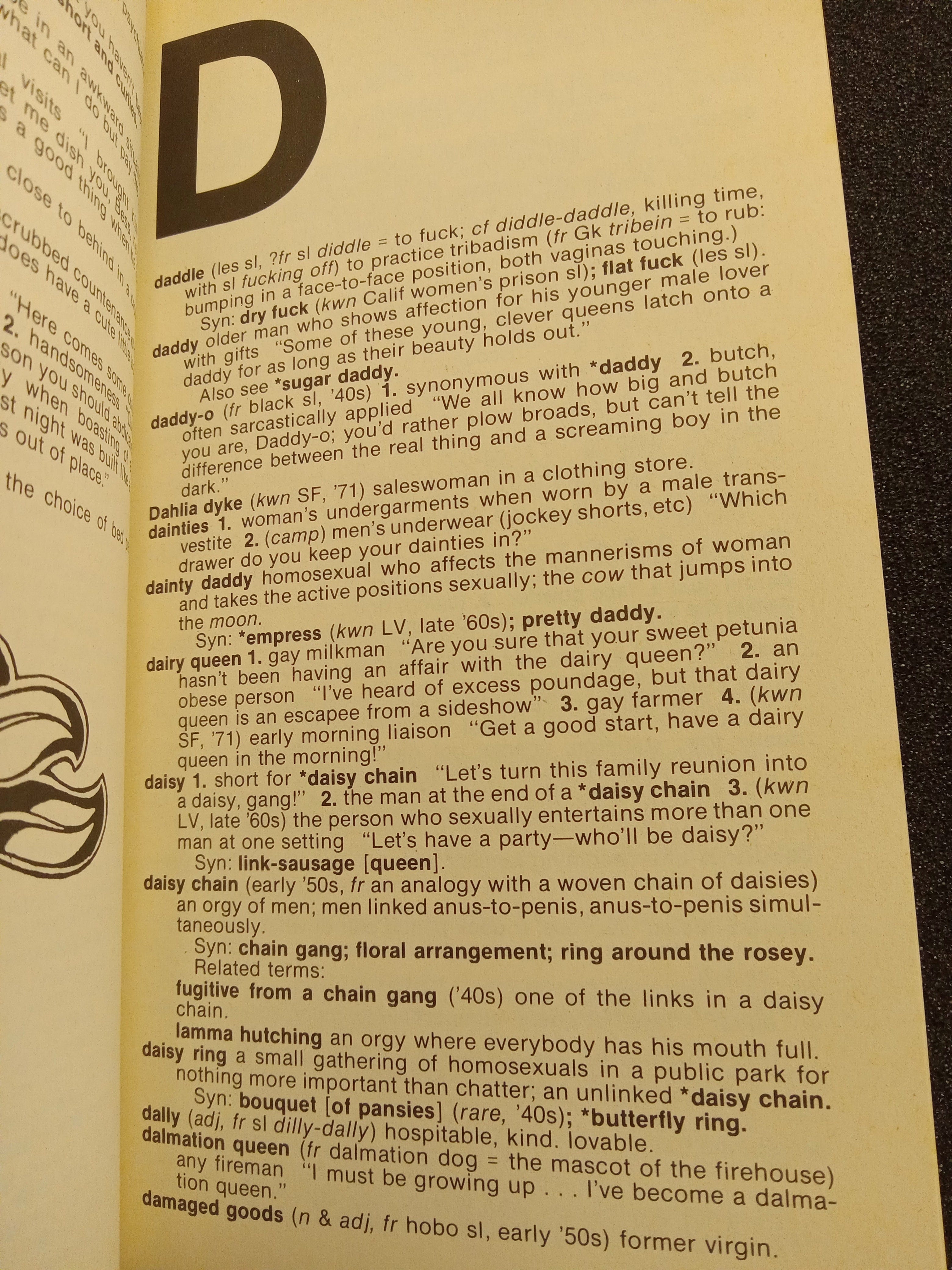
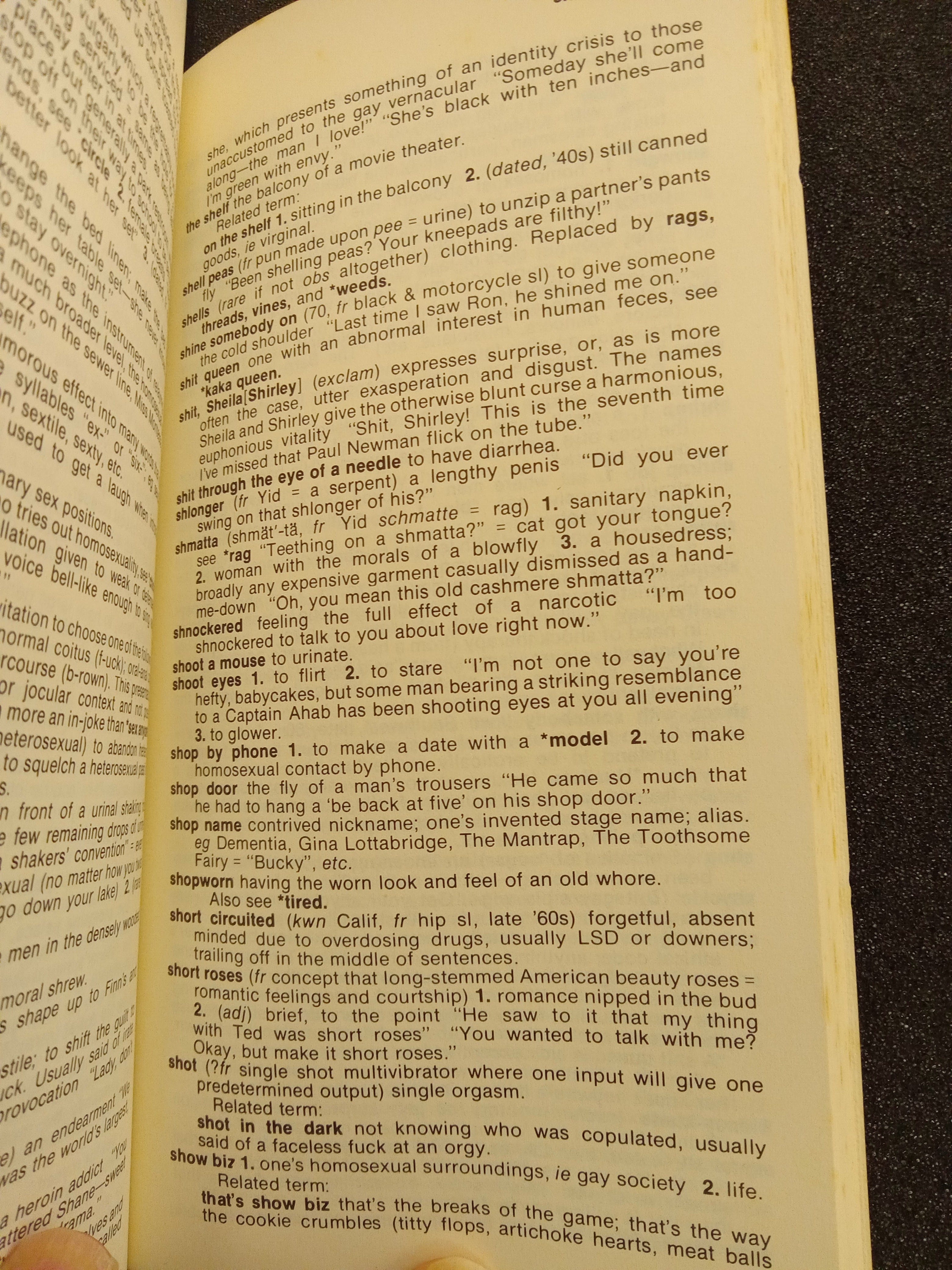
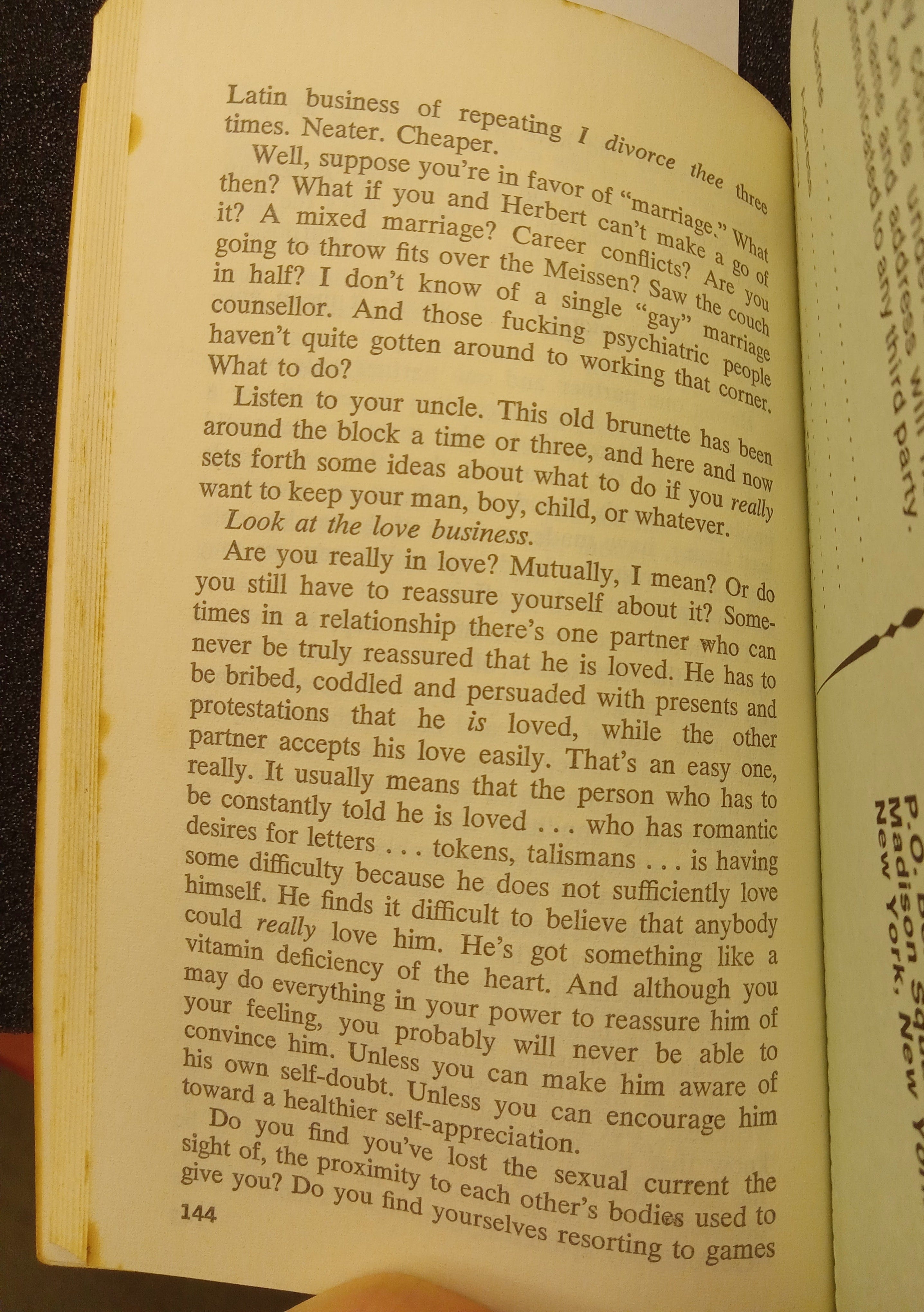
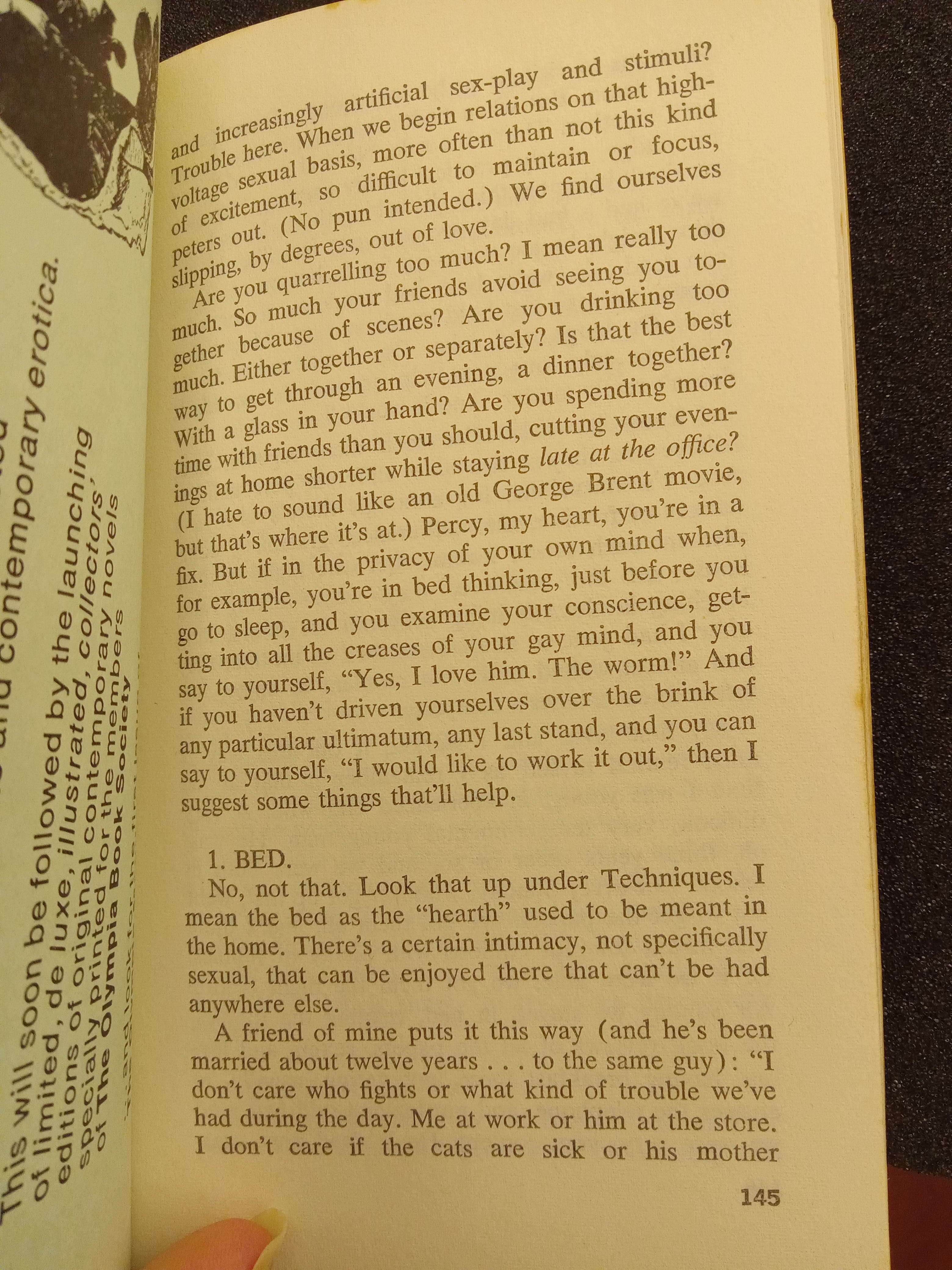
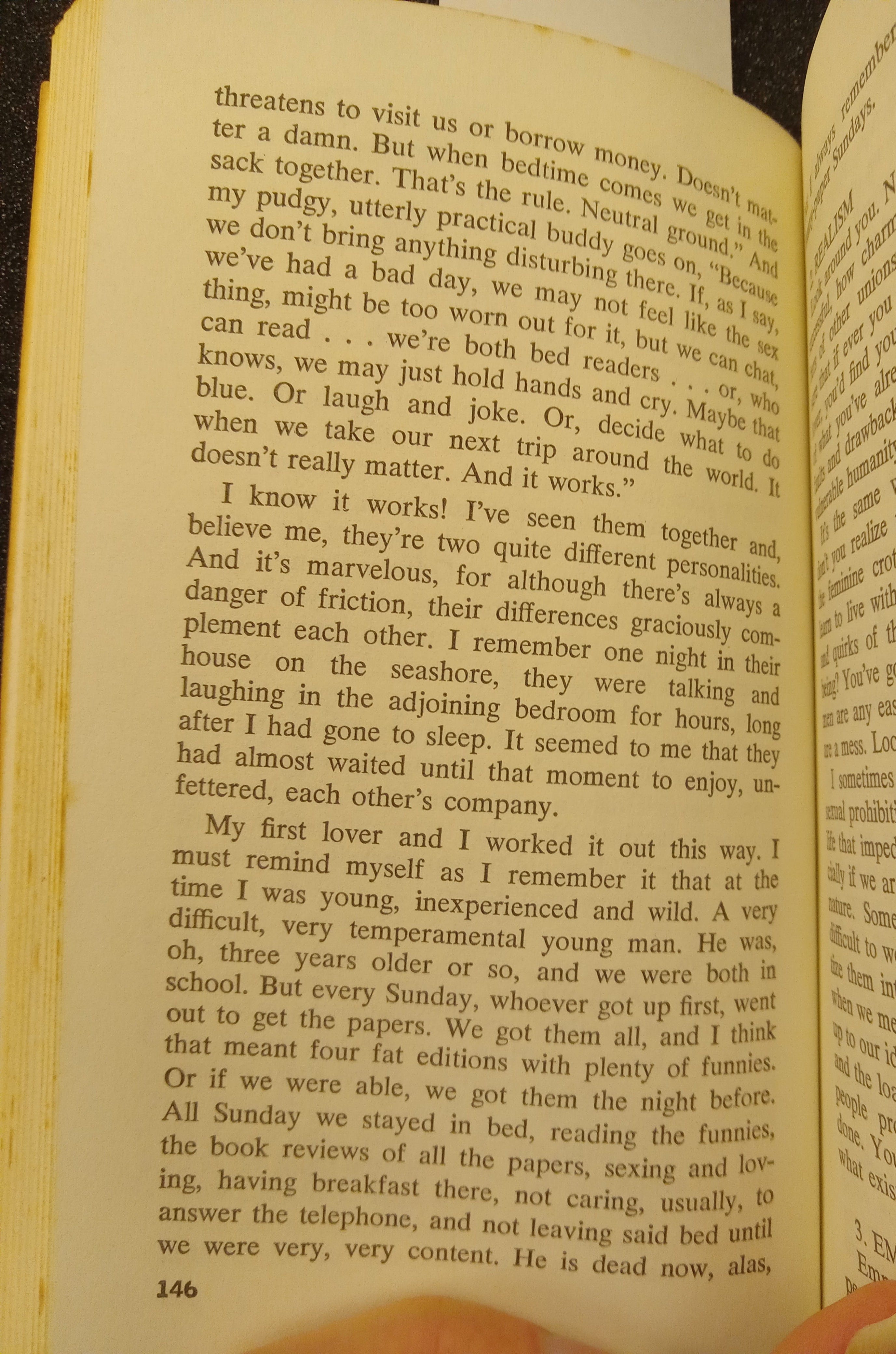
But the real gem so far has been this number, from Olympia Press (1968), by an pseudonymous author I’d never heard of (real name, apparently: Josef Bush—who around this same time, among other things, outed J. Edgar Hoover and adapted Sade’s ‘Philosopher in the Bedroom’ for the stage!)
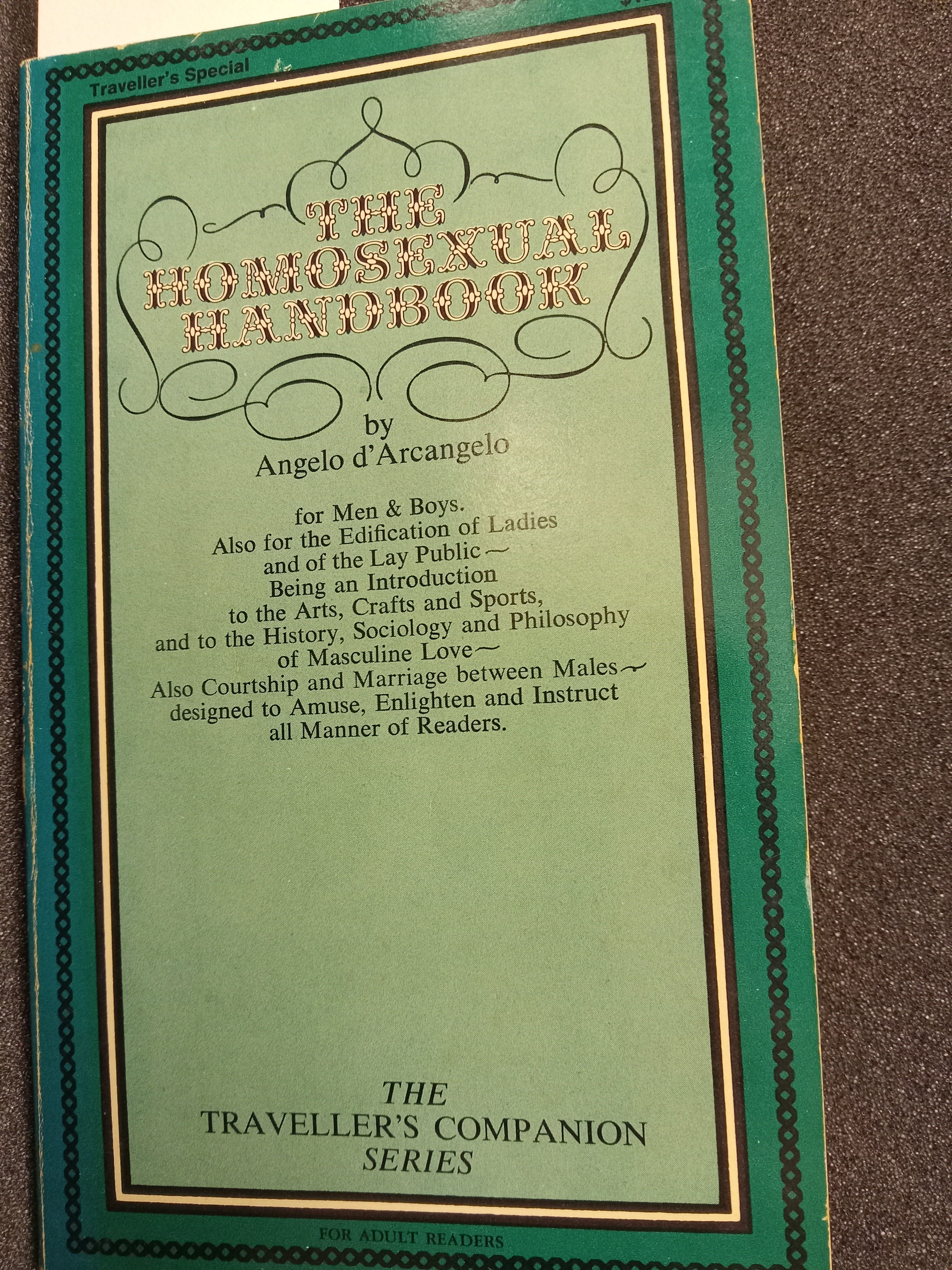
Frankly I wish I could post every page of this book, which has a wonderful tone of avuncular condescending comfort to the reader who is figured as a tutorable ephebe:
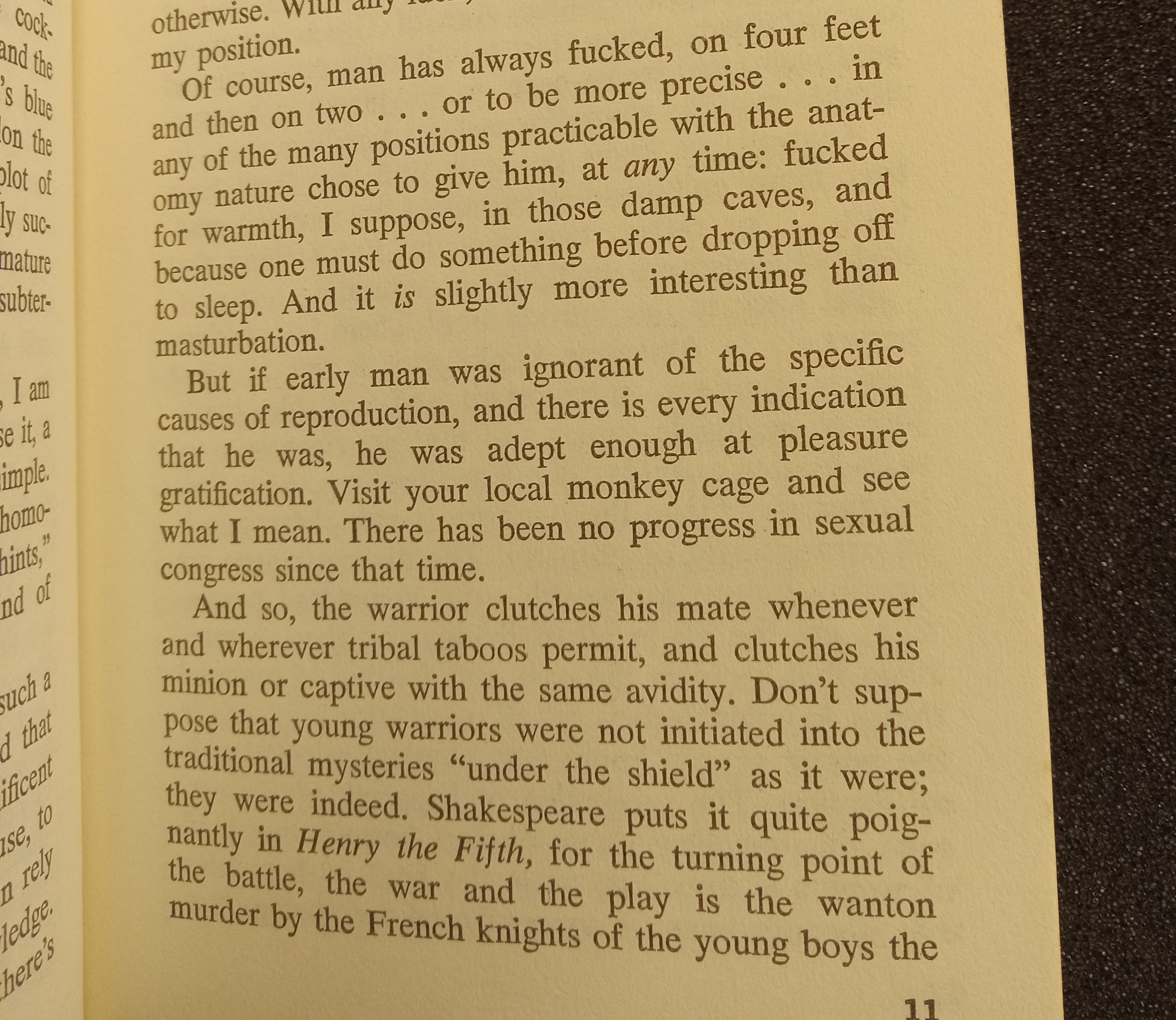
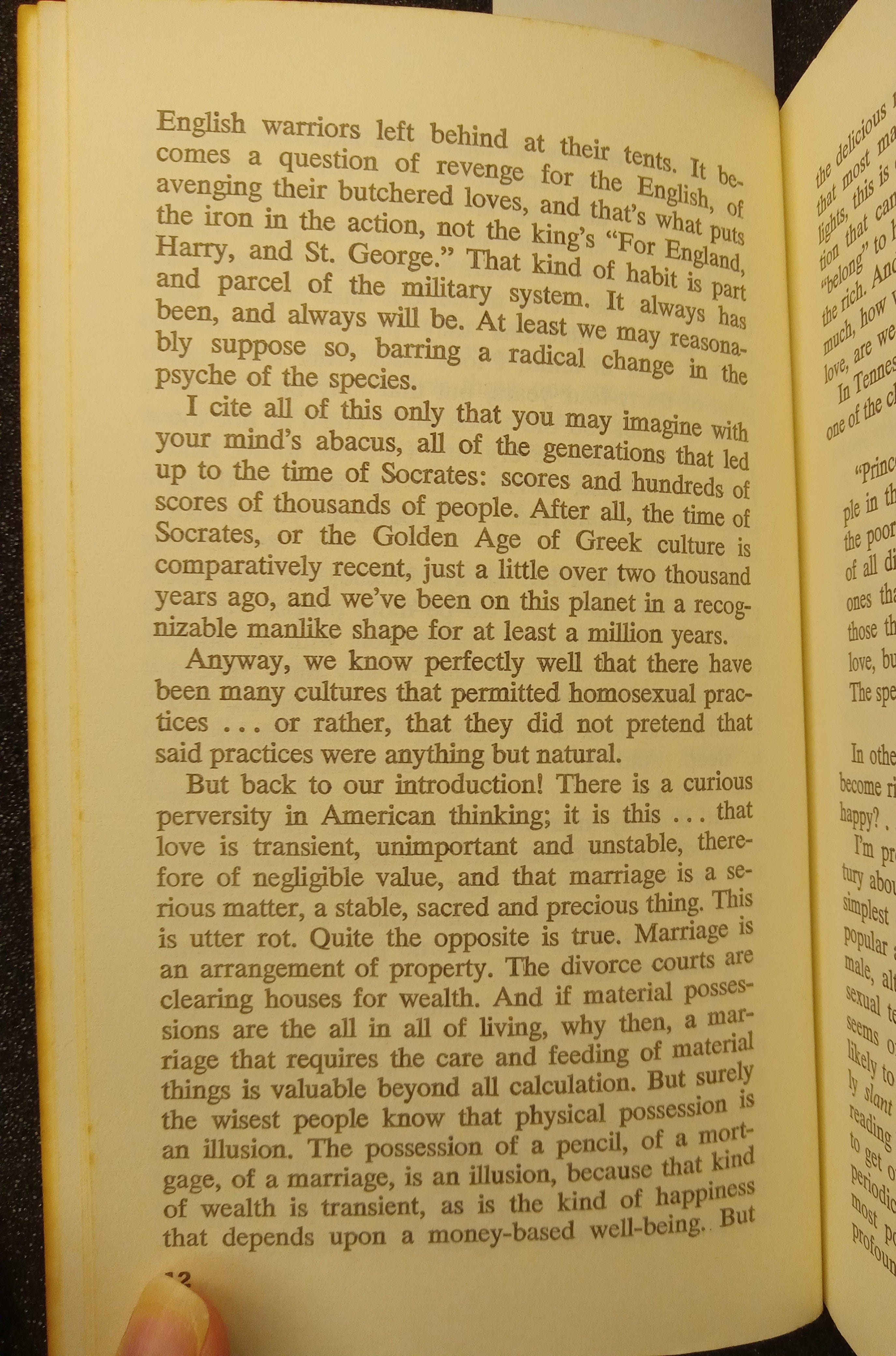
What’s advice without anecdote?
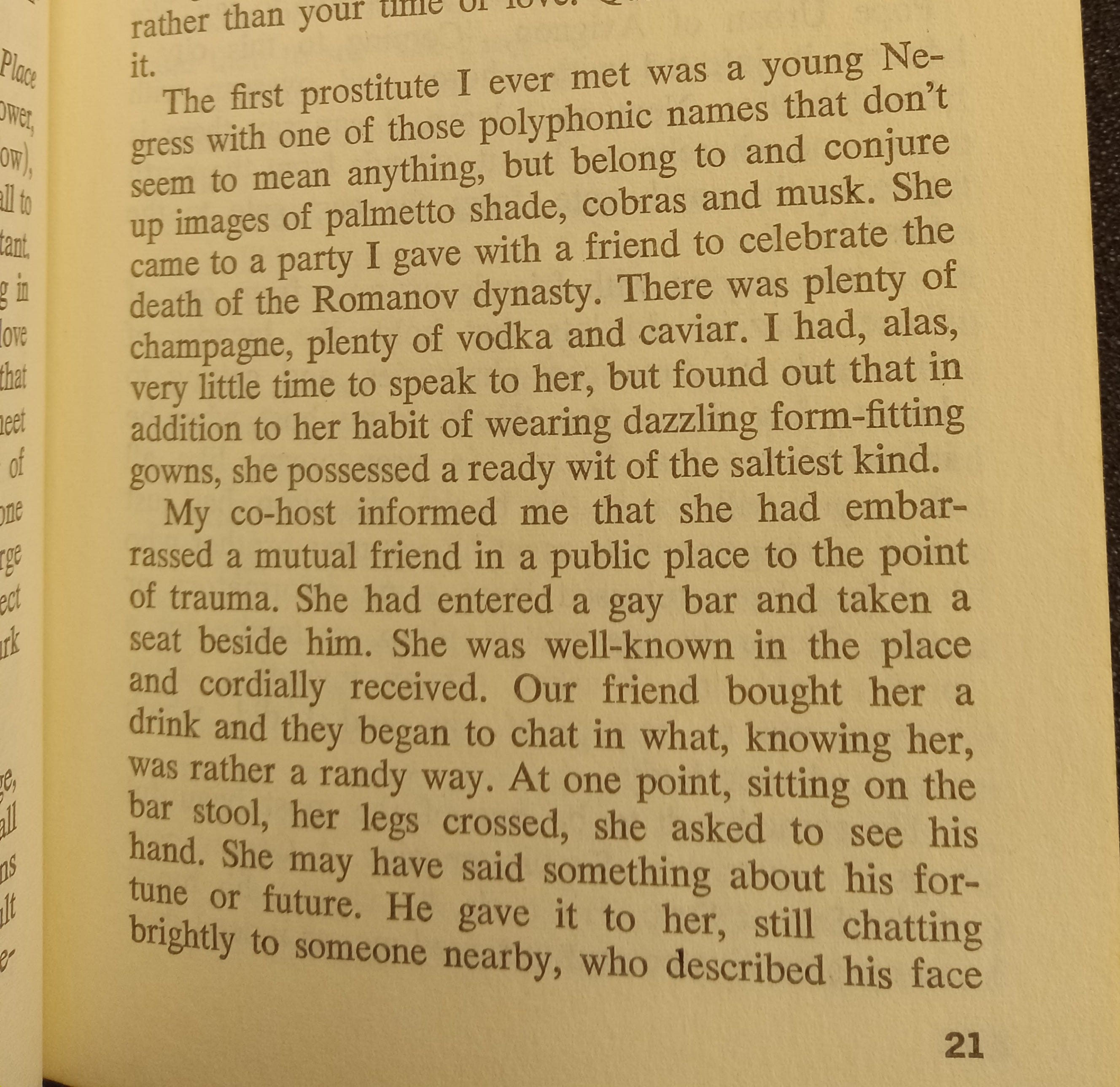
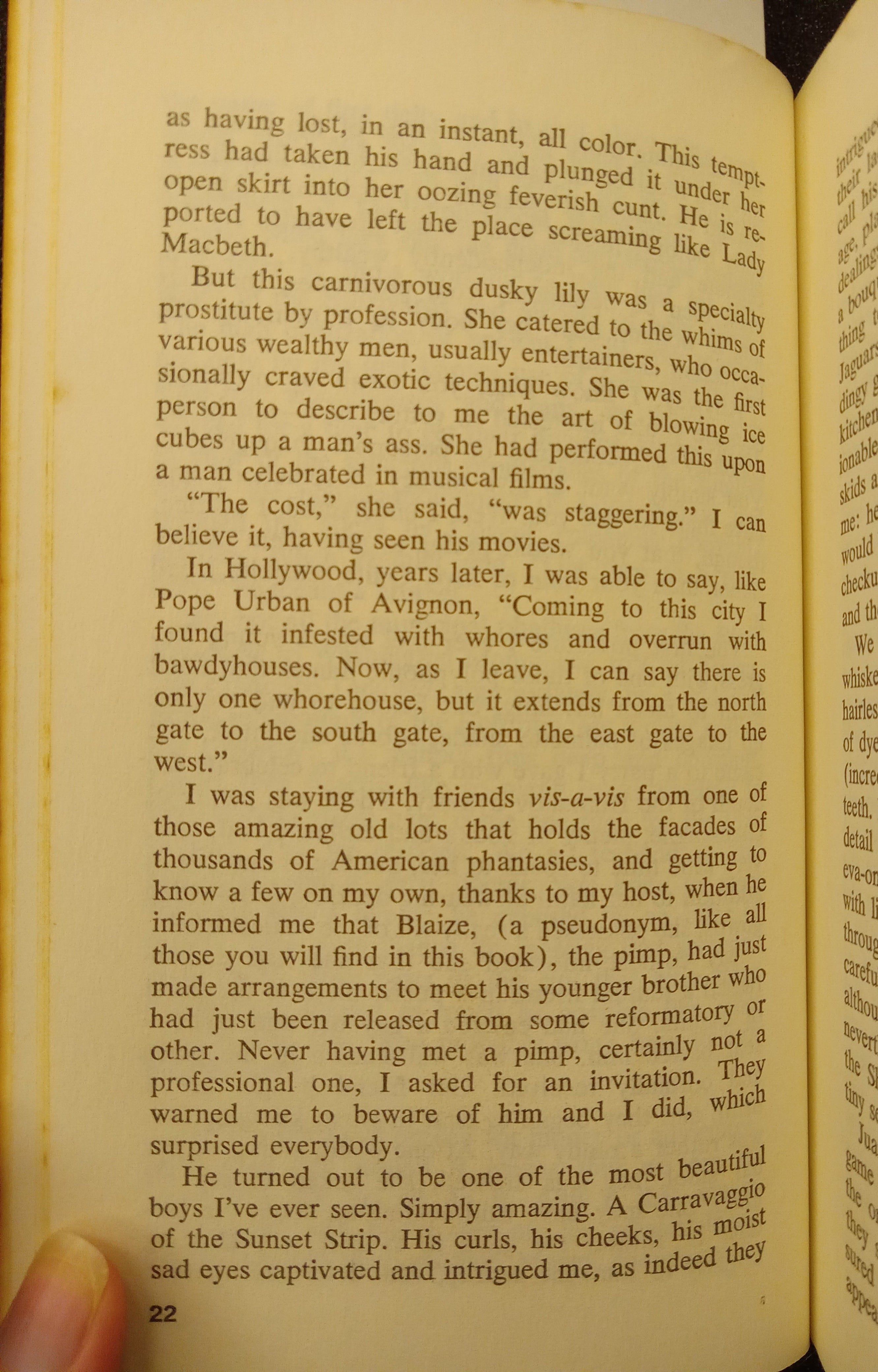
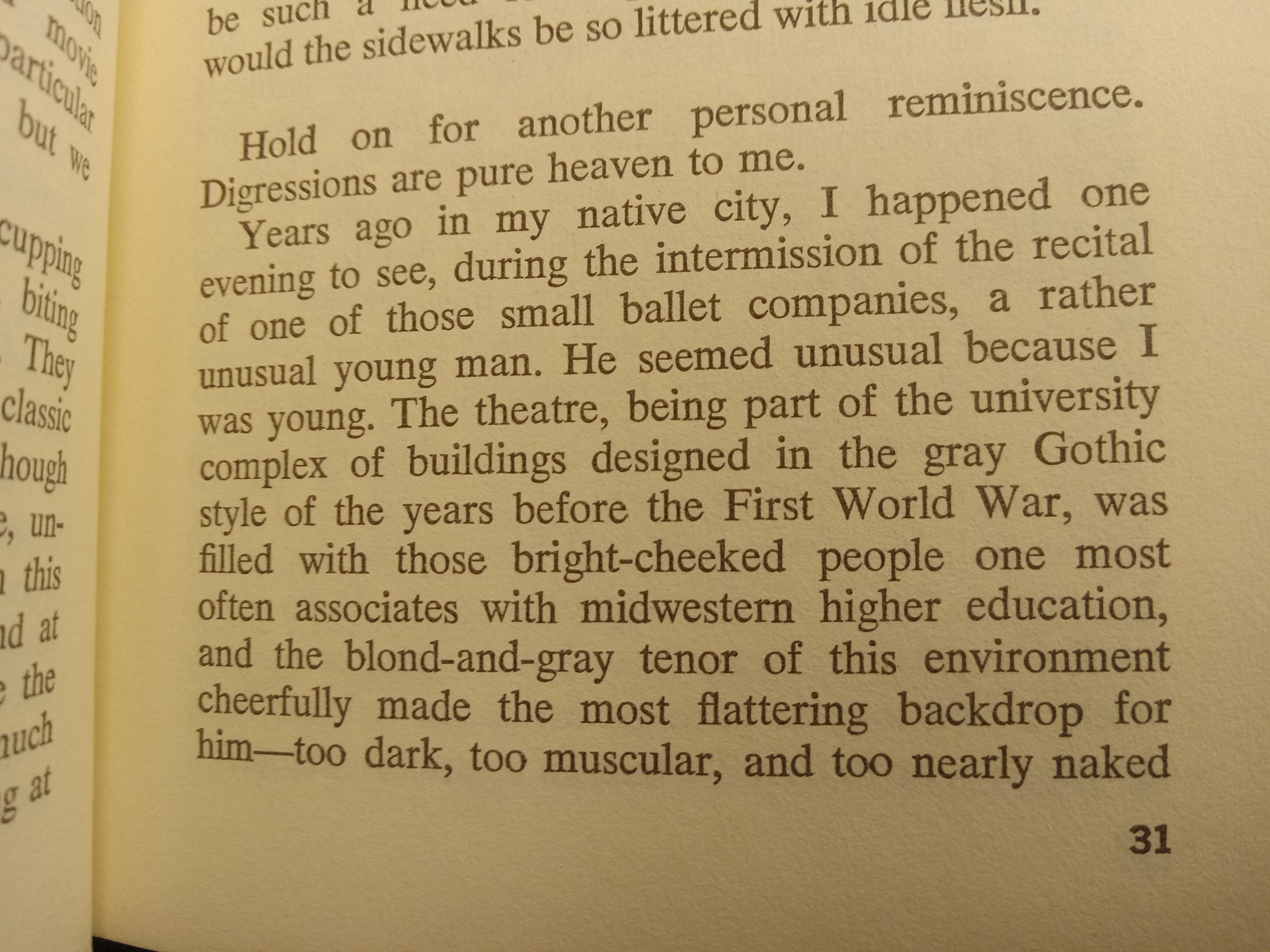
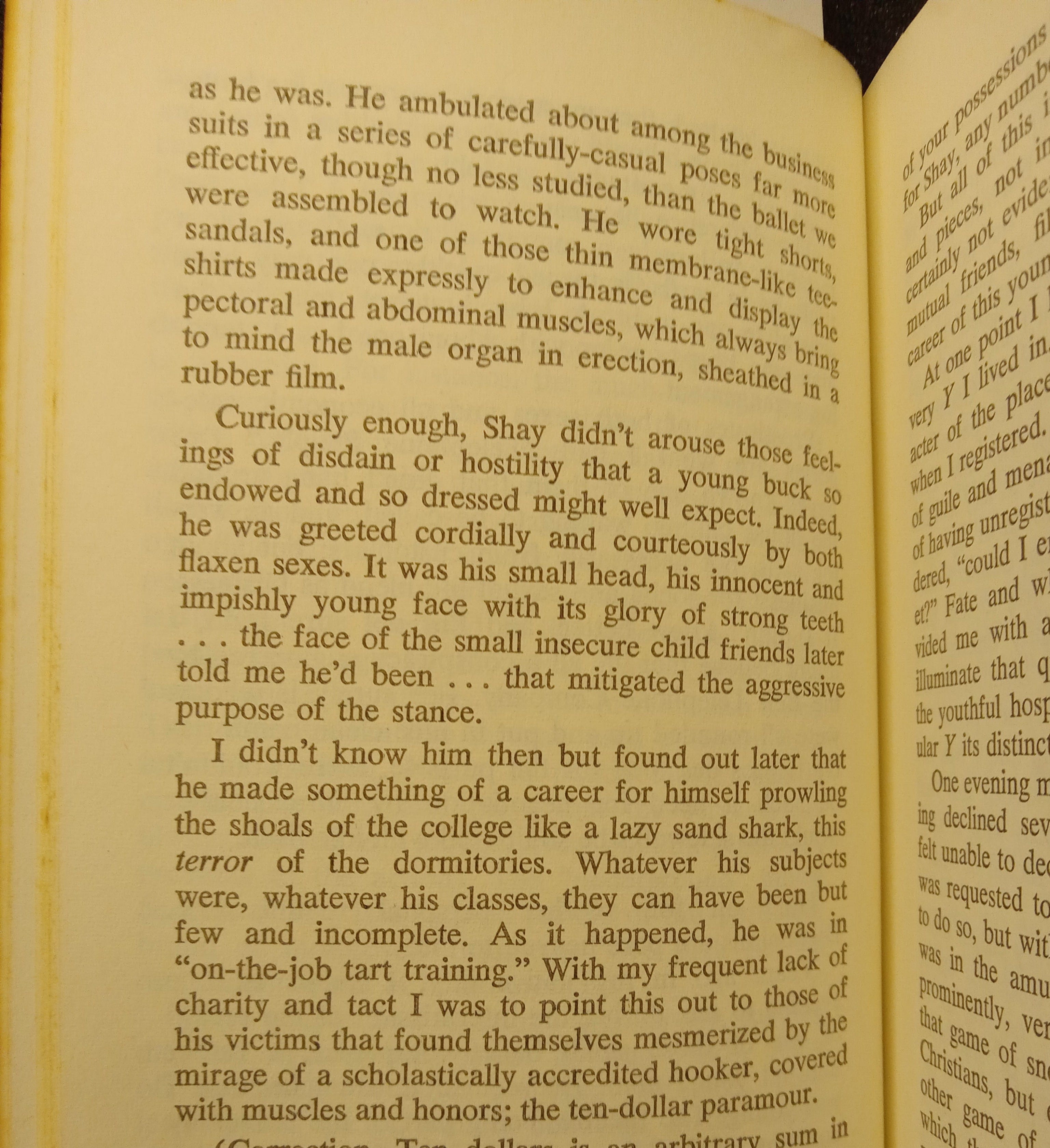
Among the anecdotes there really is some sound advice:
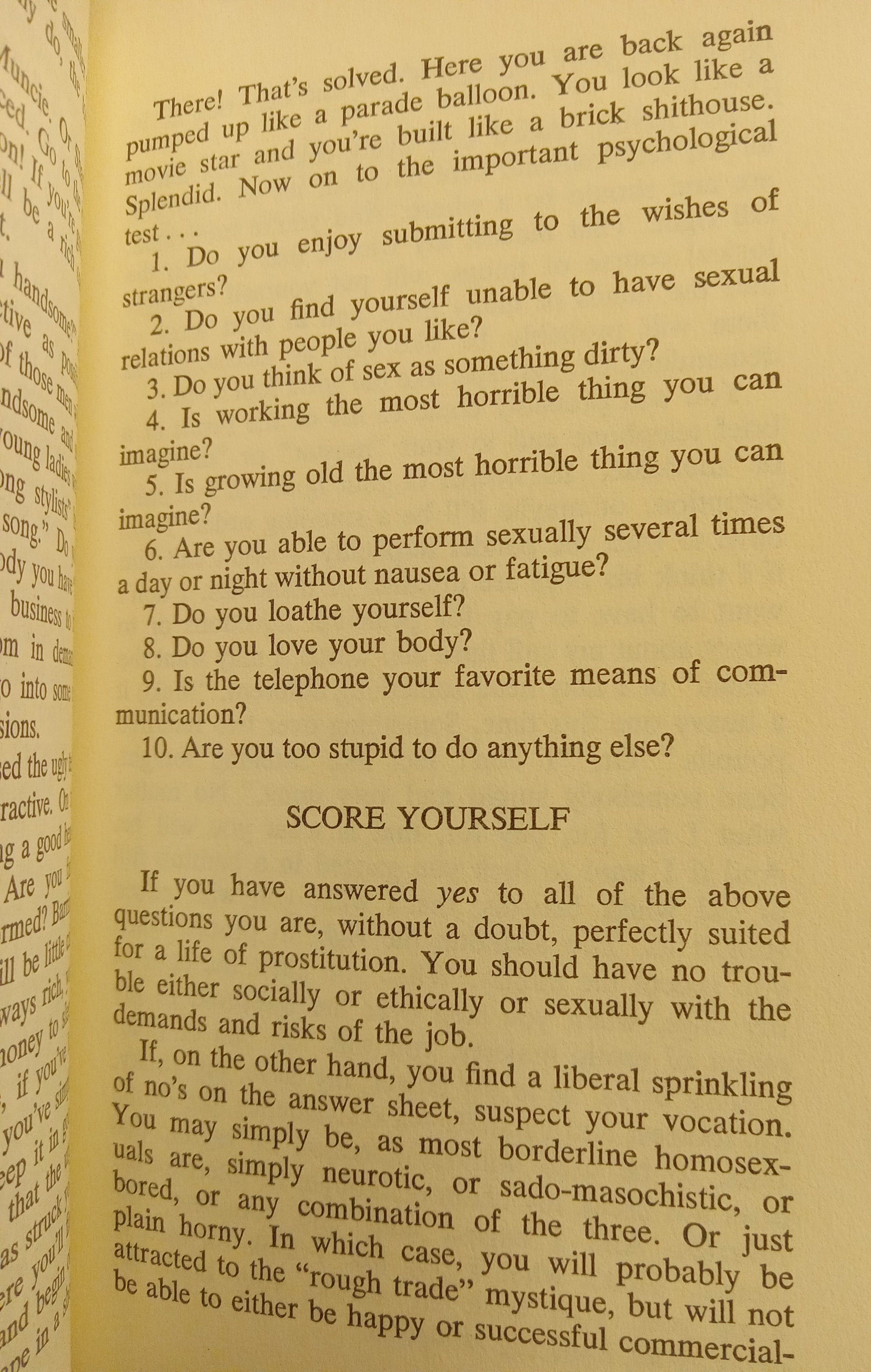
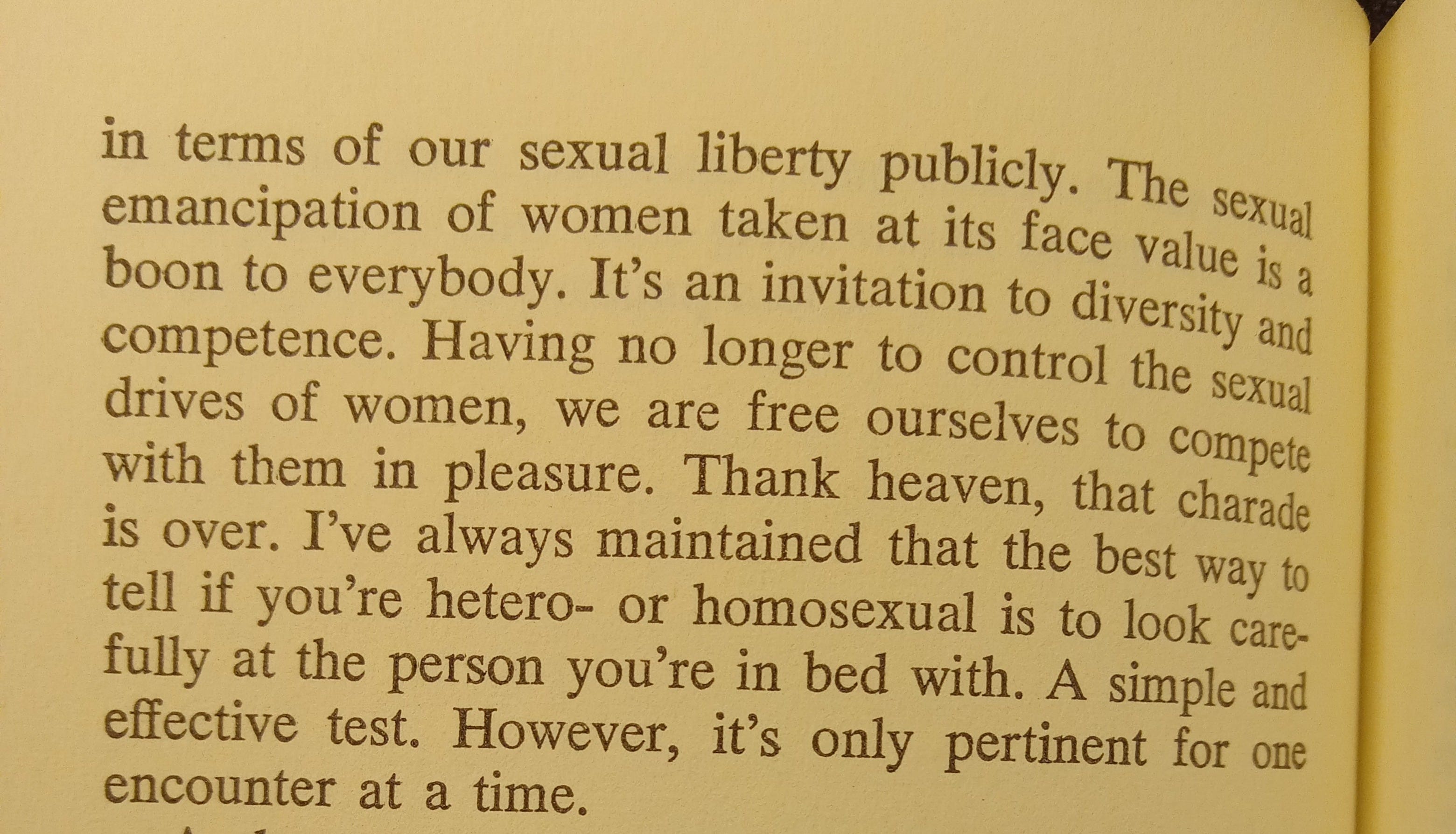
The few losers at Goodreads who’ve gotten their hands on copies of The Homosexual Handbook faced with such wisdom and delights have this to say:
Some good camp, but not enough.
…it’s pretty unrefined. There are errors in the text, points meander, and sometimes things are dropped in almost as an afterthought. Racism and sexism abound, this being written in 1968 is obviously what drew me to it, so I did know what I was getting into there.
Gays don’t deserve gay literature.