
Of what might be called the ‘second generation’ of gay writers promoted by/in Christopher Street and St. Martin’s Press (the first being men born around 1940, like Andrew Holleran, Edmund White, and other Violet Quill members, as they founded the category of ‘gay literature’), Allen Barnett was, from Michael Denneny’s perspective, one of the best and most exemplary.
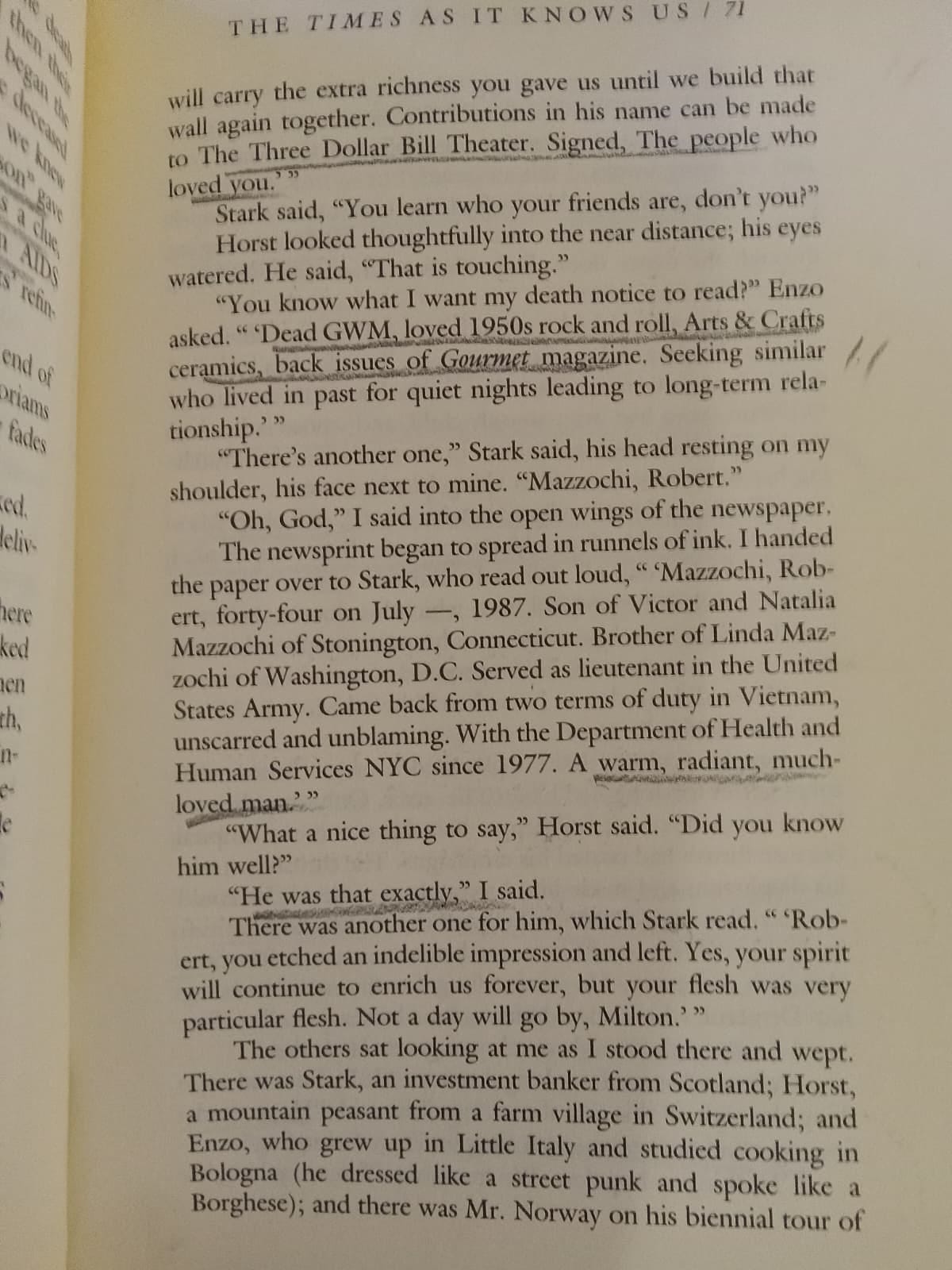
Denneny especially loved Barnett’s story “The Times as It Knows Us,” which is among other things a multi-perspectival view of how a group of gay friends, many of them sero-positive and some about to die, face each other and the crisis in a summer house on Fire Island (like the one where Barnett, dying, wrote the story). The New York Times is central to their lives as educated New Yorkers—and particularly central to them that summer because a friend of theirs helped a straight woman journalist put together a story about The Way Gays Live Now, which the friends debate, critique, etc., many of them resenting that the Times never gets anything right, toggles between ignoring gay life and condescendingly misrepresenting it, and resenting too that they do after all depend on the Times for recipes and obituaries.
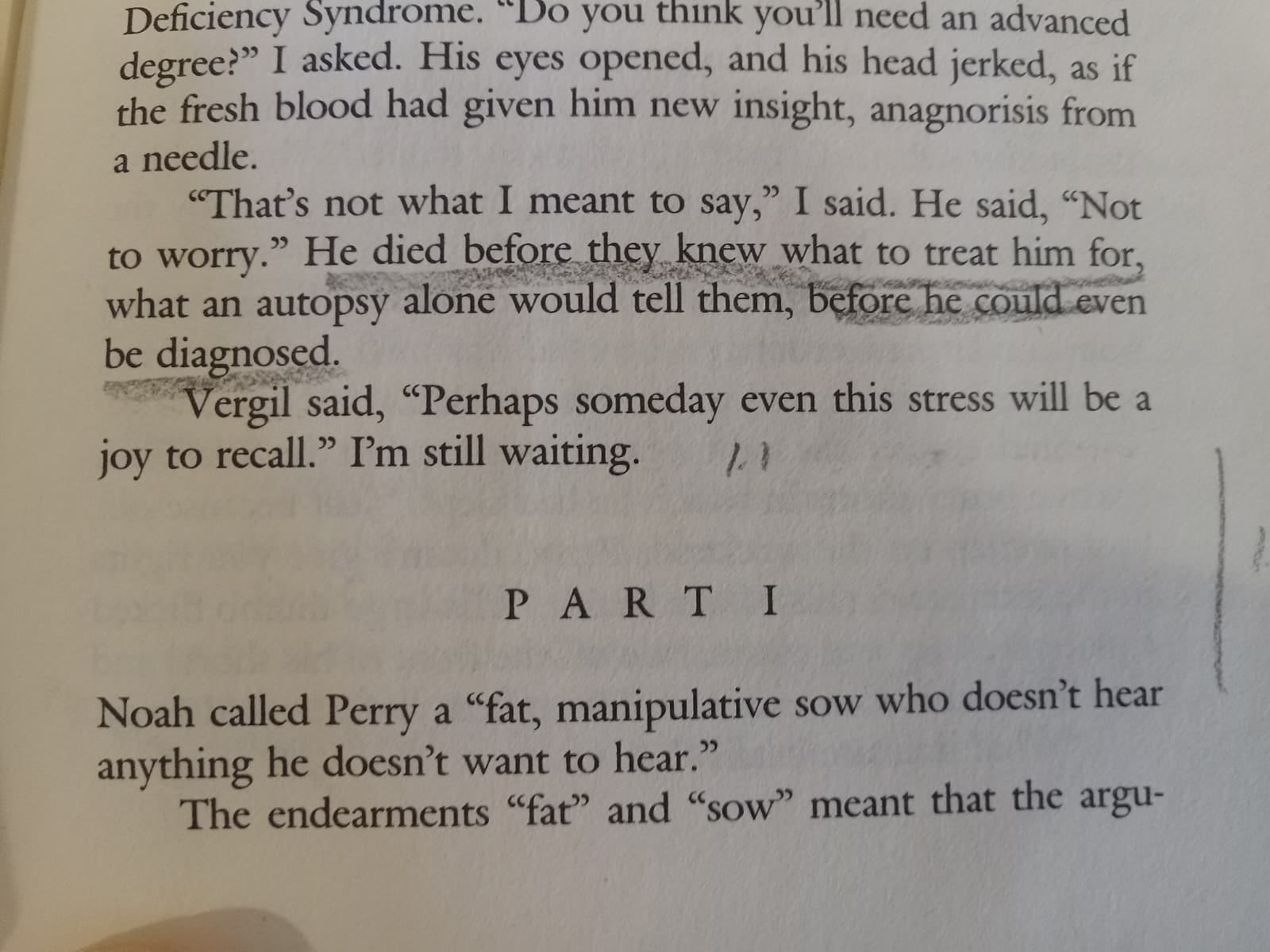
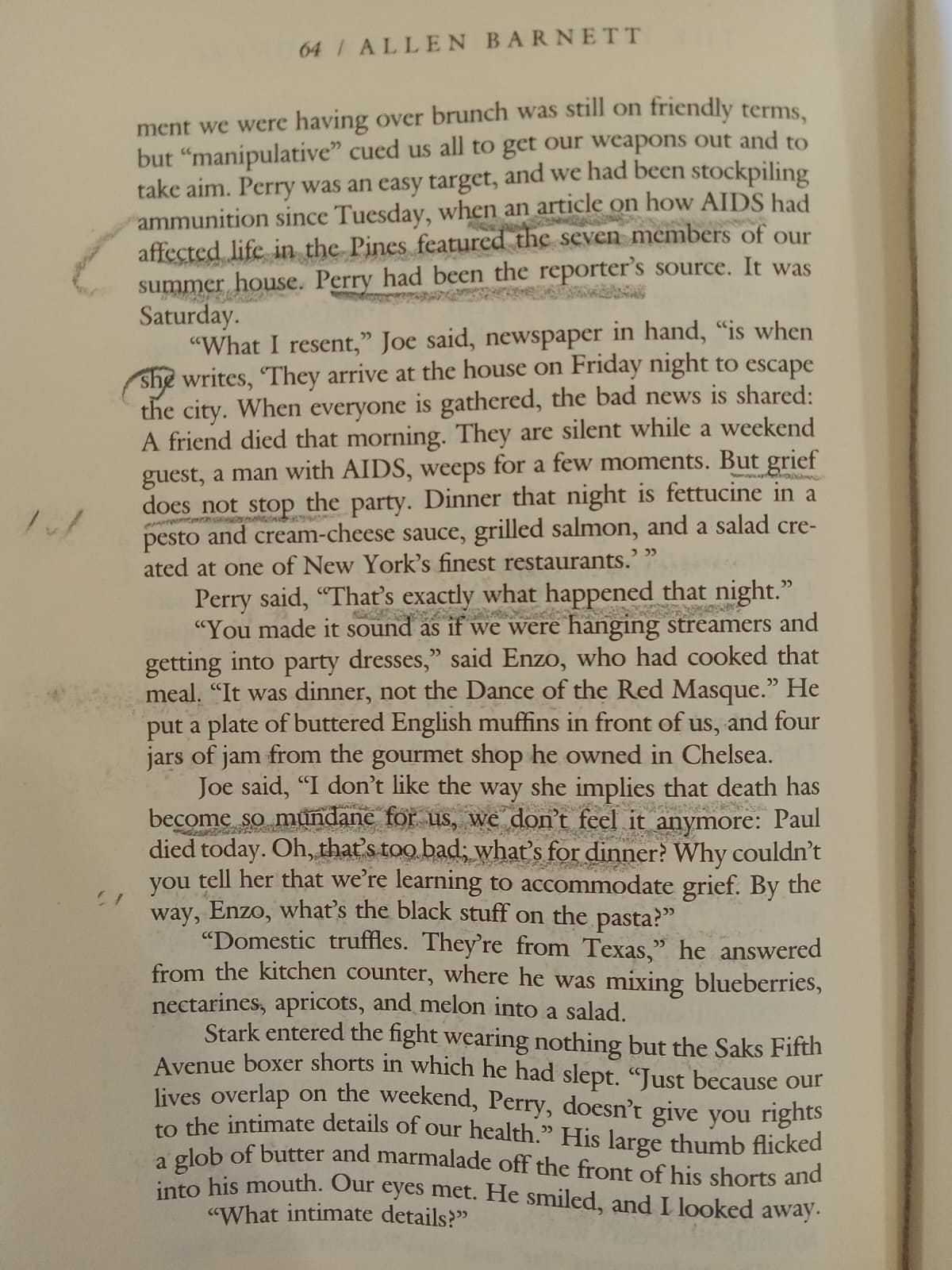
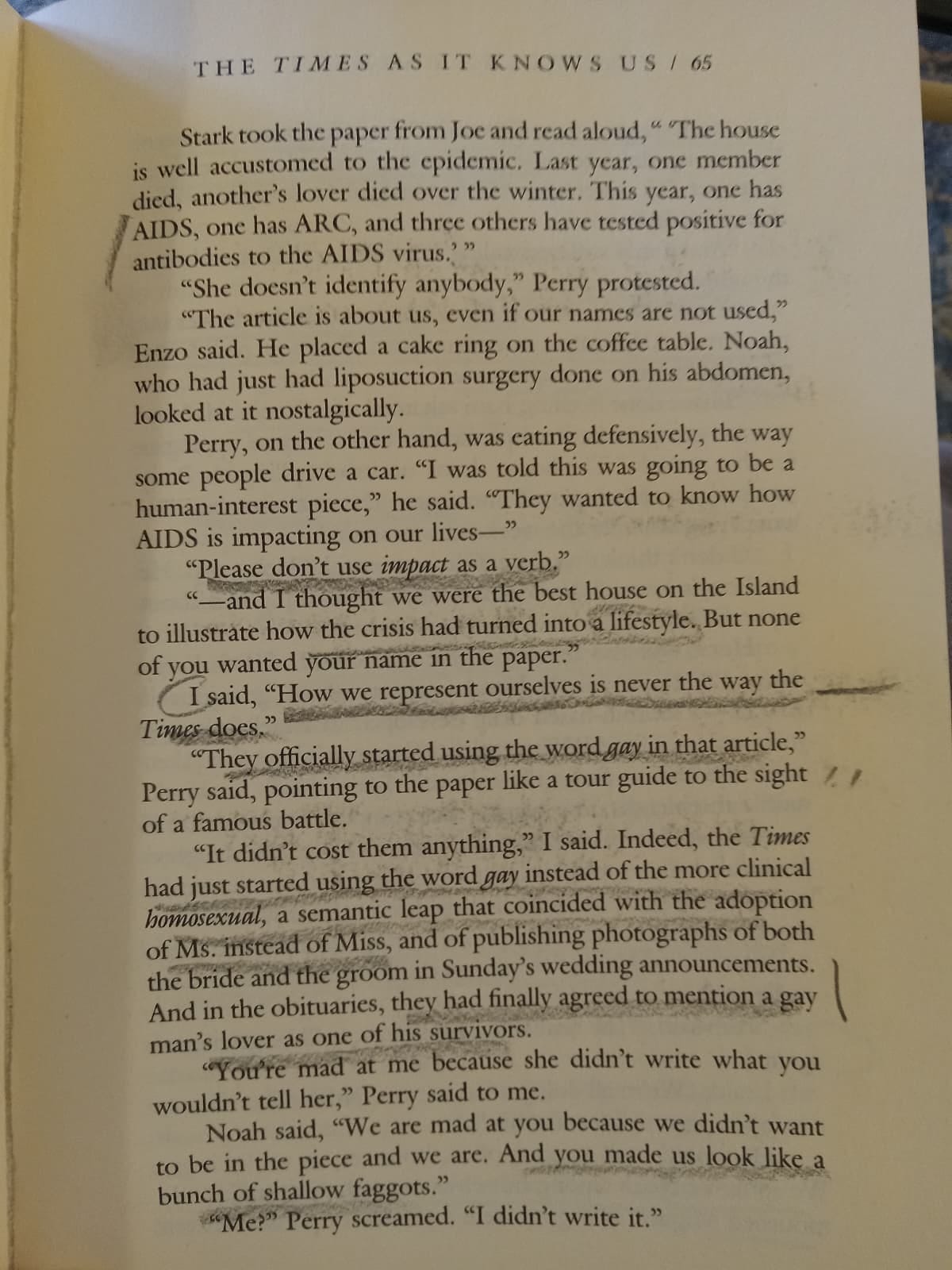
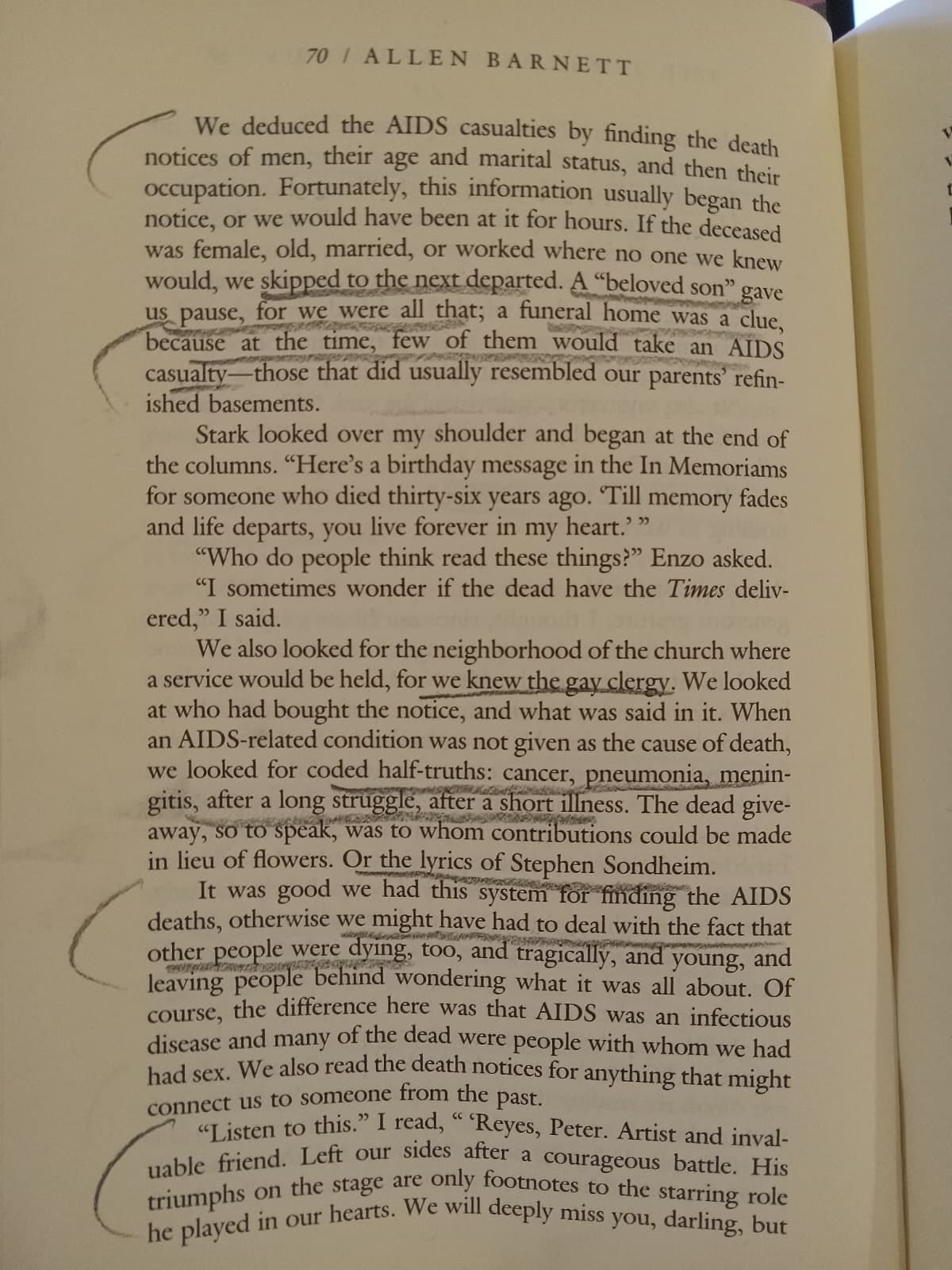
Barnett captures both the way AIDS was reshaping what Denneny called the “gay world” (the circuits of conversation about matters of common concern that hold together a community) and the way that this world, like I suppose all of our worlds now, exists, frustratingly and confusingly, not just on its own terms, but routed through, continually appearing in and commented-upon by, a media infrastructure whose agents are at best indifferent or patronizing. Denneny hated the Times, which spent the first years of AIDS downplaying the crisis and not using the word ‘gay’—as do many people today, yet one can hardly avoid reading the paper of record, even if you have to scan it as carefully as the Kremlinologists did Prada to find some truth:
Barnett died of AIDS at the age of 36, shortly after finishing the book of short stories in which “The Times” appears, The Body and Its Dangers. He had a few other publications, such as an important book review of Stambolian’s Men on Men collection, and was one of the co-founders of GLAAD, which he envisioned as a much more radical organization—in the spirit of the Gay Liberation Front and Gay Activist Alliance’s direct-action protests against homophobic media outlets—than it ended up becoming. And somewhere there’s a collection of stories that made up his MFA thesis (I can’t find his papers, which you might think would be, like other gay writers of his network, at either Yale or the New York Public Library). But The Body and Its Dangers, recently republished by a small gay press, was his primary accomplishment.
In a eulogy that he gave for Barnett’s funeral at St. John the Divine (published also in Christopher Street), Denneny stressed that Barnett was, however brief his writing life had been, a “great writer”—great not only in the sense of being an accomplished stylist, but great in facing up to the “moral responsibility” of bearing witness to AIDS. He recalled that Barnett had said (in a quote I can find only in the eulogy itself) indeed that “writing is an act of moral responsibility about moral responsibility.” That is to say, we write out of concern for the people who make up our world, and our writing (the act of writing and the content of what’s written) models what we think such concern should or might look like.
Denneny’s aesthetics (politics, morality, etc.) as it arose from his encounters with Arendt, gay liberation, and gay literature, is the task of my book and not what I want to talk about here. Except to note in passing that in “The Times” Barnett is showing how what Denneny understood as the “gay world” (the circuits of conversation by which we exchange our perspectives on matters of common concern and through this exchange keep our hold on the reality of our own experience) persists, at the edge of oblivion, amid both the catastrophe of AIDS and the crazy-making way that all of our talk and thinking now pass through an infrastructure of media that seems, even when its agents are apparently well-intentioned, to make us look, and in doing so drive us, crazy. The book, hopefully, will talk about Denneny’s aesthetic-moral-political reading of Barnett’s fiction. Here I’d like to show another aspect of Barnett, which Denneny (although he must have grown up Catholic himself) wasn’t interested in: his engagement with Christianity/Catholicism.
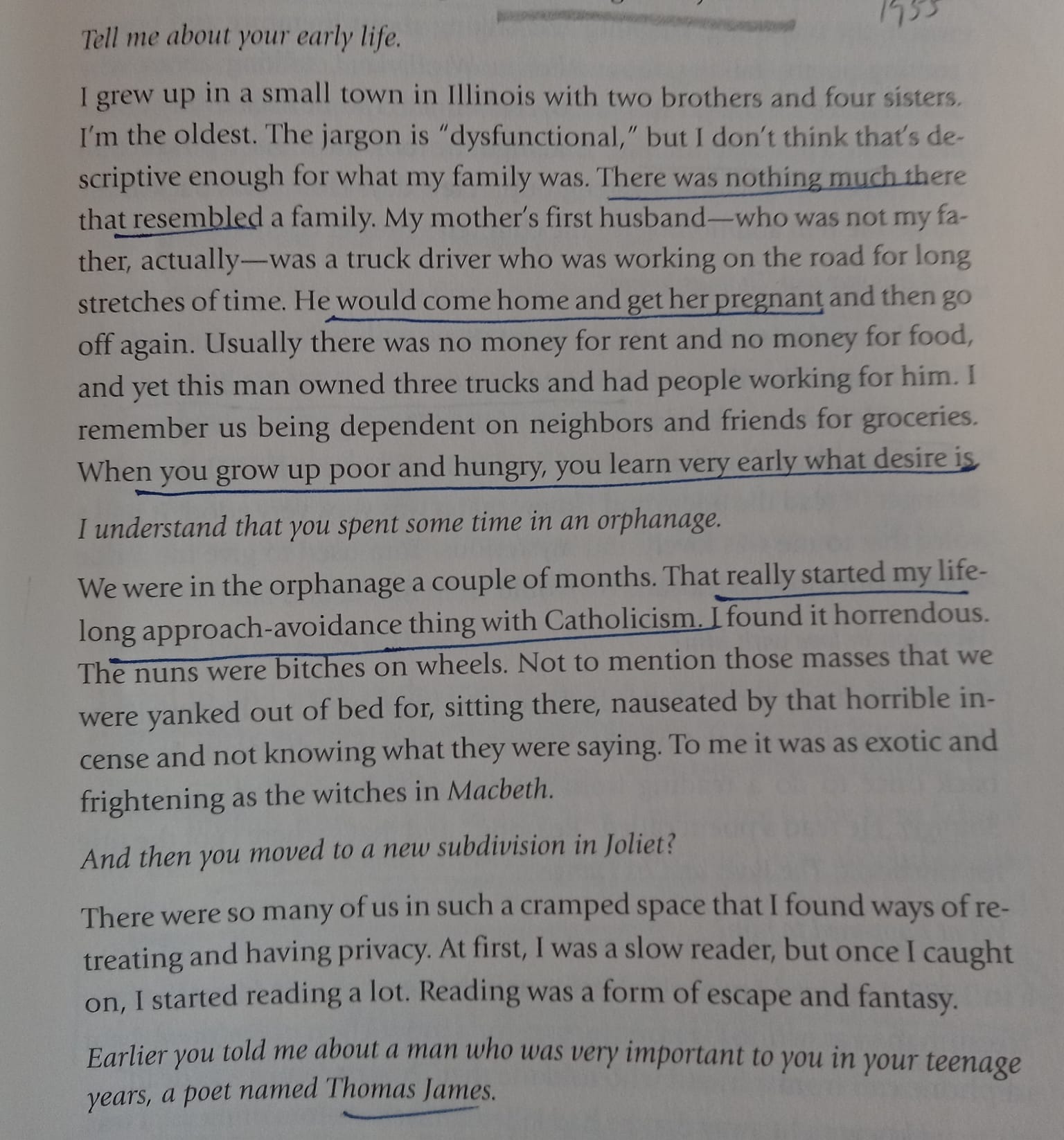
Barnett grew up in a poor, irregular family in Joliet, Illinois, just outside Chicago. He spent some time in a Catholic orphanage, and did his BA at Loyola, a progressive Jesuit school in Chicago, before moving to New York. His fiction is full of Christian references, themes, and characters—citations of Augustine, priests dying of AIDS, bitter lapsed Catholics and gay Episcopalians. There’s overlap with the issues at stake in Tim Dlugos’ poetry, although Barnett’s vision is often darker, harder and more hostile to the church (which makes sense, given that Dlugos was out to be a priest).
In a 1990 interview, already dying of AIDS, Barnett recalled his childhood, and the formative influence of another gay writer from Joliet, Thomas James (1946-1974):
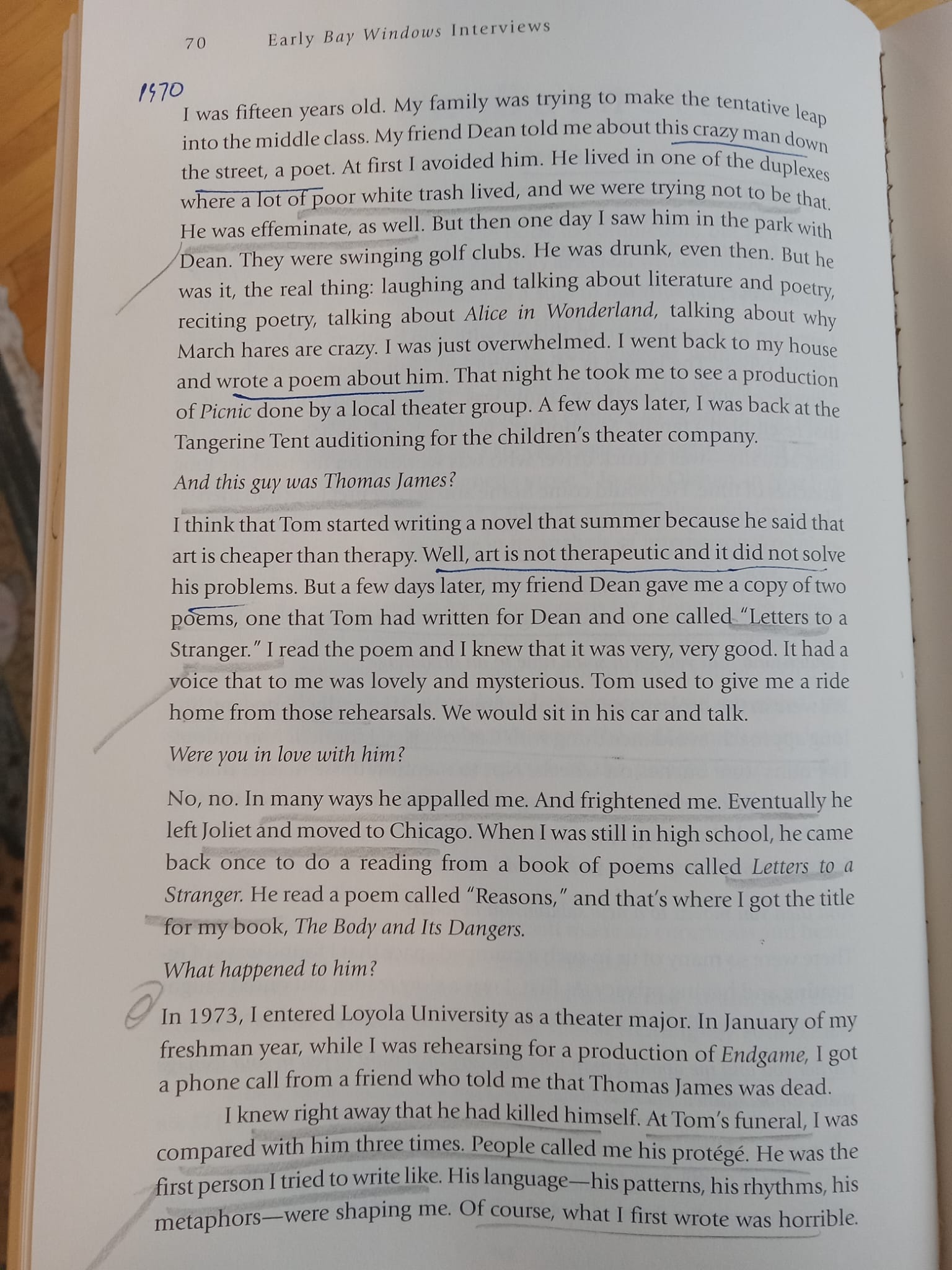
James published one book of poetry before his death (apparently his family was less sure than Barnett that it was suicide), Letters to a Stranger, republished in 2008 on Graywolf Press in a series edited by gay poet Mark Doty. James’ best poems, “Sister Miriam Therese Takes the Veil,” and “Mummy of a Lady Named Jemutesonekh” are competent Richard Howard-style dramatic monologues. Howard admired them, and taught the latter at his writing classes at Columbia in the early 80s.
Barnett was one of Howard’s students—imagine how strange it must have been for him to re-encounter James that way, a decade after his friend’s death (and how strange and sad that Howard, born in 1929, outlived both James and Barnett, along with many other of the gay poets he had inspired). Just as he had helped Larry Kramer edit what became Faggots, and Edmund White Forgetting Elena and Nocturnes for the King of Naples, and did so much else to hold together a gay and American literary tradition, Howard became a mentor for Barnett and helped him prepare the stories that came together in The Body and Its Dangers, which takes its title from the final poem in James’ Letters to a Stranger, a melancholy lyric about a passing hook-up.
Many of James’ poems are somehow informed by religious imagery, often unsuccessfully. For instance, here’s the first and last stanza of the poem that gives its book its title, “Letters to a Stranger”—it’s appropriate for this Lenten season!
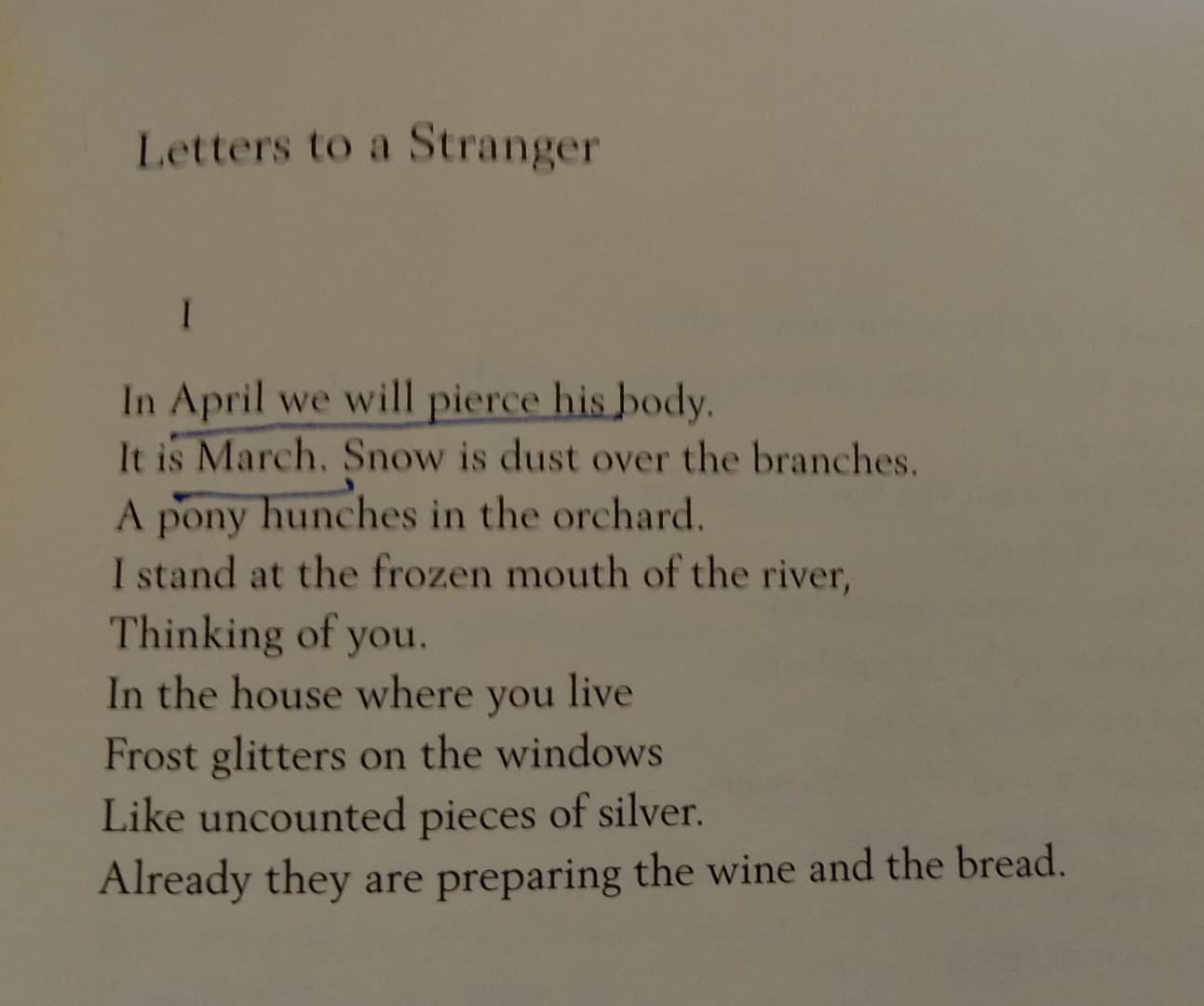
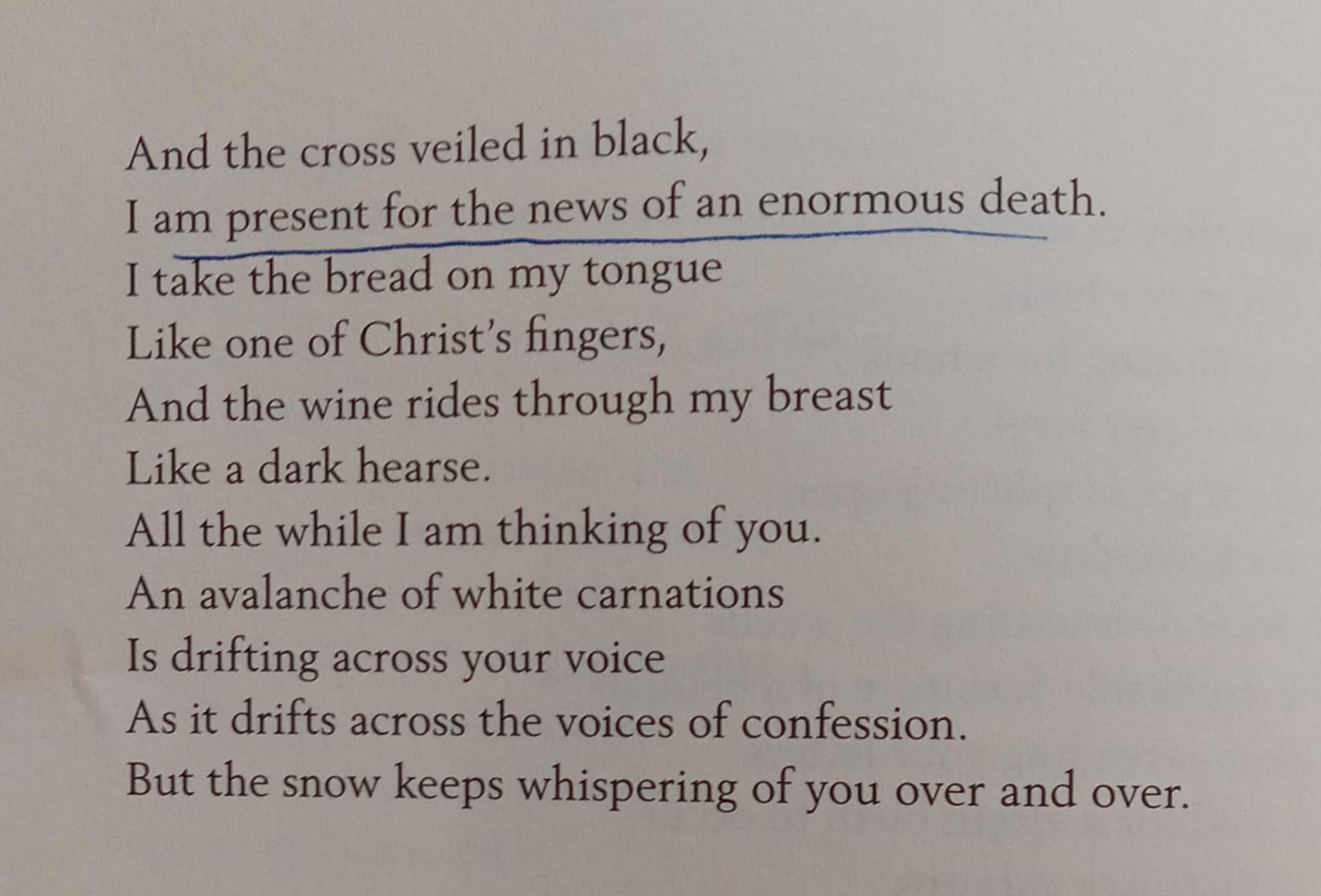
These seem like the pretty typical bad verses of a provincial gay guy working through, as if from first principles, the idea that religion and sex are related. I do not like the “avalanche of white carnations… drifting across your voice.” “Sister Miriam Therese” is, I think, better and more erotic, although it doesn’t go anywhere really new with the thought:
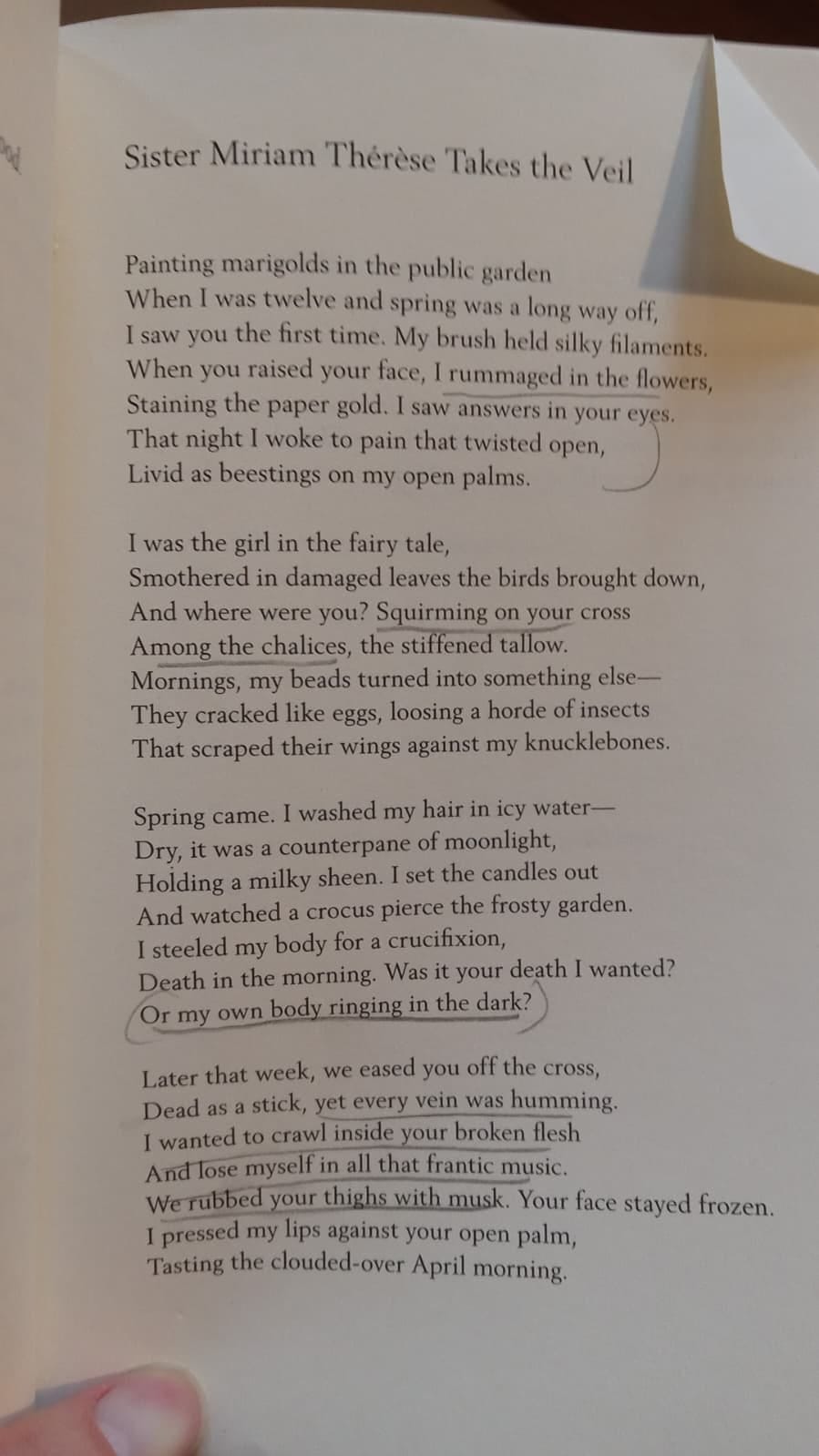
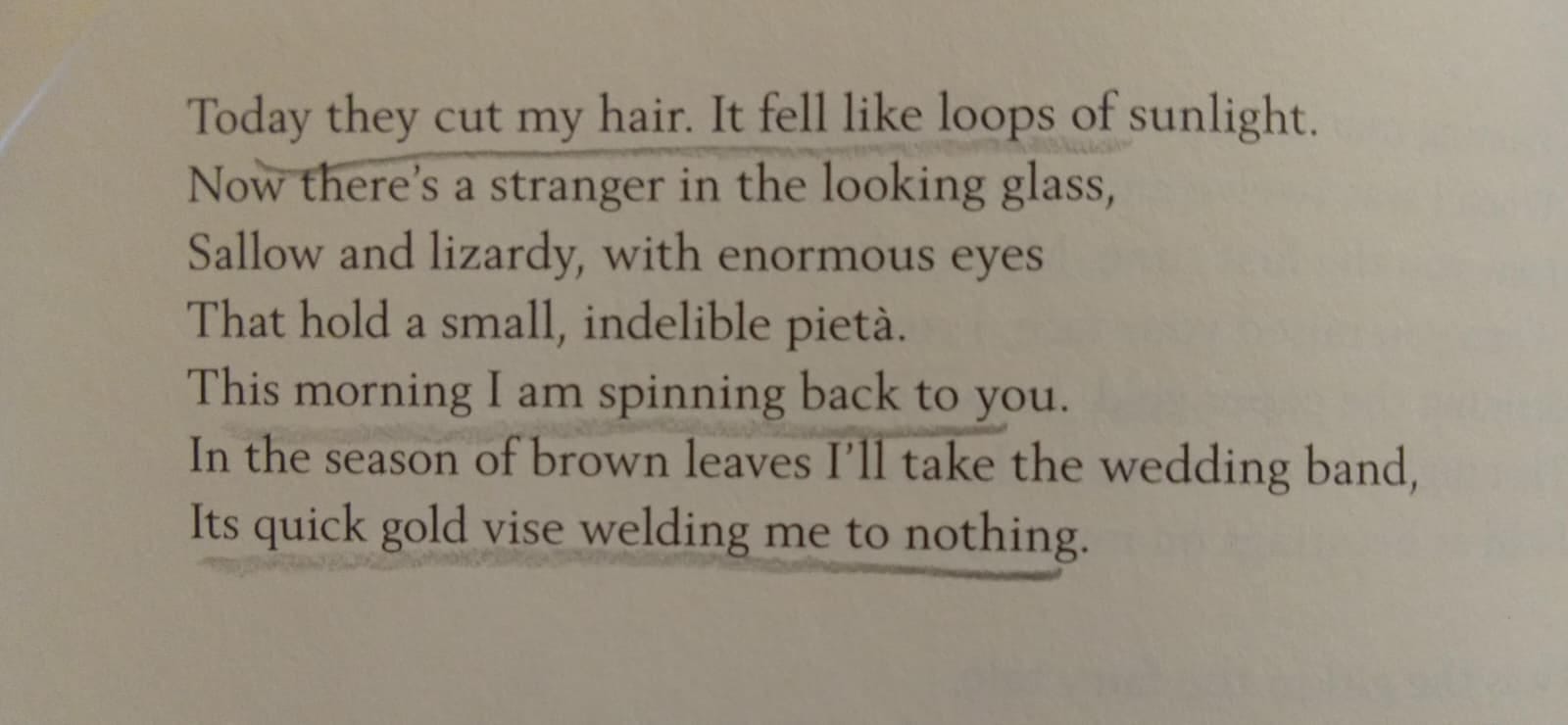
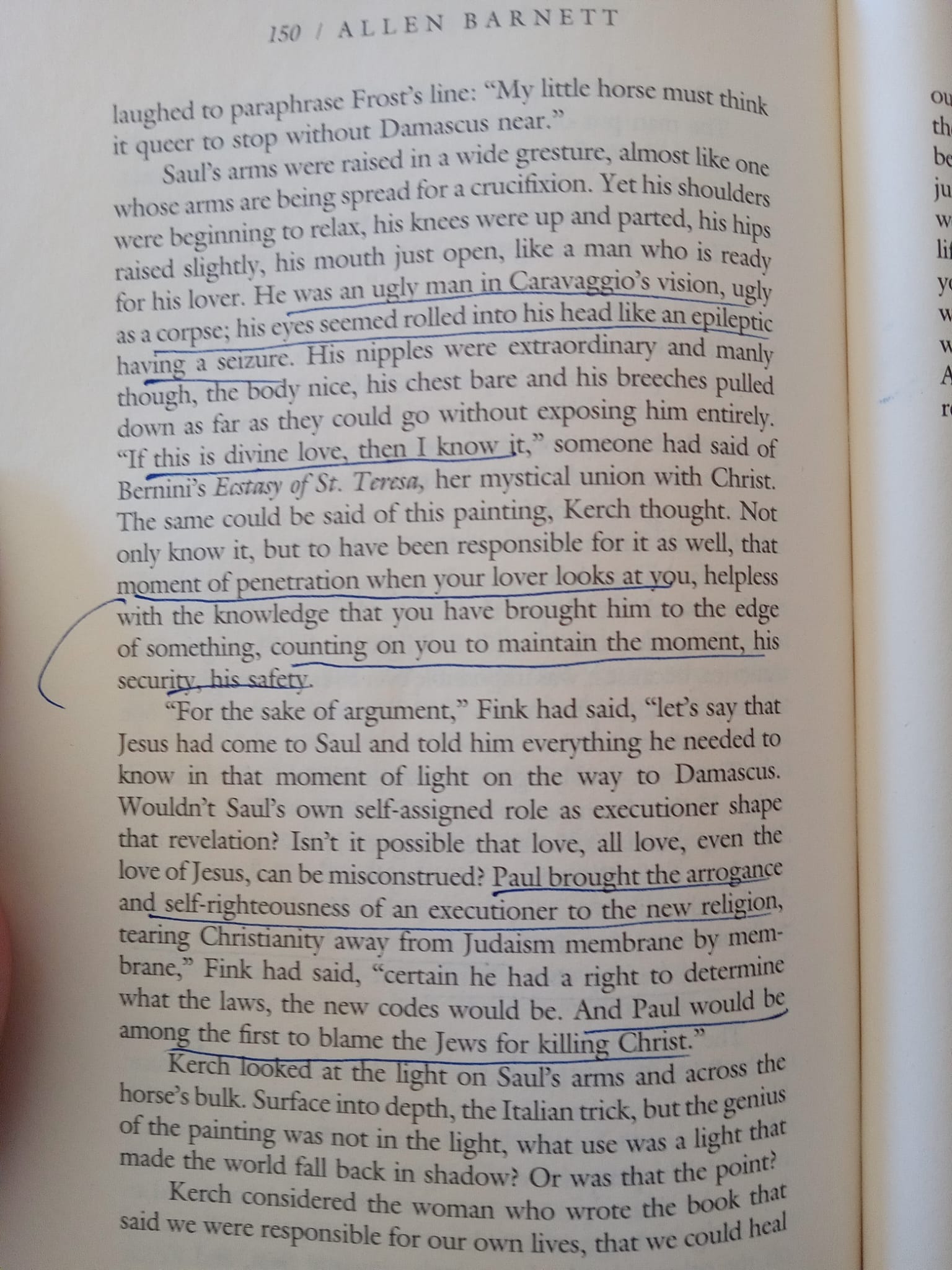
Writing almost two decades later, Barnett could also draw on the sort of sexuality of Counter-Reformation iconography, but his protagonists evoke it usually in order to get “finished with Rome,” as in this passage at the end of “Succor” (a story about a man who takes into his apartment homeless men dying of AIDS, which recalls in its painful beauty Flaubert’s “Saint Julien l’hospitalier”):
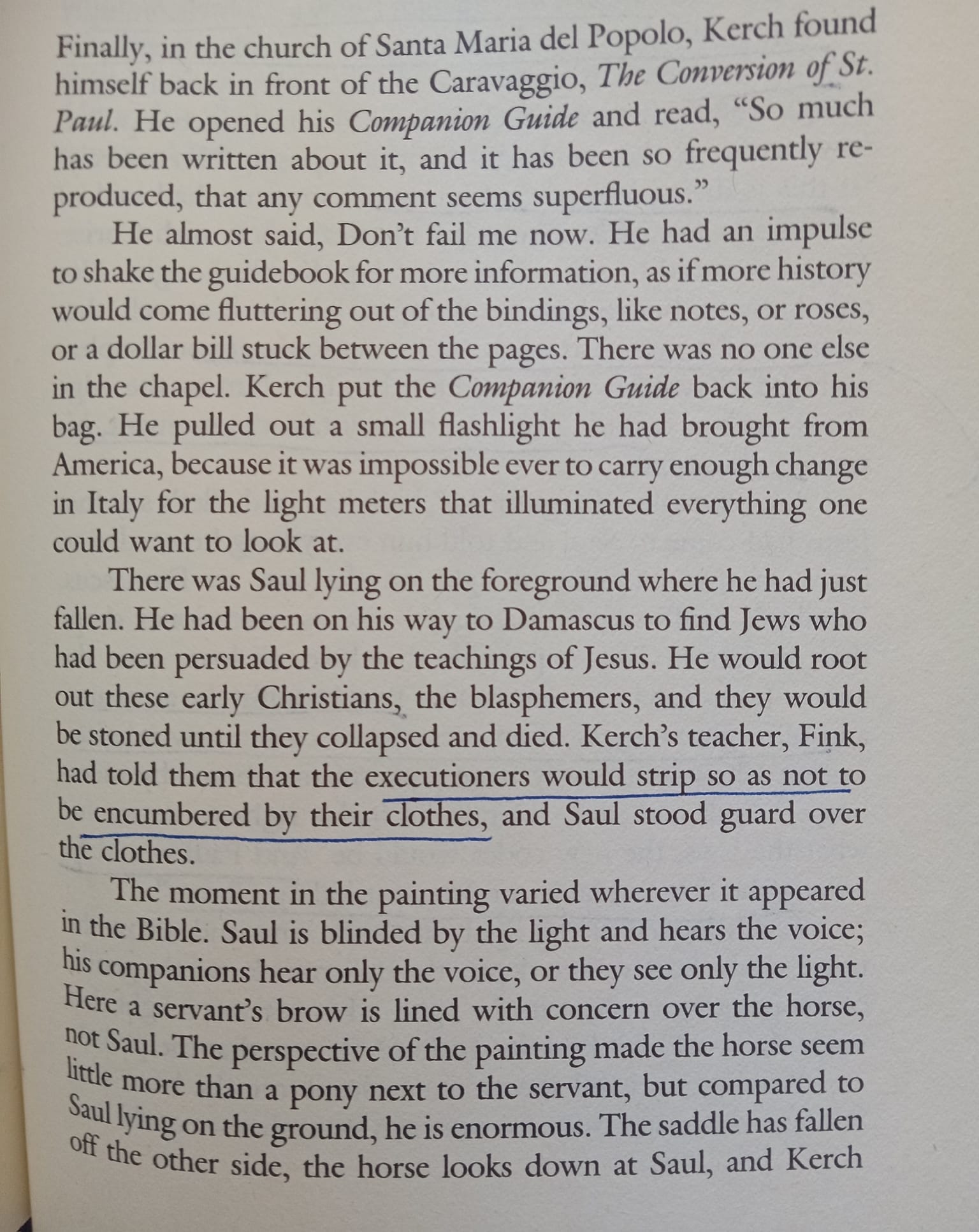
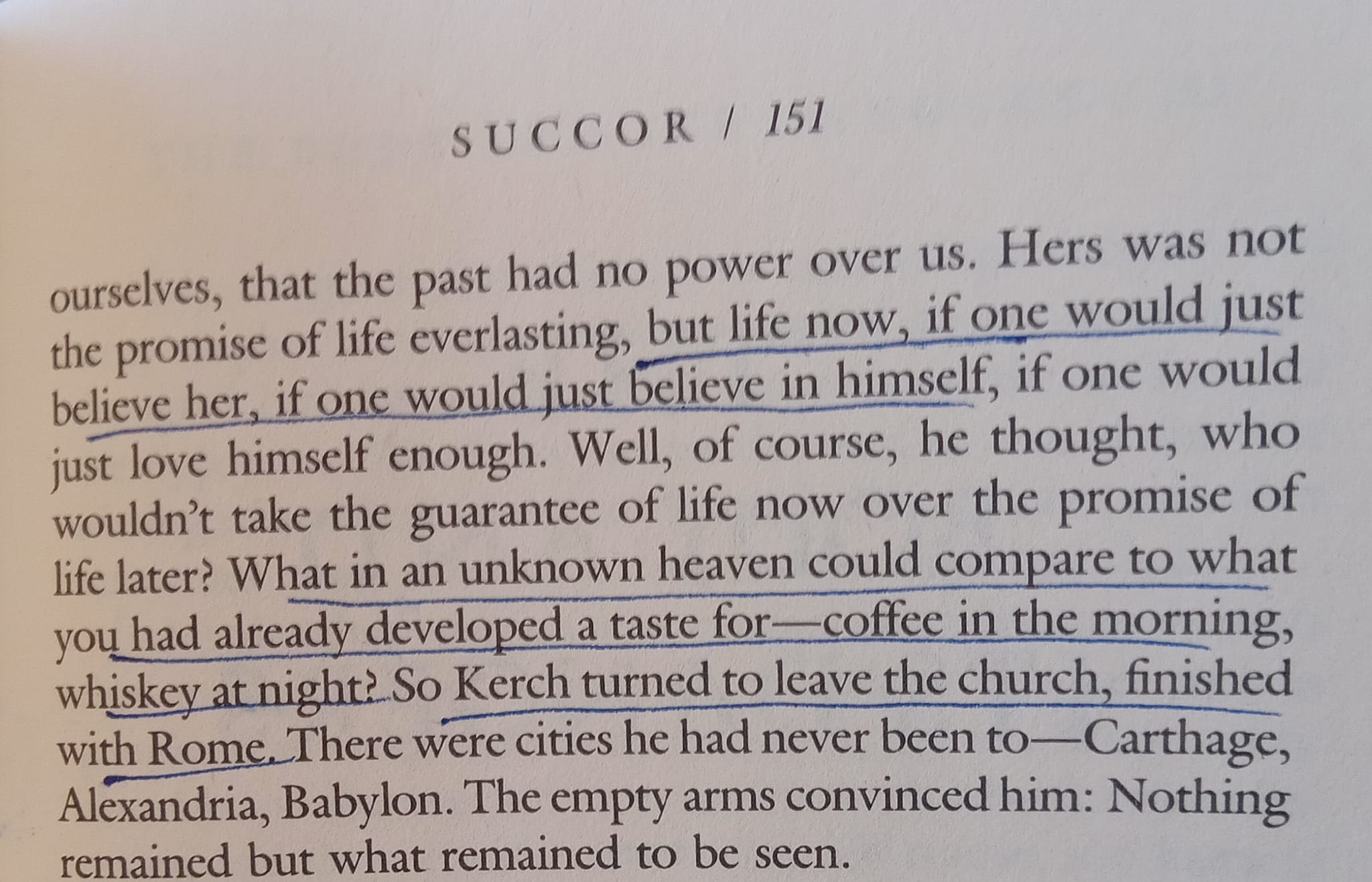
The woman mentioned at the end of this passage is a Marianne Williamson-type spiritual guru who advises AIDS patients to just think, er, positive thoughts! Barnett is vicious in his stories with characters who offer spiritual comfort:
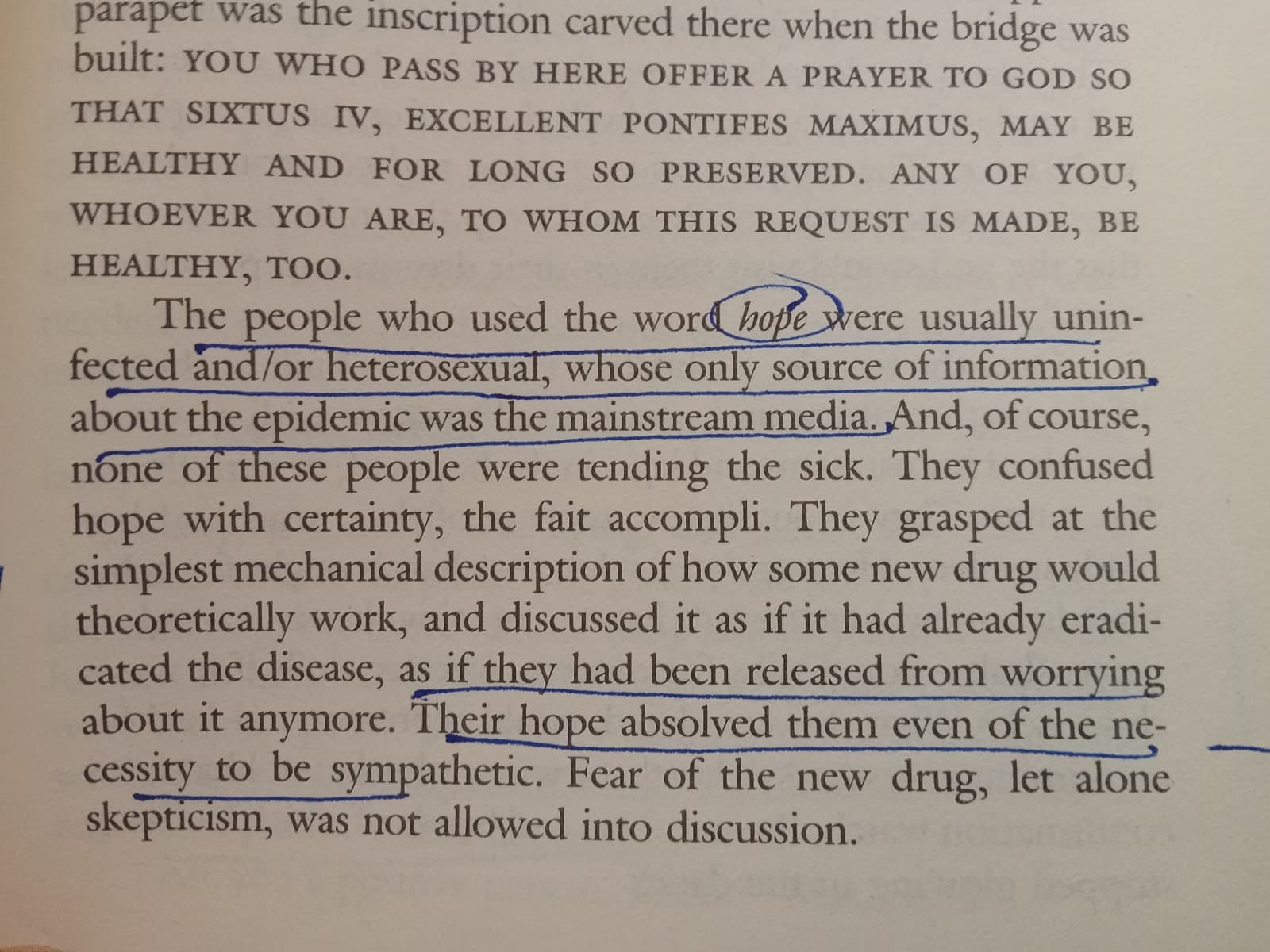
The “new drug” is AZT, which was worse than useless.
Religion as a secularized horizon of “hope” (sorry, Jonathan Lear!) or as a system of images for directing libido heavenward, let alone as a politico-moral institution, appears in consistently negative terms in Barnett’s work. As well it might!
And supposedly (that is, according to himself), Barnett came up with the idea, first aired at early GLAAD meetings, of disrupting mass at St. Patrick’s Cathedral to protest Rome’s murderous line on safe sex and homosexuality (it was of course ACT UP who actually did it—there’s a lot of queer theology and even AIDS theology in liberal Christian circles these days, but I wonder if anyone other than yours truly would want to say, by way of a compliment, ACT UP was the last great expression of Protestantism? And Reformata semper reformanda is after all pretty queer when you think about it; endlessly re-form-ing is giving Ramzi Fawaz):
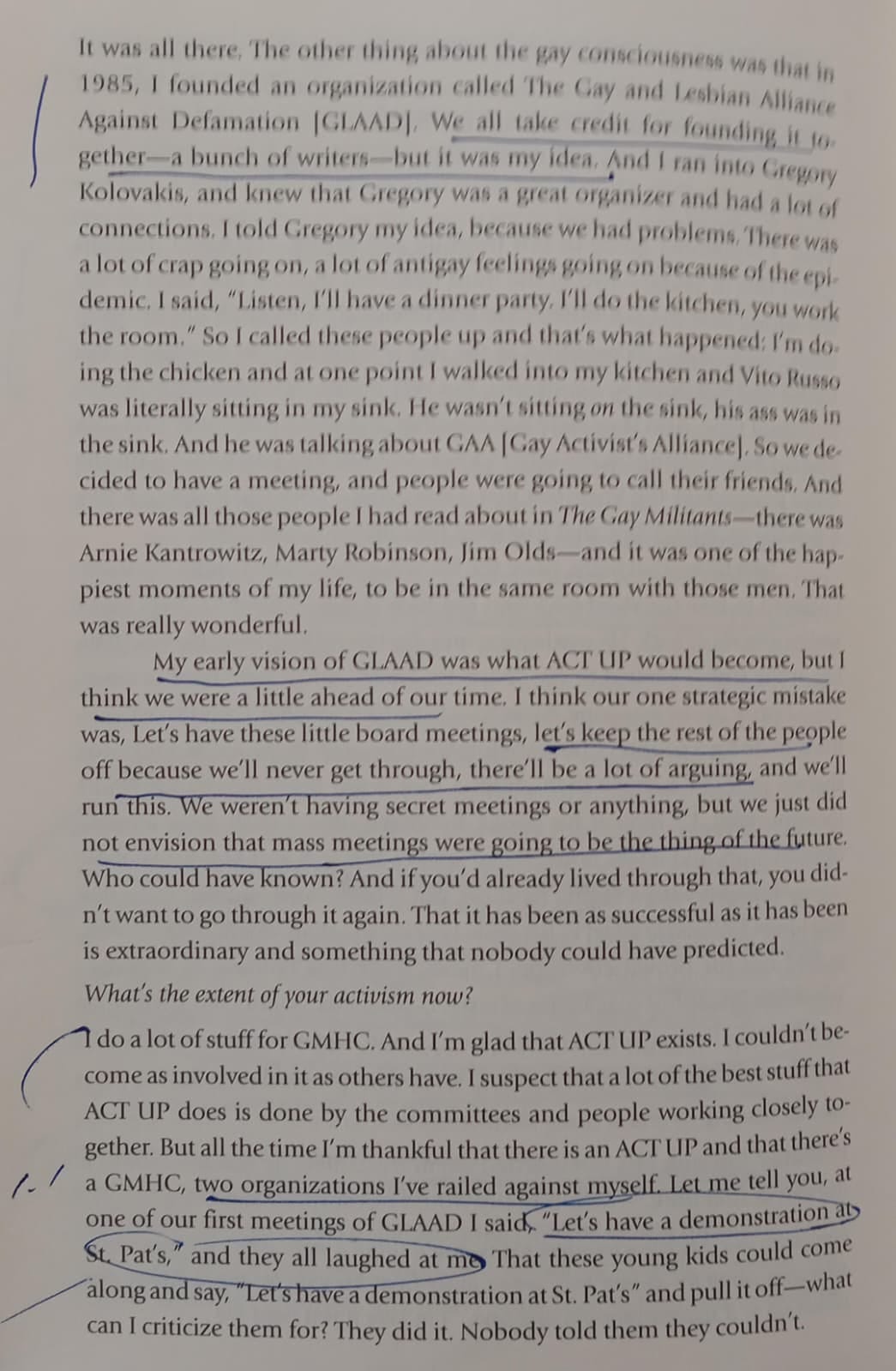
Now whether or not any of this is exactly true, I have no idea, but the tone of it—understandably bitter and hurried to get out his version of things (he died a few months later)—seems to validate the authenticity of another interview published posthumously in Christopher Street.
Barnett was here in conversation with someone named “J.C.”, and the editors of CS have no idea who that could be. It could be that Barnett made this person up, using the format of the fake interview to get across some pointed opinions on gay culture. It wouldn’t have been CS’s first fake interview. I’m not convinced all of Stambolian’s interviews were real, and Boze Hadleigh’s interviews with famously closeted celebrities, published after their deaths, in which they ‘told all,’ were so obviously fake I have to assume they were a joke.
Of course, JC might be Jesus Christ! CS did title the piece—rather tastelessly!— “Interview at the Pearly Gates”…
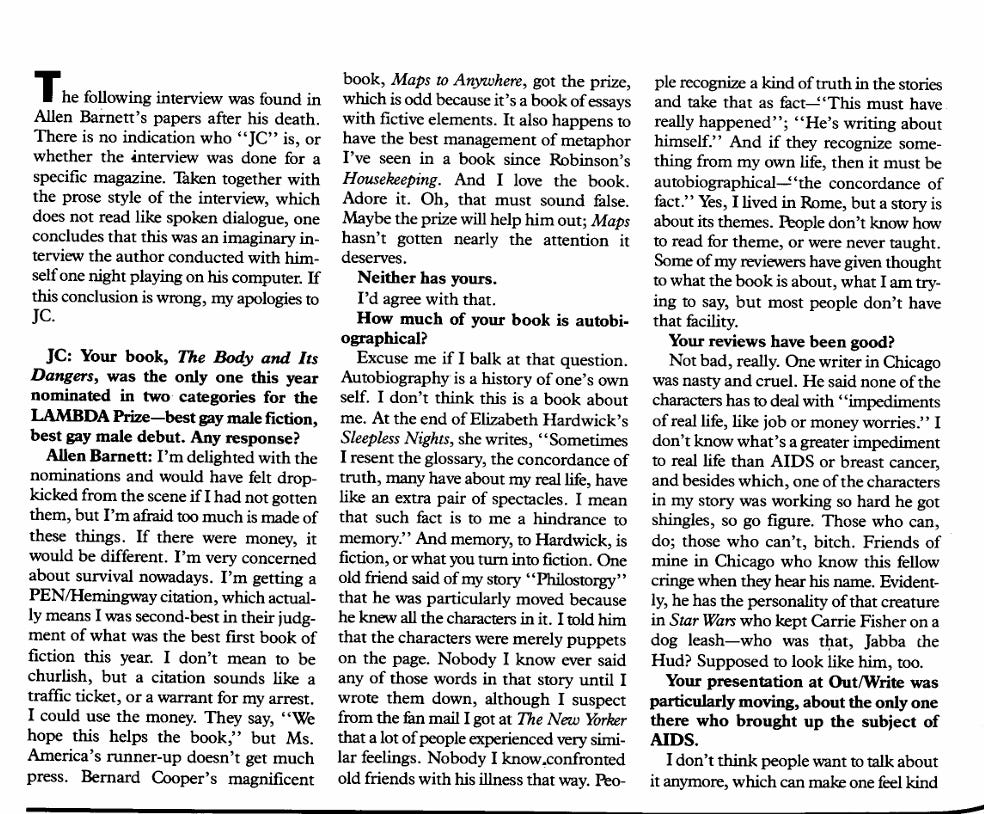
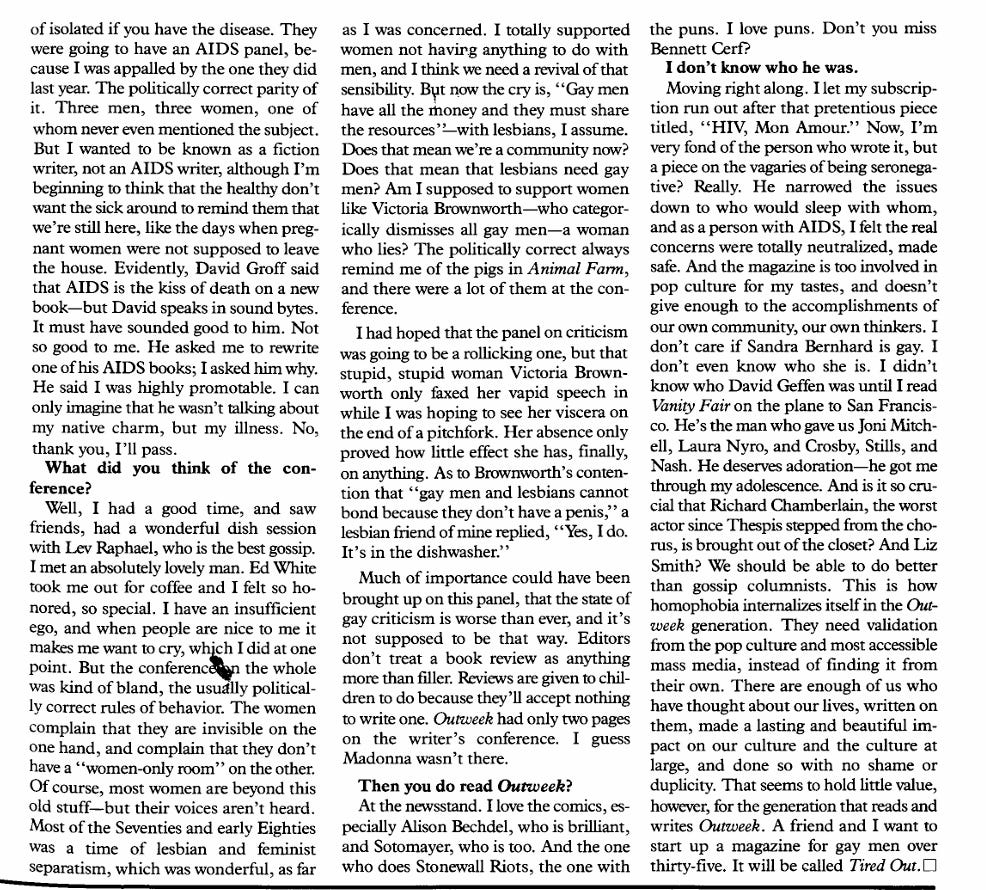
It’s the second half of this short interview where I think things get really interesting.
There’s a fun sideswipe at gay publisher/poet David Groff, and a critique of Outweek, a short-lived gay publication that tried, in a way Christopher Street and previous gay media really hadn’t, to engage with straight popular media. For Barnett, this was a terrible step away from the effort to develop a gay culture, and akin to the problem of being glued to The New York Times. Arguably the obsession getting “validation from the pop culture and most accessible mass media” rather than making our own “gay world” has only gotten worse since. Although Sarah Schulman a few years back celebrated Outweek in The Paris Review (lol) as “The Voice of ACT UP Culture”!
In passing, though, we must forgive Barnett for being totally wrong about Sandra Bernhard, genius, who sometimes herself gets religion.
bravissima as per yoozh, ty blake for this background on one of thee greats
excellent and insightful as always — had to laugh at this though, as one can only wonder whether "Prada" for "Pravda" was a slip or quite intentional:
"as do many people today, yet one can hardly avoid reading the paper of record, even if you have to scan it as carefully as the Kremlinologists did Prada to find some truth:"